Roy Thomas: On the making of Stars of the Underground featuring De Underground Records
7th September 2021 - Katherine Green
Artist and filmmaker, Roy Thomas, was born in the 60s and grew up in first Tower Hamlets and then Newham, living in Upton Park and then Dennison Point, one of the three blocks which make up Carpenters Estate, Stratford.
Growing up in Newham in the 70s and 80s, Roy’s experience demonstrates the mosaic of musical history and culture in the borough and just how influential that was and is. Crossing multiple genres as diverse as sound system, rare groove, punk, new romantics, rave, jungle and garage.
When you talk about music that area and specifically that estate loved music. In the daytime, I could be jamming in somewhere like the King Eddie or the Pigeon Pub and even Atherton Suite which is part of the local swimming baths building on the Romford Road, nodding my head with my skinhead mates and listening to music that was a cross between the punk and the skinhead thing and then I might be in a blues dance at three o’clock in the morning, on the same day.
It was also a time of conflict and discrimination, anti-establishment views and DIY ethics.
We weren’t able to get the jobs we wanted. There’s high unemployment. Racisms gone nuts. All these new things are appearing like Rock Against Racism. Punks are fusing their music with reggae. We’re growing up and we’re looking for something. I’m at university but people I’ve grown up with are actually attacking the status quo by putting on illegal raves and broadcasting on pirate radio, like Centreforce Radio in my block of flats.
These musical influences and networks were reflected in Roy’s experimental filmmaking. In university he made Come Play Mass and The Walker. His subject matter explored music and Caribbean culture in Newham in the 80s and 90s, including one film featuring De Underground Records, the influential jungle and drum and bass shop and studio on Sebert Road, Forest Gate.
To understand how Roy arrived at those subjects is to understand something of Newham and its rich cultural heritage. There were many connections between De Underground Records, jungle music and Roy which led him to that point, such as his collaboration with John Aymer, brother to Mike De Underground and Cool Hand Flex, and owner of Reel II Reel Records.
Local friends in Roy’s circle included Rudy Tambala and Alex Ayuli who’s indie ‘dream pop’ band, A.R. Kane, topped the indie charts with their first two albums and whilst signed to 4AD teamed up with Colourbox to form M|A|R|R|S. Their one release together, Pump Up the Volume, is considered a milestone in the development of British acid house music.
When Rudy Tambala moved to the states to work with David Byrne of Talking Heads, John Aymer took over his Stratford-based studio and set up Reel II Reel Records.
Across the road from the Reel II Reel studio and where their records were pressed was Vinyl Cuts Records, operated by Darren Murphy and his father Terrence Murphy, another family with their own musical dynasty.
Spending time at these businesses, watching the artists come and go, Roy saw the nascent jungle scene unfold and heard everything from punk, to new romantic, to garage being pressed onto vinyl. With connections across all these scenes his interest focussed on the emergence of jungle music and its DIY punk sensibilities.
I’m now surrounded by lots of different people doing different things, different genres of music. I’ve got a camera in my hand and at will I can create my masterpiece whatever that is going to be. But jungle was the thing. Because I knew nobody was actually documenting or looking at that music in the way I was looking at it.
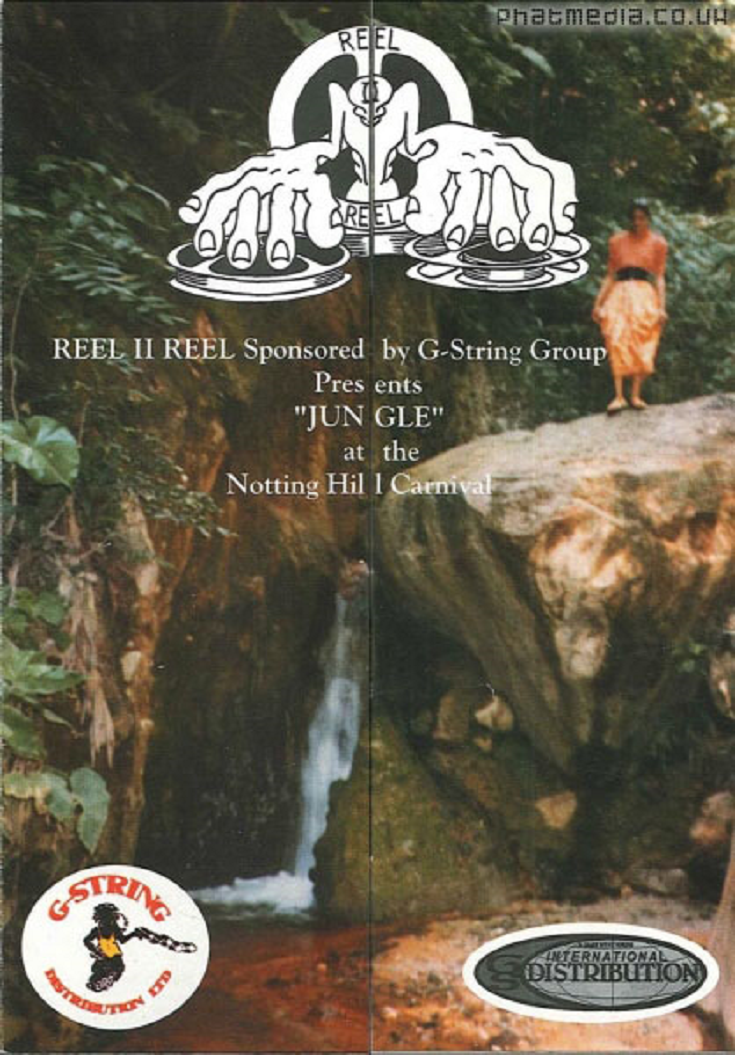
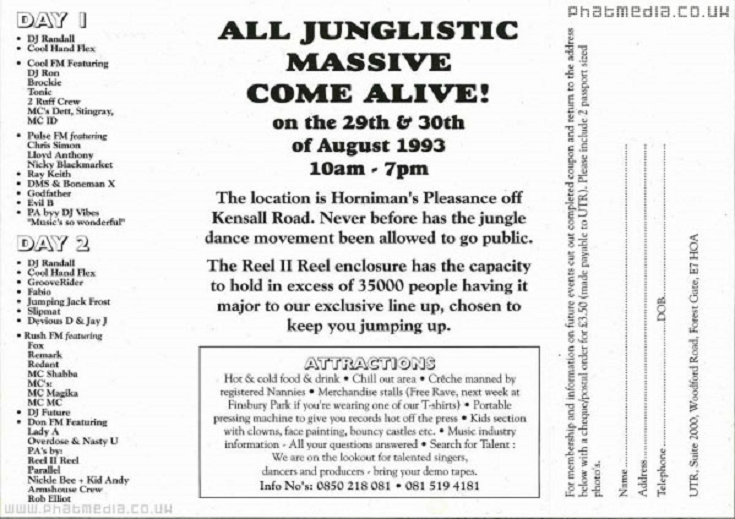
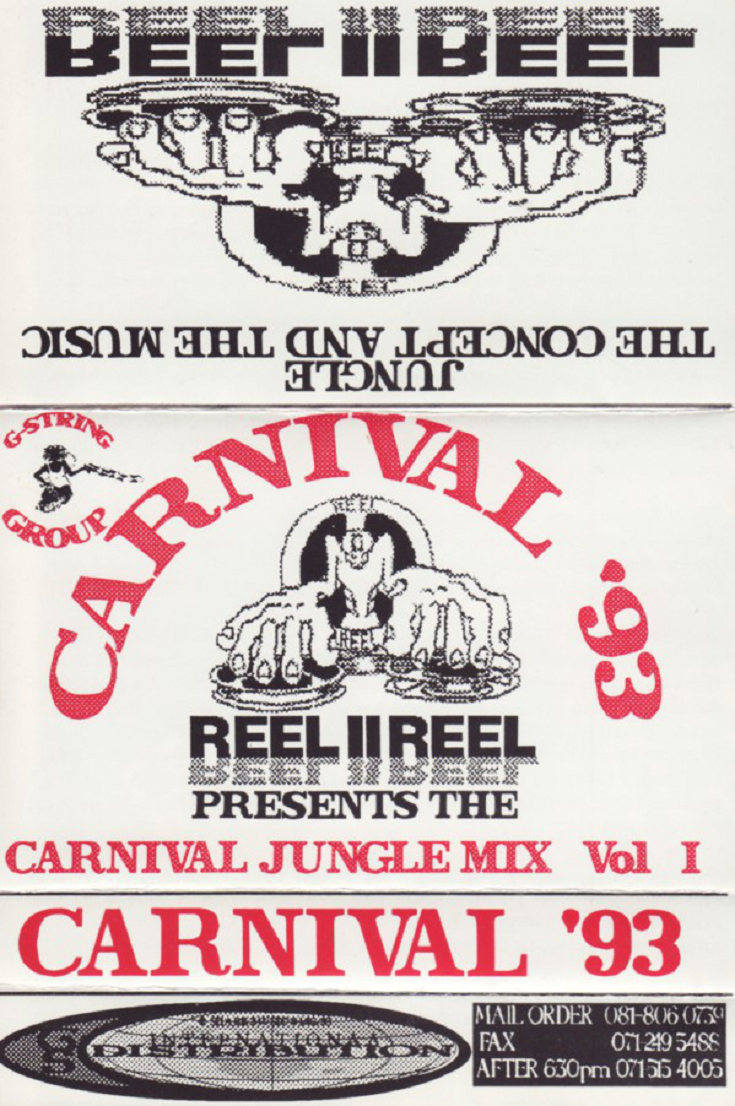
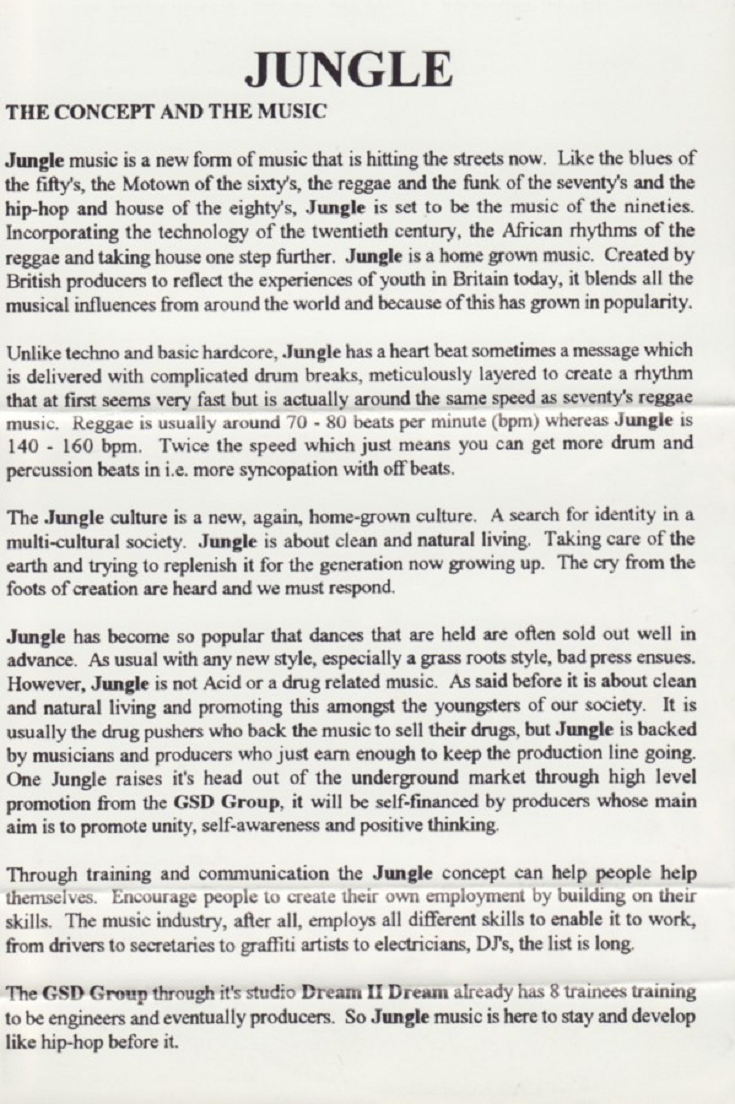
The resulting film, Faces indie Jungle, explored the question, ‘What is jungle?’, in a style which Roy describes as ‘art meeting social commentary’. It was mainly filmed in Stratford, much of it featuring John Aymer, ‘Who I considered to be a major influence in promoting this music’ with additional scenes filmed at Notting Hill Carnival. In 1993 Reel II Reel, supported by G String Group, put on a massive two-day event at carnival with DJ Randall, Cool Hand Flex, Fabio, Grooverider, Jumping Jack Frost, Slipmatt and many others. It was considered one of the first major acknowledgements of jungle at carnival and Roy was there to capture it, ‘We had to move between one end of the carnival and the other to grab particular scenes, like creating small scenes when it came to the sound system on the street pumping out jungle, to the actual massive [Reel II Reel] stage event’.
Faces indie Jungle was screened at Portobello Film Festival and the ICA, but otherwise has had limited exposure.
In 1995, Roy followed up with Stars of the Underground which focusses on three businesses on Sebert Road, Forest Gate. The predominant shop of the trio was De Underground. Roy’s intention was to capture the interrelationship and interdependency of the shops, ‘to capture dialogue from the very same people that we grew up with as kids’ as well as investigating the nature of Caribbean businesses operating without an ‘economic base structure’.
Roy was familiar with these shops, firstly having used one as a rehearsal space for his own jazz-funk band in the early 80s, and then whilst running an innovative childcare provision to support working parents on the road in the 90s, he became interested in capturing the community around the shops and exploring their relationships.
It’s a story about three businesses, De Underground Records, Jungle Commodities and the mini cab office on Sebert Road. Each shop had their own characteristic. It is about the rise and fall of the Caribbean community when they actually go into business, and if you are ever in a Caribbean household, and you start talking about business, ah mate, you’re going to hear laughter.’
At the time of filming, De Underground was at a tipping point in terms of its success. The pulling power of the shop was supporting the neighbouring businesses – visitors would buy food from Danny Dollar at Jungle Commodities and take cabs home laden with their vinyl hoard.
It’s a story that’s aimed at my community but it’s also a story to show people, in one moment in the UK history, the idea that these three shops reflected our community. There was a little light there which carried a new musical form but De Underground got to a certain point and then just fell apart. People were hearing that De Underground were getting props but weren’t sharing the spoils. But then De Underground are saying, ‘We’re just individuals’ and they’re not really thinking about longevity of business in that way. It was ironic that when they fell, everything else fell apart.
The film trailer gives a taste of the everyday banter, the discussions and world around the scene with local people coming and going.
I’m approaching this genre of music, not as somebody that’s outside looking in and going, ‘What is this? You need to find out what’s going on at De Underground’. It wasn’t newsreel footage or reportage. I wanted to create something from our community that doesn’t just look at the music genre.
Also captured in the video is Eddie Otchere, a celebrated photographer who happened to be at De Underground documenting London’s jungle, and drum and bass scene. Many photographs from that day have just been published in Velocity Press’s, Who Say Reload.
As with many artists and creatives, Roy juggles teaching with filmmaking, and Stars of the Underground remains as a rough cut until such time as a sponsor or funder might support getting it finished and screened. Roy’s hope for both Stars of the Underground and Faces indie Jungle is that they might tour, particularly to universities in the near future.
The best way for me to get this work shown is to tour. I always feel comfortable touring and that could be a university thing where I’m invited as a guest lecturer. I’d also like to be able to set up an installation type thing, whether it’s external or internal. But it all takes backing and I’m ready when the time comes for that discussion.
Roy was at the heart of an important shift in UK music culture, his position as an insider afforded him an intimate and genuine perspective. His films are a fascinating portrayal of a community of young people carving out their own identity and making their way in the world. His work is of cultural and historical importance, and is also a legacy of Newham, it’s creativity and diversity. It deserves to be seen more widely, so here’s hoping there’s a backer can support this happening.
Further information
To speak to Roy about him filmmaking, contact him via email.