Art in the Park: The Cultural Heritage of the London 2012 Games
About this record
This project focuses on the Cultural Olympiad and the sculptures of the Queen Elizabeth Olympic Park. If you would like to learn hidden stories about the artworks, we invite you to embark on this journey with us. Reflecting back on the Games after a decade, we’ll share our research, curiosities and interviews with some of the artists that were part of the London 2012 Games.
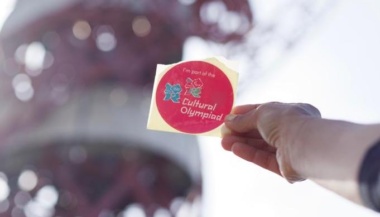
Sticker with the symbol of the Cultural Olympiad in front of the ArcelorMittal Orbit. Image © Sylvie Belbouab
Have you ever heard of the Cultural Olympiad? No? Well, you may have joined some of its events or seen some of the sculptures created specifically for it and may not even have been aware of it. It runs in parallel with the Games, but many people don’t know about it but as the Cultural Olympiad official evaluation states, “A Cultural Olympiad is a required element of any Olympic and Paralympic Games and is part of the International Olympic Committee’s ambition to present the Games as the blending of sport, culture and education”.
In January 2022 we made a visit to the Queen Elizabeth Olympic Park to do some research, took lots of pictures and examined the cultural legacy. Here is what we found:
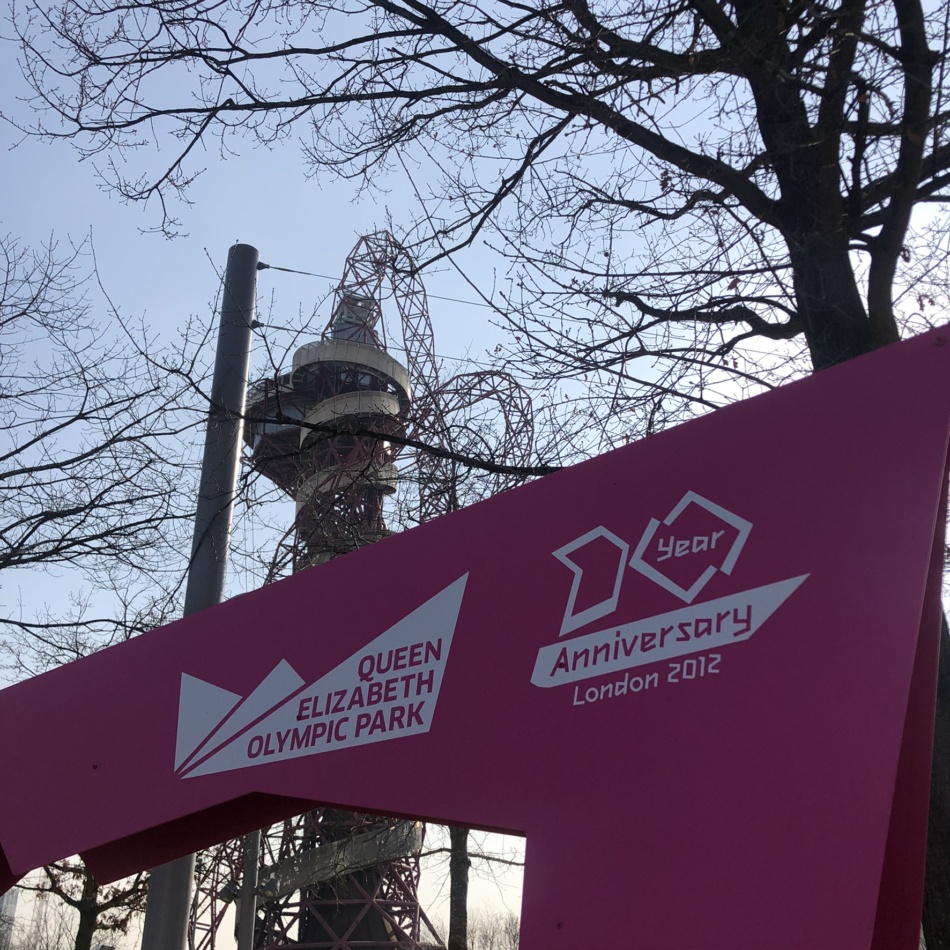
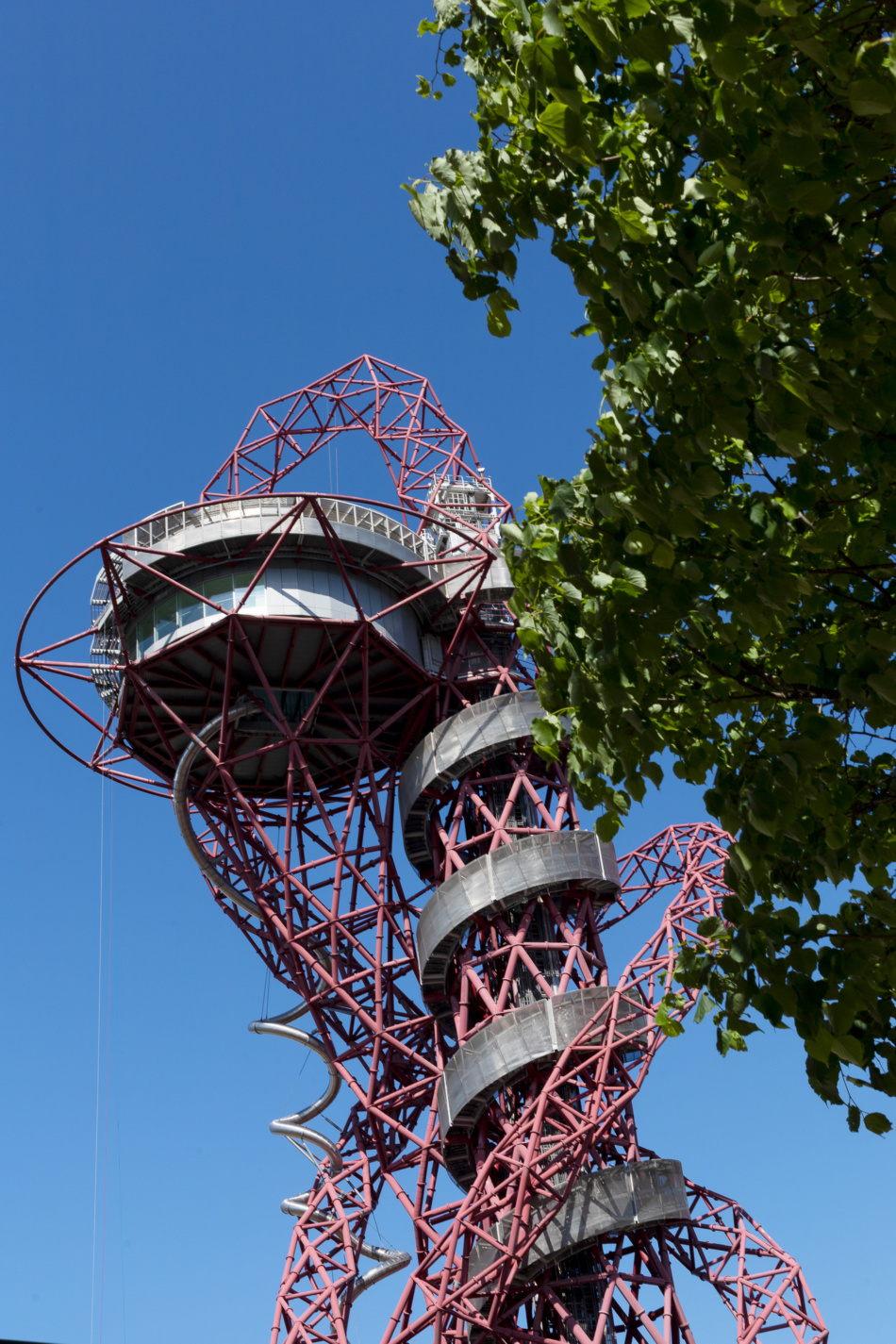

ArcelorMittal Orbit by artist Sir Anish Kapoor and designer Cecil Balmond
Towering at 114.5 metres tall and constructed using recycled steel, it is the UK’s tallest sculpture. It takes the form of a continuous loop from start to finish, a creative representation of the 2012 Games and the extraordinary physical and emotional effort that people undertake when they compete. And from its top you can spot not only many of the sculptures in the Queen Elizabeth Olympic Park, but also London’s distinctive skyline.


The Cost of Your Words by artist Fabio Lattanzi Antinori
It was installed in September 2021 at this site as part of The Royal Society of Sculptors’ First Plinth Award and it will be in place only for a year. The sculpture explores how our online choices are influenced by algorithms, and invites the viewer to reflect on the kind of freedom we experience when talking about free access to information.
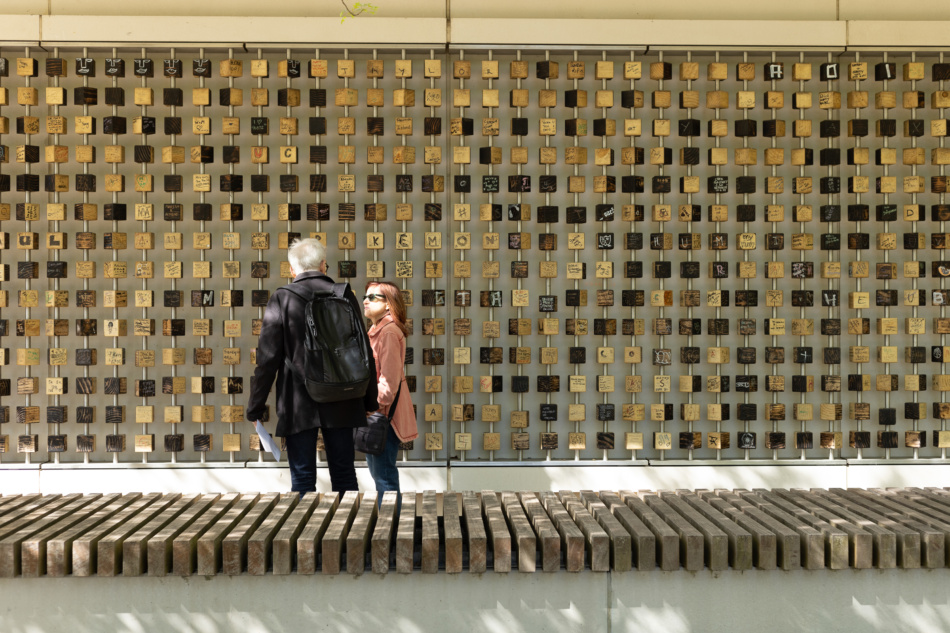
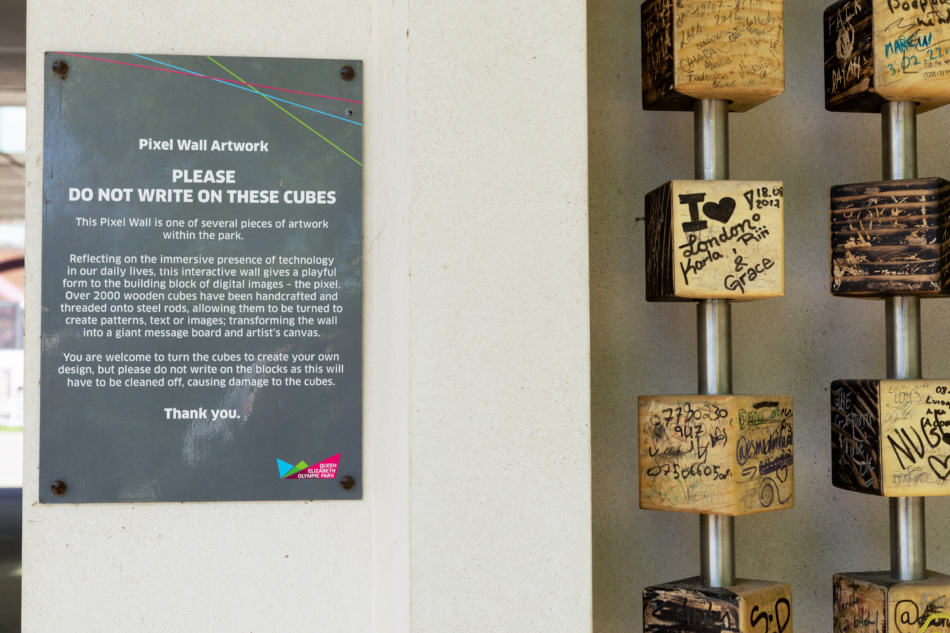

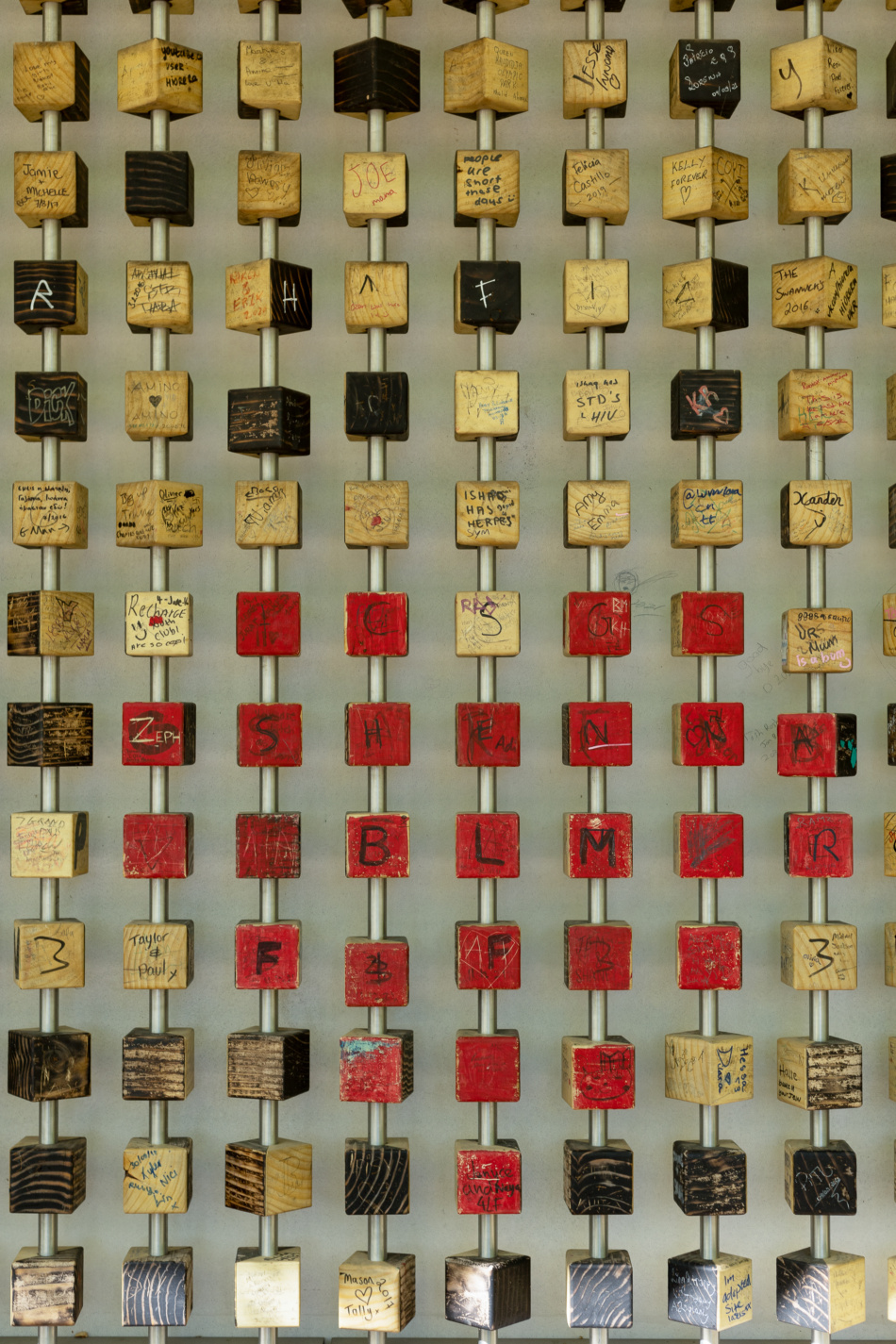
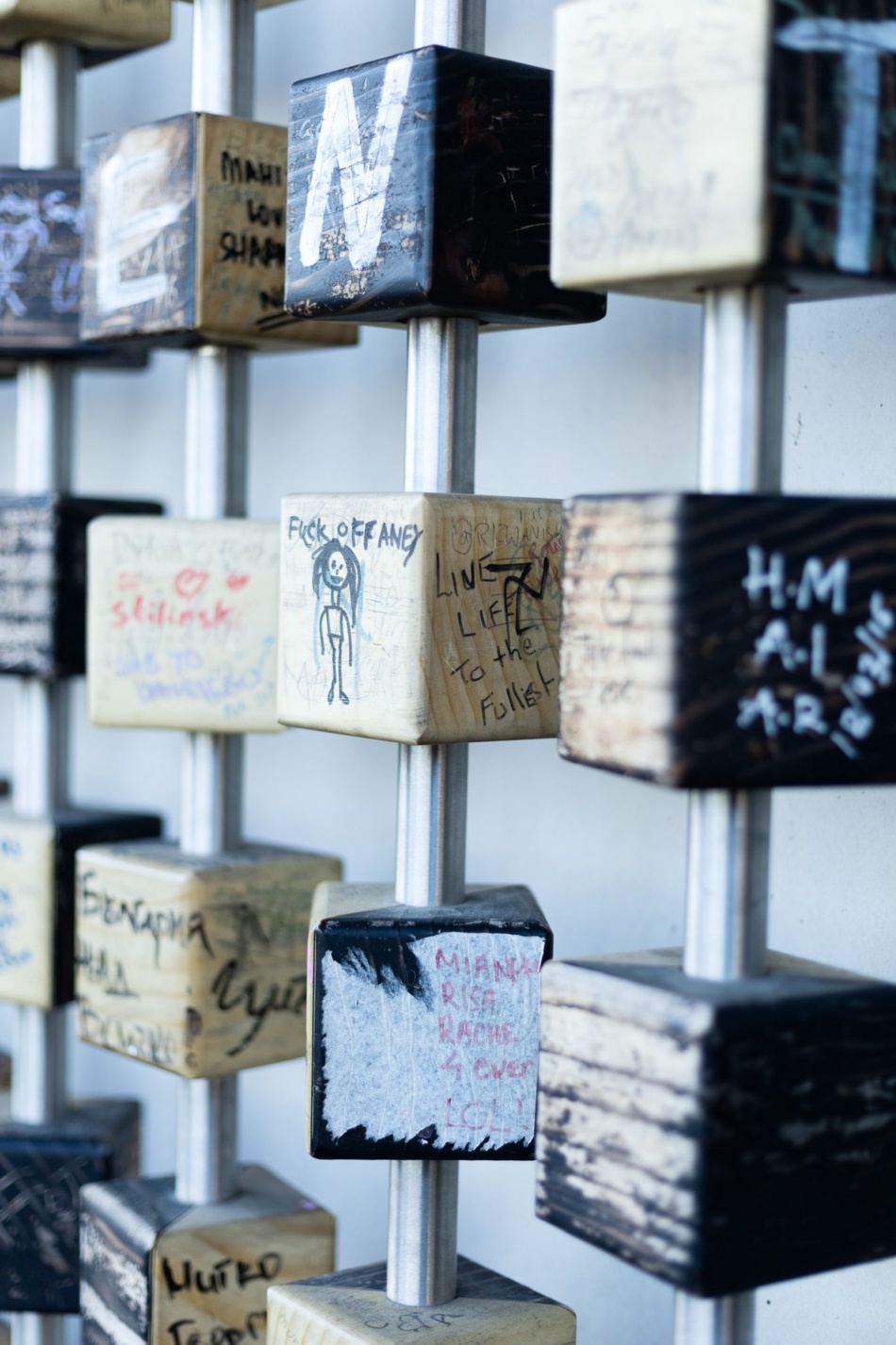
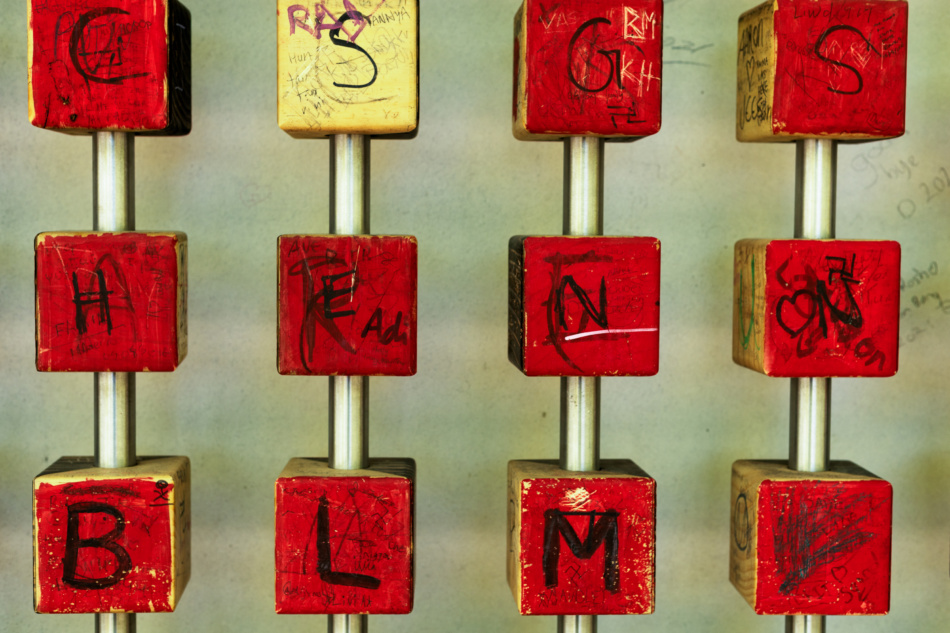
The Pixel Wall by Tomato, a London-based design collective
The Pixel Wall was created by Tomato, a London-based design collective. It was designed to be an interactive wall providing dark and light surfaces to be turned to create patterns, text or images. During a visit to the park, we observed how people interacted with the Pixel Wall, using it in their own way, leaving their own message behind. Some draw, others have sculpted their initials or written poems on it, despite the sign asking people not to write on the cubes. Even though it wasn’t supposed to be used that way, the contribution from the community seemed to have given another dimension to the artwork. What do you think?

Steles by artist Keith Wilson
Thirty-five striking and colourful posts line the Waterworks River, bringing a distinctive identity to one of the main waterways in the Queen Elizabeth Olympic Park. Both sculptural and functional, like a chain of minimalist pop monoliths, they evoke nautical waymarkers and have been made from the same durable material as navigational water buoys. The Steles are also practically useful as mooring posts, referencing the ongoing and historical activity of boats and barges in this area.
Curious fact: To install the Steles, a bespoke clamp was made that dropped each sleeve into place from a floating pontoon.
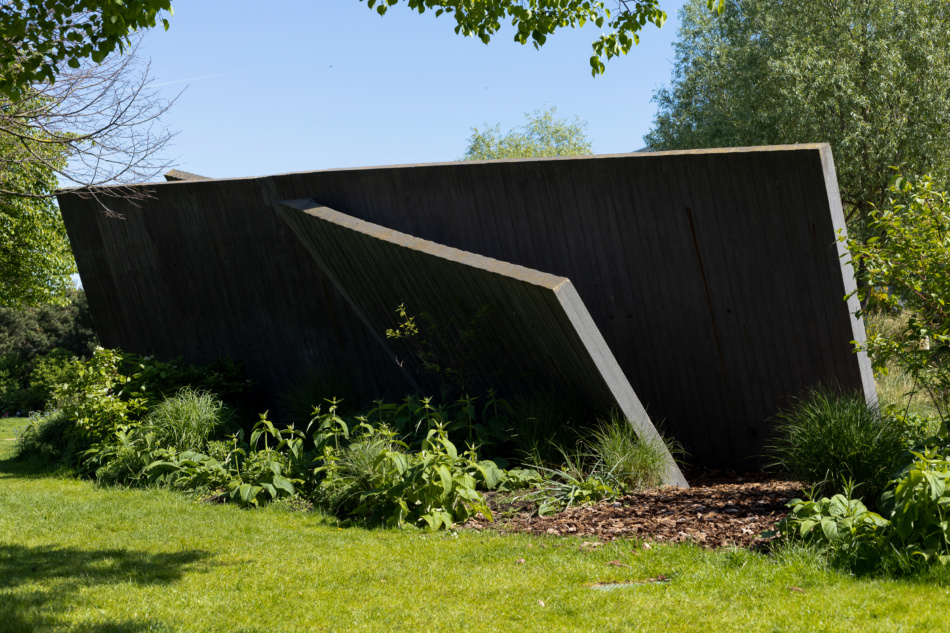
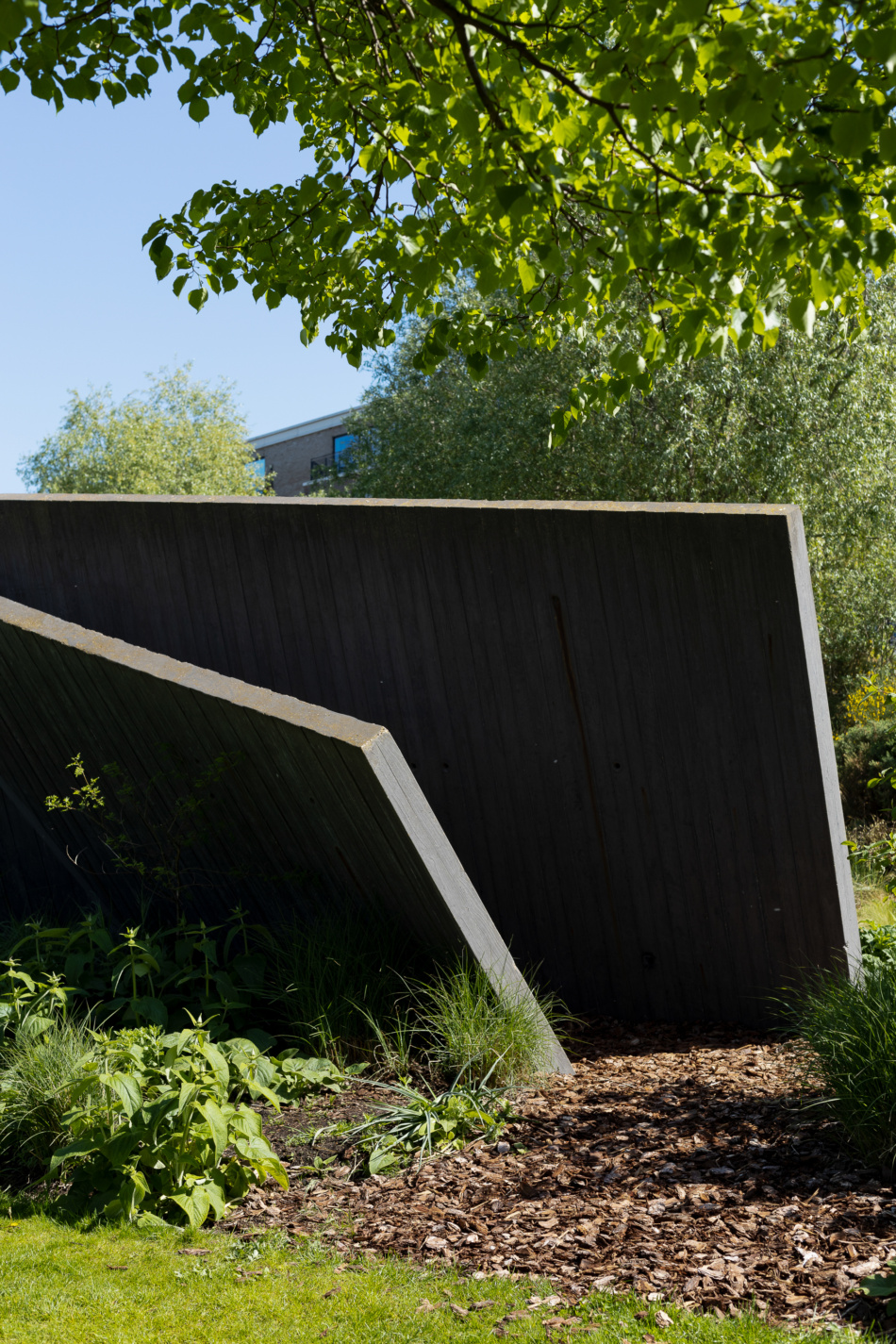
Cross and Cave by Heather and Ivan Morison
Emerging like ruins from the future, Cross and Cave appear as two elemental shelters that create inviting cave-like spaces within their simple arrangement of leaning concrete slabs. Cross has two shelter spaces, formed by intersecting slabs, while Cave provides a secluded space accessible from one side. The dark colour and angular construction reflect the industrial history of this area.

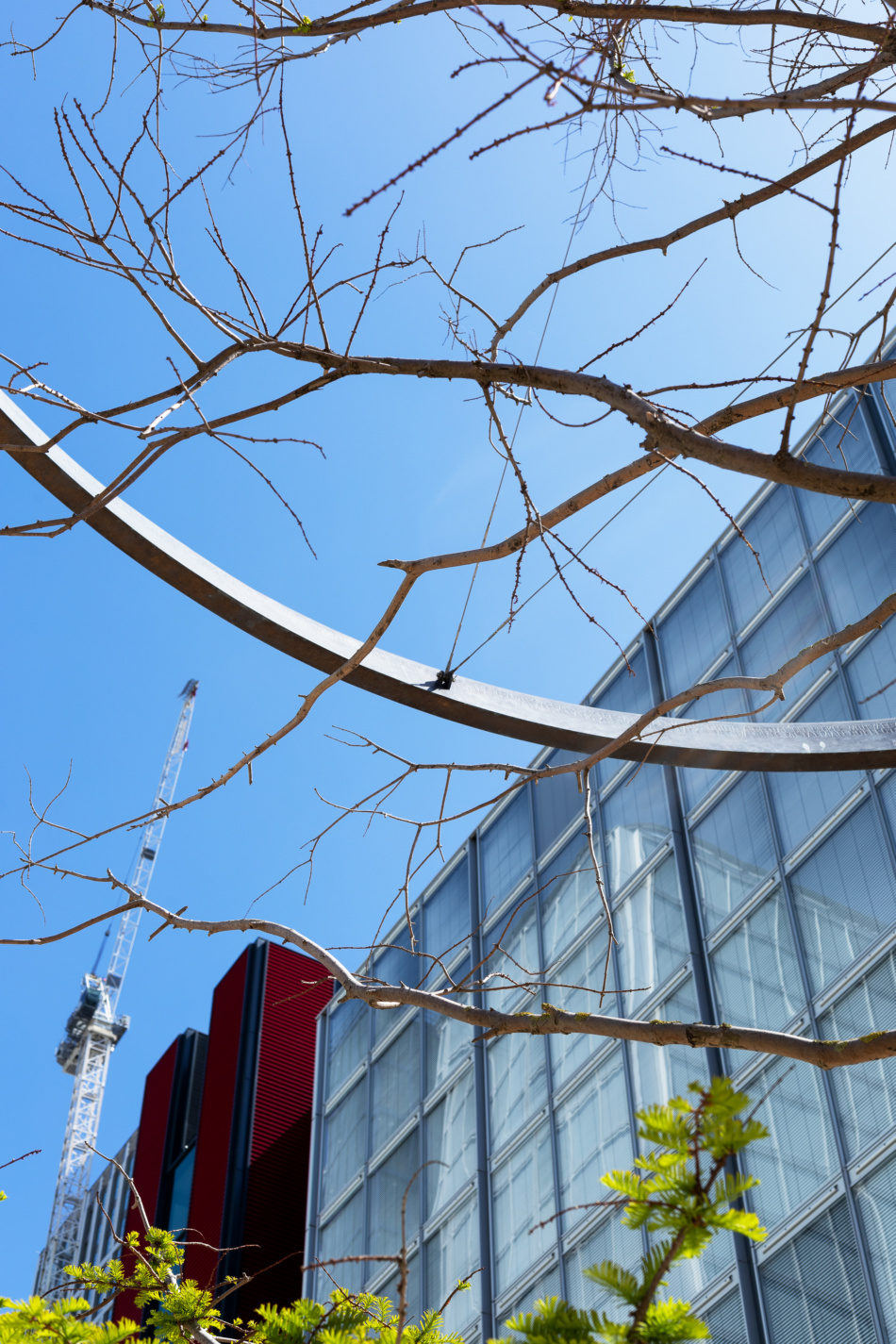
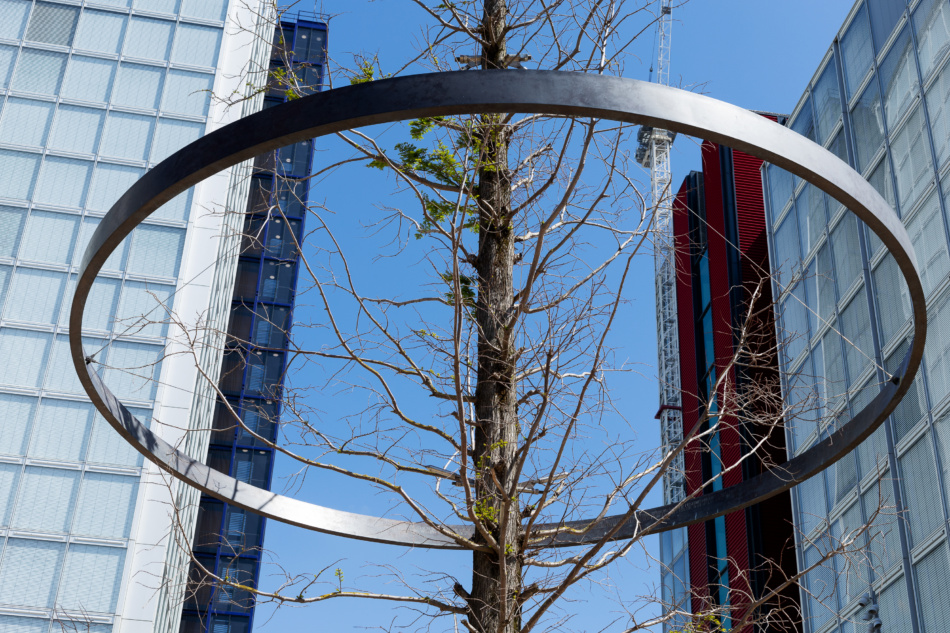
History Trees by Ackroyd and Harvey
British artists Ackroyd and Harvey created a series of living artworks to mark the main entrances of the Park. Ten specimen trees, chosen to reflect the biodiversity of the Park, each support a large bespoke metal ring within their crown. The rings, engineered from bronze or stainless steel, are six metres in diameter and individually engraved on the interior face with text capturing an archive of history from each location. For the full inscriptions of each of the rings visit ackroydandharvey.com.
The History Trees was supported by Mapping Your Manor, a project by artist Lucy Harrison, who worked with local people to record shared stories and memories whilst construction on the park was still ongoing, in 2011. To learn more about this and her other projects, visit our record to see images and an exclusive interview the artist gave us reflecting on the legacy of this and other projects she worked on for London 2012.
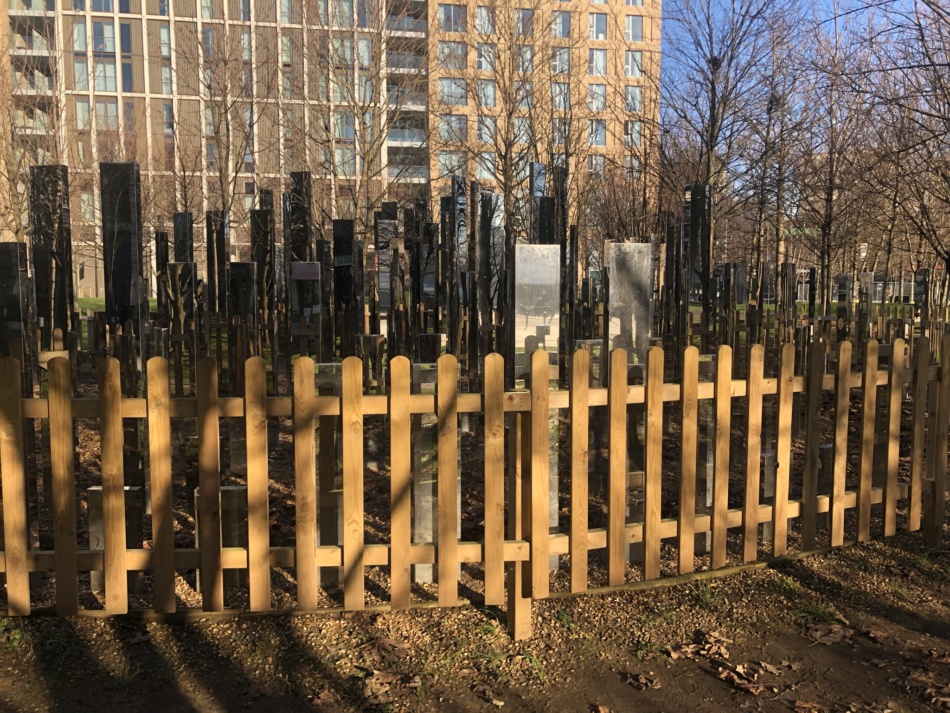
Mirror Labyrinth by artist Jeppe Hein
The artist often makes participatory art projects and for him “art has to come from the heart”. He designed the artwork (left) to commemorate the London 2012 Olympic Games. Taking the Olympic Rings as inspiration, the sculpture consists of multiple mirrored steel columns arranged in concentric circles, encouraging visitors to step inside the maze and enjoy the many reflections that play out across the mirrored surfaces and can easily confuse and disorientate the viewer.
Olympic and Paralympic Games symbols and Spiegelei Junior sculpture

Olympic Games symbol and Spiegelei Junior by Jem Finer. Image © Sylvie Belbouab
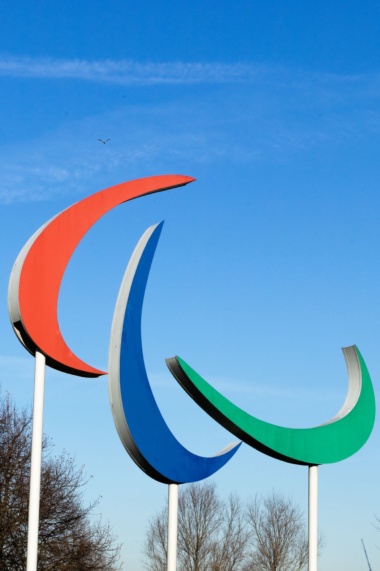
Paralympic Games symbol. Image © Sylvie Belbouab
The Olympic symbol has five interlaced rings in the centre: blue, yellow, black, green and red. This design represents the five continents of the world, united by Olympism, while the six colours are those that appear on all the national flags of the world at the present time.”
The symbol of the Paralympic Games is composed of three “agitos”, coloured red, blue, and green, encircling a single point, on a white field. The agito (“I move” in Latin) is a symbol of movement in the shape of an asymmetrical crescent. The symbol also reflects the Paralympic Motto, “Spirit in Motion,” representing the strong will of every Paralympian. They’re coloured red, blue and green, being the colours most widely included in national flags.
Spiegelei Junior by artist Jem Finer. Conceived as both a sculptural work on the outside and a working observatory on the inside, it reflects and inverts the surrounding landscape using the simple technologies of the mirror and the lens. Inside, the camera obscura creates an immersive, 360-degree panoramic projection, illuminating the spherical interior with an upturned image of the Park. The sphere also echoes with sounds from the outside world, transformed by the acoustics of the orbicular space.
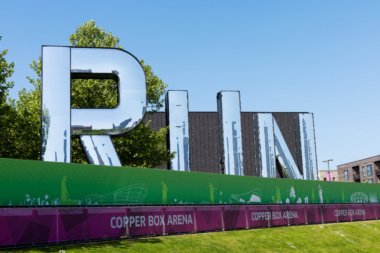
RUN by Monica Bonvicini. Image © Sylvie Belbouab
RUN by artist Monica Bonvicini
RUN by artist Monica Bonvicini is a glass and stainless-steel artwork made up of three huge letters by artist Monica Bonvicini, each measuring nine metres high. Inspired by the many references to running in popular songs, its meaning is deliberately ambiguous, both serious and satirical. The artwork represents a bold architectural statement on one of the highest points of the Park. In daylight, RUN is a vast mirror for you and your surroundings. By night, the letters glow with lines of internal LED lighting that seem to extend endlessly into the mirrored interior.


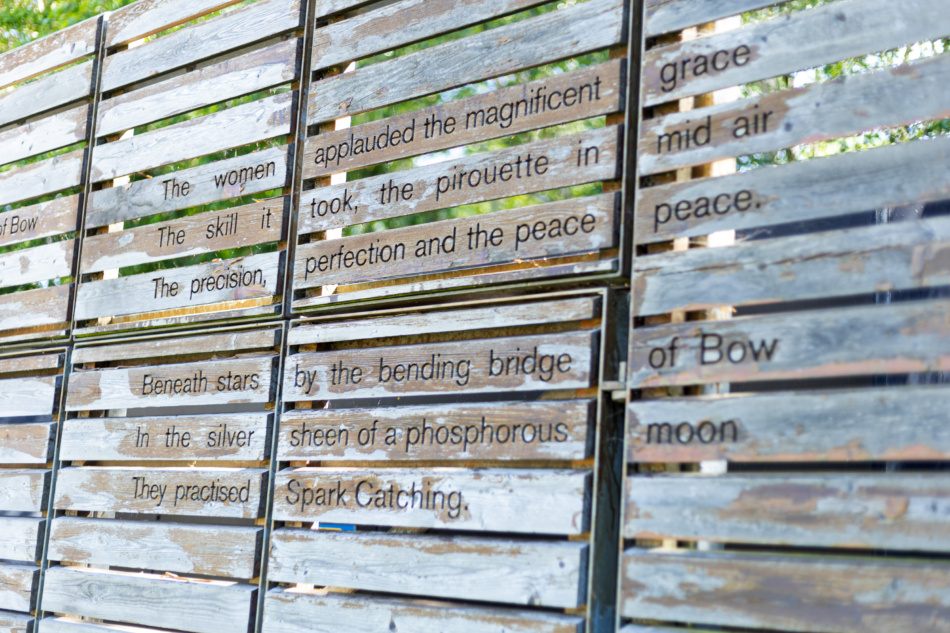
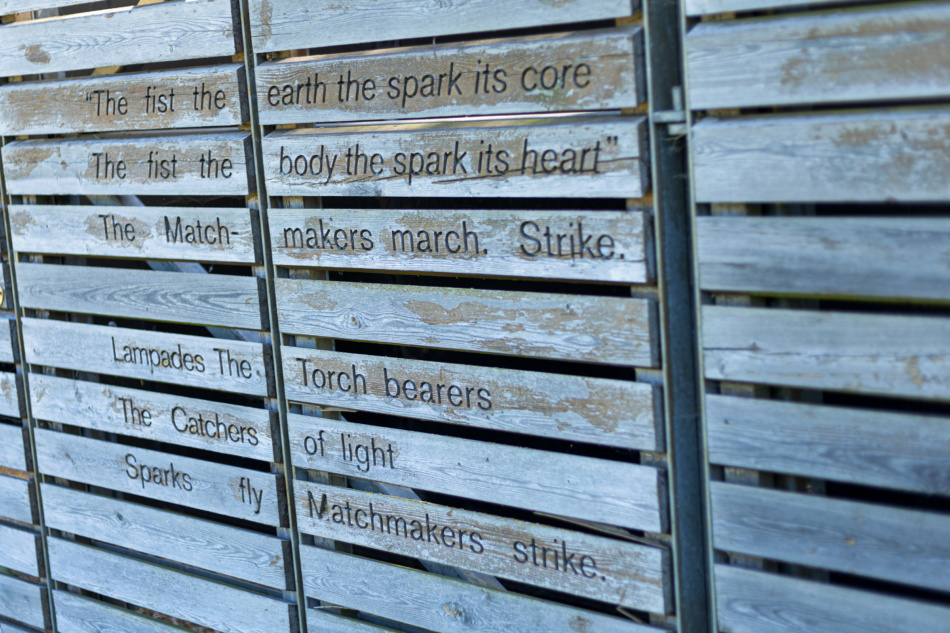

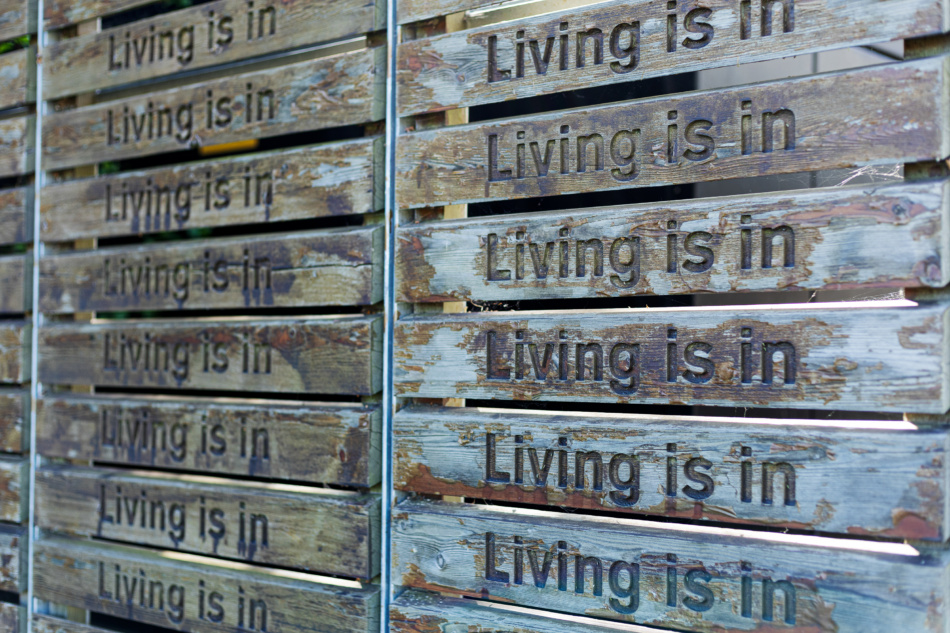
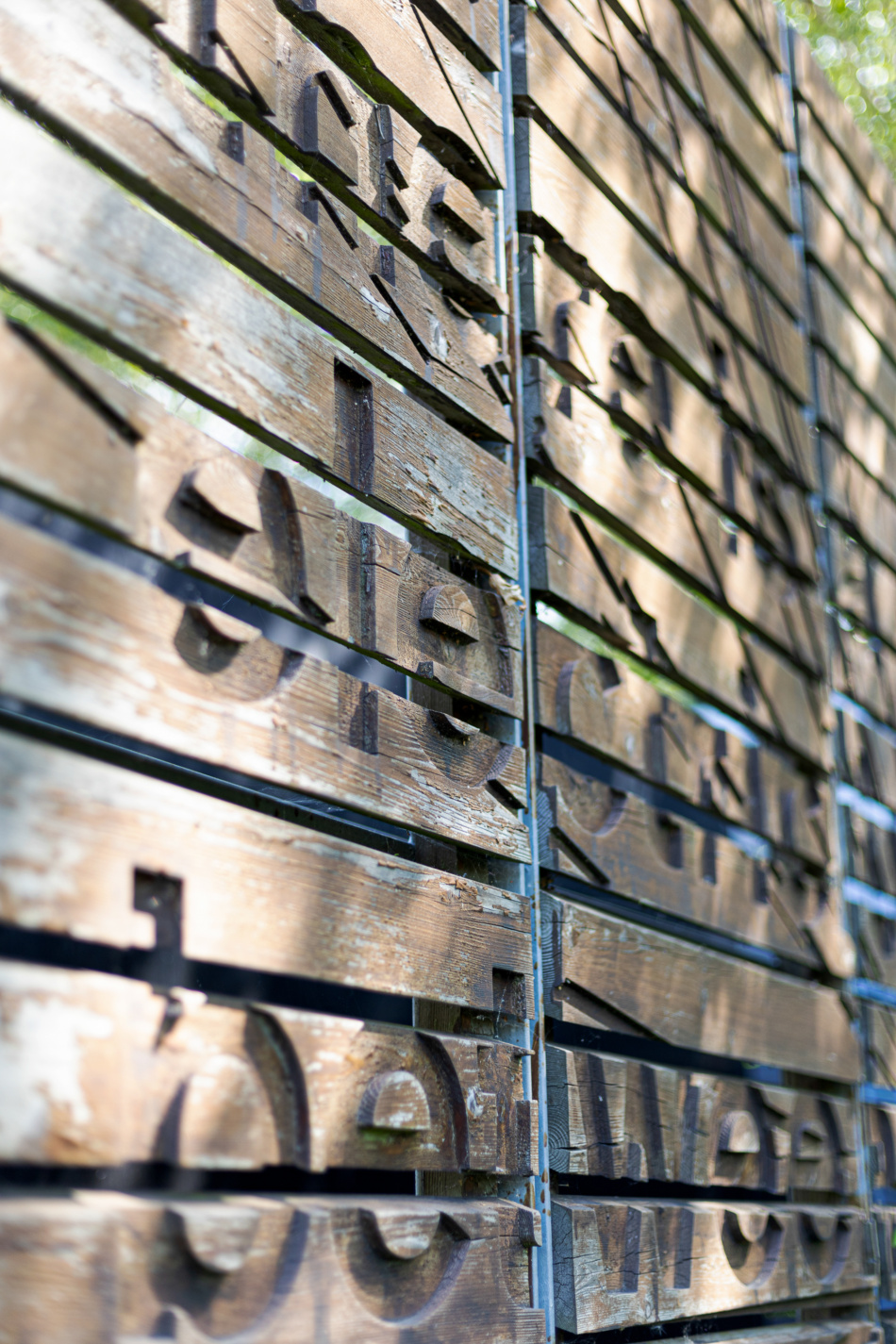
The Spark Catchers by Lemn Sissay
The Spark Catchers by Lemn Sissay is inspired by the former Bryant and May match factory and the first strikes in British history that took place there, led by women’s rights activist Annie Besant. The factory women, many of whom were younger than 16, protested against their appalling working conditions which caused them both injury and illness. In 1888 when the factory’s owners erected a statue of Prime Minister William Gladstone paid for, in part, by the workers’ wages, the women took action and refused to go to work.
Sissay’s poem presents the factory women as ‘spark catchers’ – people affected by a momentary ‘spark’ who allow it to grow into something larger. The poem plays with the word ‘strike’, to mean both igniting a match and going on strike from work. Sissay also calls attention to the nature of fire, which, like the factory workers, can be unpredictable. ‘The Spark Catchers’ is itself an explosive poem, and the fact that it clads one of the electricity transformers on the Park is particularly appropriate.
POETRY PERFORMANCE INSPIRED BY THE PARK AND ITS SCULPTURES
We invite you to have a look at our other records in the NHM’s website and to join us commemorating its 10th anniversary on Sunday 19th of June, from 2.30-3.30pm, at the Timber Lodge, for what promises to be an electrifying poetry performance inspired by the park and its sculptures. Book your free ticket here.
ART IN THE PARK GUIDE
If you wish to explore the Queen Elizabeth Olympic Park further and search for more sculptures, here is a link to download the Art in the Park brochure and guide.
RESEARCH RESOURCES / BIBLIOGRAPHY
https://www.queenelizabetholympicpark.co.uk/the-park/things-to-do/arts-and-culture
https://www.queenelizabetholympicpark.co.uk/-/media/art_in_the_park_trails-booklet_web.ashx?la=en
https://www.ackroydandharvey.com/olympic-commission/
http://www.ackroydandharvey.com/wp-content/uploads/2017/01/A1_Final_Layout.pdf
https://www.paralympic.org/video/paralympic-symbol-what-does-agitos-mean
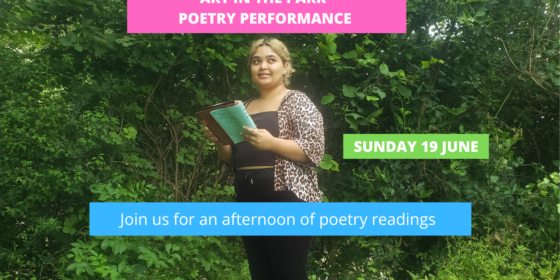
Join us for an afternoon of poetry readings by young Newham residents inspired by a tour of Queen Elizabeth Olympic Park FULL DETAILS +
Additional record details
- Contributor: Sylvia Morgado and Sylvie Belbouab
Heritage newsletter
We would like to send you monthly emails spotlighting heritage content in Newham, as well as updates and opportunities to be involved in next year's festival. Be the first to hear about new projects, funding opportunities and ways to be involved.