Eastside Community Heritage – Tubular Bells and Copper Flowers
About this record
This project explores what is was like to take part in the 2012 Olympic and Paralympic opening ceremonies via a series of interviews with individuals who danced, drummed, operated chimneys, spun umbrellas and moved in time together to achieve the most spectacular welcoming displays that are remembered the world over.
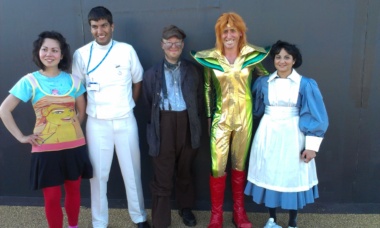
Behind the scenes of the London 2012 Olympic opening ceremony 27/07/2012
Many people who took part in the opening ceremonies had no previous experience of performing, they just wanted to be involved. They had no idea of how the opening ceremonies would be received. They gave up their time and rehearsed in empty industrial space or car parks.
For many the impact of taking part was life changing and something that stills remains a magical part of their life – even today.
The title of this project comes from music by Mike Oldfield played at the 2012 Olympic opening ceremony entitled Tubular Bells and the Copper flowers related to the Olympic flame cauldron.
This project involved interviewing people who took part in the 2012 opening ceremonies then using material from these interviews to inspire workshop participants from a range of diverse groups to create artwork and a group podcast. The artwork was then used to create banners for display in Newham Parks.
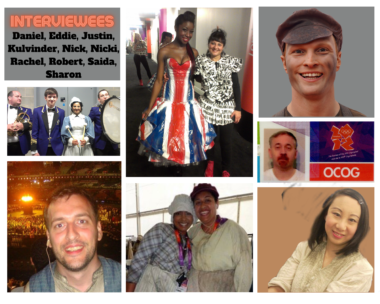
Saida
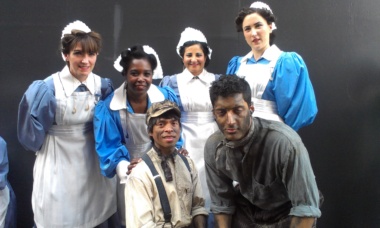
Behind the scenes on the 2012 Olympic Opening night featuring Saida in costume for the NHS, nurses scene (Saida is third from the left on the back row).
Saida who was working or the NHS at the time, was on her lunch break when she heard that the UK have won the bid to host the 2012 Olympics and Paralympics.
“I was in the cafe and it was the most fantastic news and it really uplifted me, my morale and everything, and I couldn’t wait. And I’m thinking ‘I have to be part of this’.
Saida applied and was invited to attend an audition.
“I was really nervous, because next to me were people that were like models and things like that – I think they had people from all kinds of backgrounds. This person next to me, I think she must have been a professional model or something because there were all these cameras with a really long lenses pointing at her, and I’m thinking ‘What am I doing here? Because I’m just an ordinary person. I think I’m in the wrong place’ and I nearly walked out”.
“The audition itself was fantastic was so much fun, they made it so much fun that even now when I listen to the music from the audition, oh my God, I still get excited, I get butterflies in my stomach, I turn it up really high when I’m in the kitchen and I’m cooking, and it transports me back into that stadium, and also during the audition it was fantastic”.
Saida was invited to attend a second, NHS audition, where interviewees danced in rows in front of judges
“I’m not a dancer, I’m thinking ‘I’m not a dancer’ I just did my best and I thought they were looking for was enthusiasm, smiles, and your energy.”
I wondered, ‘Have I been accepted or not?’. Then came the email and oh my God, this was the most exciting news ever!”
At rehearsals volunteers were given headphones to hear instructions, as well as food, and a travel card. A shuttle bus was available to transport volunteers from Dagenham East station to the rehearsal site. Little markers were added to the floor, so volunteers knew where to stand. When Saida was finding some of the steps difficult she would go to Hyde Park after work, and practice.
“We all supported each other, and then came the big moment when we all had to move from Dagenham to the big stadium, which was now ready to receive us – and when we got there, oh my God, butterflies. Suddenly, the sense of the, the enormity of the occasion came over, came to us. It was like very over- overwhelming, you know?”
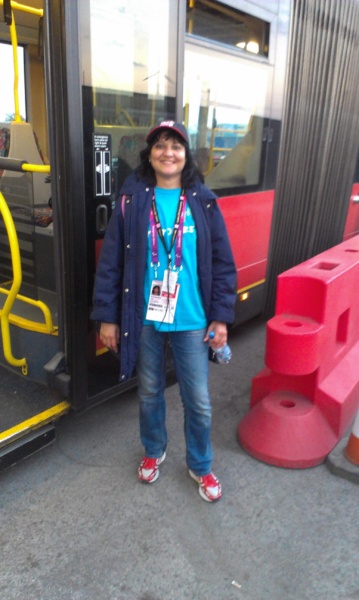
Saida by the shuttle bus.
It wasn’t until the dress rehearsal, that volunteers got to watch any of the other scenes.
“We were having a sandwich and we were watching it, and oh my God, when those drums, drummers came roaring from the aisles, from the side steps where we were sitting – I mean you just heard huge thumps in your heart. It was the most amazing experience and I couldn’t believe it, I’m thinking ‘Oh my God, all these people that will be coming to see this tonight for dress rehearsals.”
On the night there were a few changes and surprises like the James Bond scene that Saida and the other nurses peered out of the voms (tunnels leading to the stadium) to catch a glimpse of. “The excitement and everything, it was just it was just incredible, it was like out of this world, it was fantastic. And then it was our time to go on and there was no thinking – you just went into auto mode. If I start to think about the sense of the occasion, I’ll get, you know nervous. So, you just went into your, into auto mode and you knew you had to be perfect. If my timing wasn’t perfect, our bed would collide with the big double beds. We had lots to remember, but one step at a time and it all worked up perfectly”.
“The dressing room, it was absolutely buzzing. Everybody was so supportive with each other.”
Hairdressers and costume people showed volunteers how to apply make-up and hair from the time period there were representing.
“Everybody helped each other. And it was one big family and it was fantastic”.
“We took so much pride in doing it, and um the whole thing was fantastic”.
“At the end of it, up at the backstage I remember videoing my little group and we all just said ‘We did it’ and that was it. And that was fantastic. Yeah. And er and yeah at the backstage, after it was finished, it was the most spectacular sight, because you had all these again, you had, like, steps going up to the top to leave the stadium and the backstage. And you could still see rivers of blue and white nurses and all the performers at the back. And that was an amazing sight, it really was. It is the most, most fantastic, most moving experience, especially if you are just an ordinary person doing an ordinary job all day and to be able to get away from that and to be part of something amazing like this, is an honour to be part of it”.
After the games were over, drummers from the Pandemonium scene started up a group, which Saida joined, and she stills drums with them.
“I’m not from a musician background at all and that’s the beauty of it. You know, even if you’re just an ordinary person, it’s such a good way of de-stressing, um, after a day’s work. Through this drumming group, we do lots and lots of volunteering, it’s great, it just feels good, contribute for good for somebody else”
Saida has applied to take part in the Commonwealth Games opening ceremony.
“I will never look at an opening ceremony in the same light anymore and I just know like what they’ve gone through – and I would encourage anybody who has never done it before to give it a go, because it is the most fantastic experience and I’ve learned so much and it’s great”.
Robert
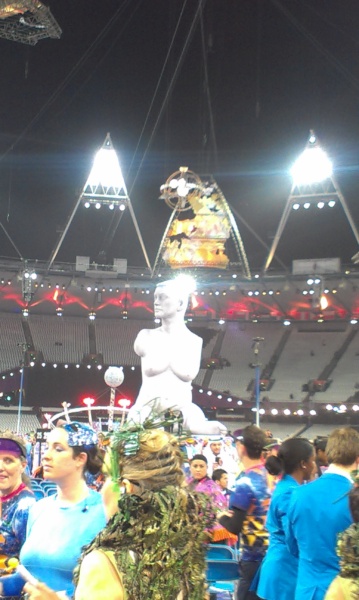
Scene from the Paralympic opening ceremony
Robert was captain of the volley ball team, but decided to stand down to enable other team mates to have a chance of applying to play at the Paralympics. Robert received a letter to attend an audition for the Paralympics opening ceremony, and he decided to go along.
“I went along to this large studio in Docklands and I could see hanging from the ceiling there was trapeze and ropes and silks and other things, harnesses, and I thought this was going to be a strange interview! They put me basically in a harness, through a series of tests to see if I could do this, that or the other.”
Robert was asked to attend circus school. At circus school everybody tried out a range of different skills to ascertain what they were good at.
“It was the hardest I’ve ever worked in my entire life. I’ve never worked physically that hard ever, even when I was a Paralympic athlete. My upper body strength went through the roof because of trapeze – just getting on the trapeze is a difficult task in itself. I have really fond memories that I’m sure all of us do and, I made so many new friends.”
On the night Robert was able to meet up with friends who were taking part as athletes.
“It was a great reunion with the other guys who were taking part and catching up with them, telling jokes, keeping the mood kind of light. So, I wasn’t really nervous before I went out, but when I got out there and then I started to brick it. I was having a problem with my armour that they gave me because there was just a couple of ties to it. it felt like it was gonna pop at any moment. I had to hold it on”.
“It was extraordinary and an even more extraordinary feeling once you’ve done it, and you know, it had gone really well. Certainly, from my perspective, it had gone really well. And, you know, obviously, the producers…loved the whole thing. It was astonishing. And I could hear people from the British GB squad, who were friends of mine, beneath me as I went across, cheering me and waving”.
Robert went back to circus school.
“I did some little bit more advanced stuff on a static trapeze. Because I love being on a trapeze and working on that. But it kills you”.
“The best part for me, was, you know, being a part of that whole circus school group of people doing the impossible things. You know, as amputees, you never thought that you…not for a million years would I thought as an amputee, that I was going to be able to get on a trapeze. And to see the guys with two legs missing, getting on the trapeze is even more incredible. Yeah. You know, so absolutely amazing”.
Kulvinder
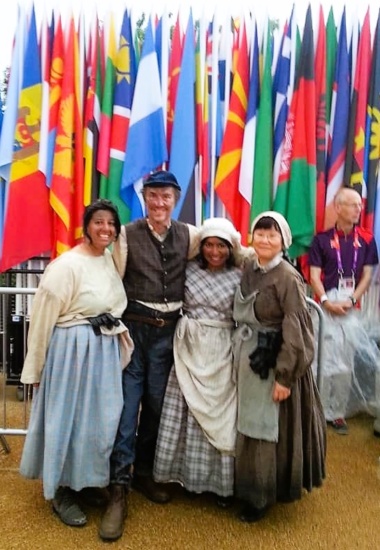
Kulvinder pictured with fellow volunteers
Kulvinder applied after seeing an advert.
“I thought OK well I’m a Newham person, um you know I’m born in Newham and I was working in Barking and Dagenham – I thought I can get there and I can, you know, I can go and try out. I’m a very proud Londoner, so it was nice to have something from our area. You know, it’s sort of really bigging up Stratford which was good. So we were gonna be the face of the world for the Olympics, the focus is on us! You know, our country, our city, so that’s why”.
“The first audition just made you realise how many people were involved, and what a mix of people there were.”
At rehearsals in Dagenham they were partnered up with a buddy.
“My buddy was Jerry, and then we made friends with people either side of us. So we got into quite a tight group of about eight of us, and it was you know just the most glorious experience. The rehearsals, chatting, getting to know each other, seeing how things work, looking at the professionals, meeting people that we wouldn’t normally meet, and dancers. So yeah, it was amazing!”
“Our section was about ten to fifteen minutes long, and we were gonna be the first part of the ceremony. They said these chimneys are gonna come out of the ground, and I thought ‘What, at Stratford?!’ Where are they gonna hide these chimneys underground at Stratford? I couldn’t picture it at all. I knew we were working men and women and we were gonna be ripping the land in the Industrial Revolution element of that. Danny Boyle told us that the rings were gonna be put together in our section. We all just kind of took a big gulp and thought ‘Wow!’, you know, that is the part – that is the biggest part of the ceremony really, when the rings come together. Every time we saw those rings, we would all get a lump in our throat, we’d all be tearful, we’d all get wobbly”.
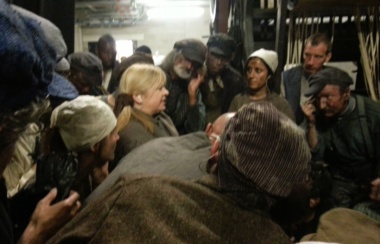
Rehearsals in progress
“Danny Boyle, we can’t say enough about him – he was so approachable, so helpful, so humane, so compassionate about what he was doing and about supporting us. And he was always available to chat, he’d always sort of walk amongst us, talk to us, and he was very open with his time as well, he was there for every rehearsal, which was amazing considering, who he is.”
On the day of the opening ceremony, excitement grew.
“We met for lunch then we walked down and it was really taking the whole day in ‘cause we knew it was gonna be something enormous and it was gonna be just so great. Then it rained, and they told us to take our sort of bib thing in case it was raining during the ceremony. I felt such excitement, such pride and we were just on fire with just feeling. And we walked across the A12 and we were in costume and all the truckers and the lorries were beeping us as we went. They could see us going over, and it was like ‘Wow!’ You know this is so good ‘cause, you know, London has come alive.
It was, you know, the proudest moment of my life – I’m a mother, I’m an award-winning teacher, but it was the proudest night of my life. I could not be any prouder of what we did that day and just, you know, being a part of it. We were lucky enough to see the rest of that evening as well, so we went back. We were meant to get changed and then leave, and then we did sort of get back in and have a sneak at what was going on so yeah, it was amazing. My placemat, it’s right here by my desk ten years later, ‘cause I look at it and I think, I’m in that picture with the first ring and I know that’s me. That’s my screensaver on the computer because it, I couldn’t be any prouder of my city, of Newham, of our country, because we did something crazy and it was such a good opening ceremony.”
Kulvinder kept her Olympic memorabilia and her costume. She has made long lasting friendships.
“We’re very close, I’ve been on holiday with some of them. We go out to lunch, we meet up regularly.”
Audio clips
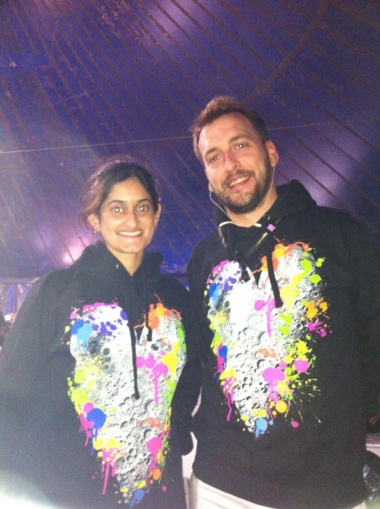
Big top rehearsal space in Dagenham
Audio tracks from Eastside Community Heritage’s project
Sharing memories, learning and creating artwork
Eastside Community Heritage ran a series of workshops with different community groups across Newham to share learning, connections and memories around the 2012 Olympic and Paralympic opening ceremonies – as well as express those connections in art work.
This art work will be used to create banner designs and will be displayed in various parks across Newham.
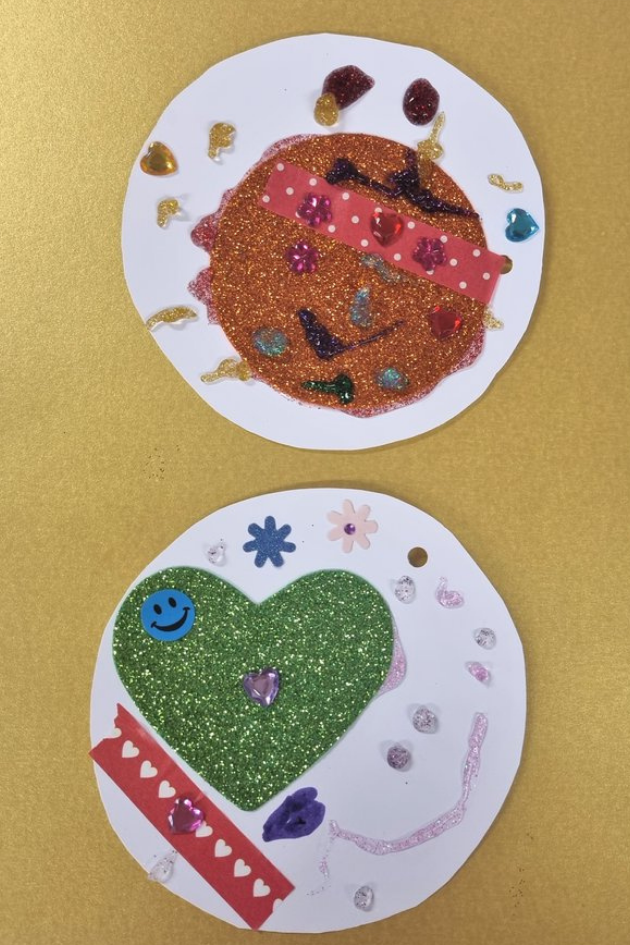
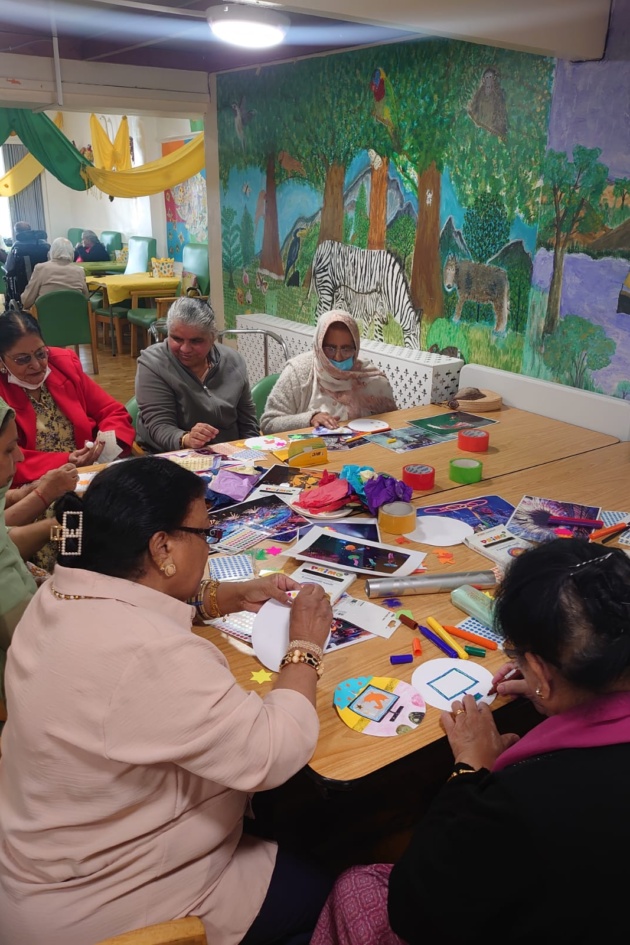
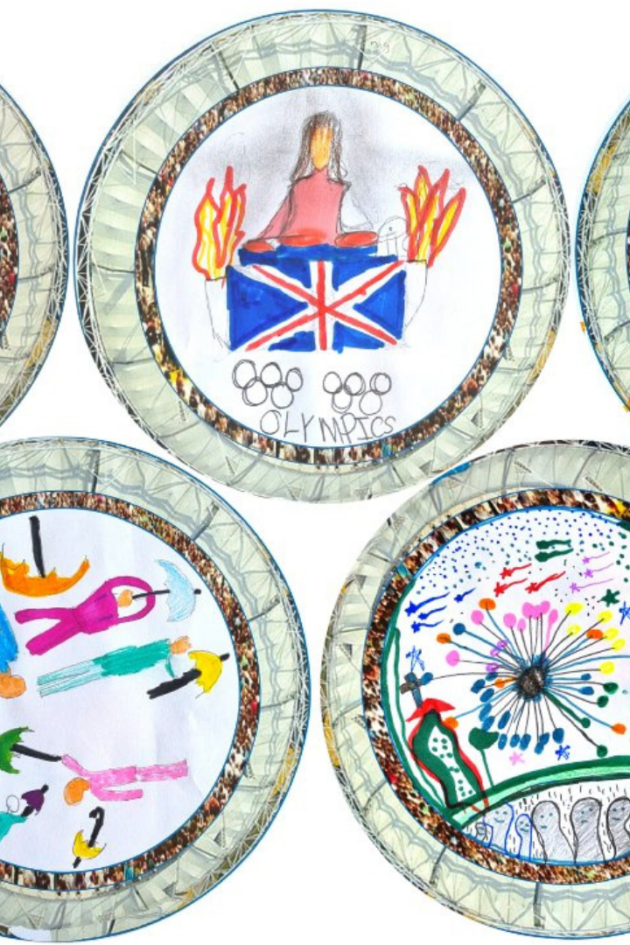
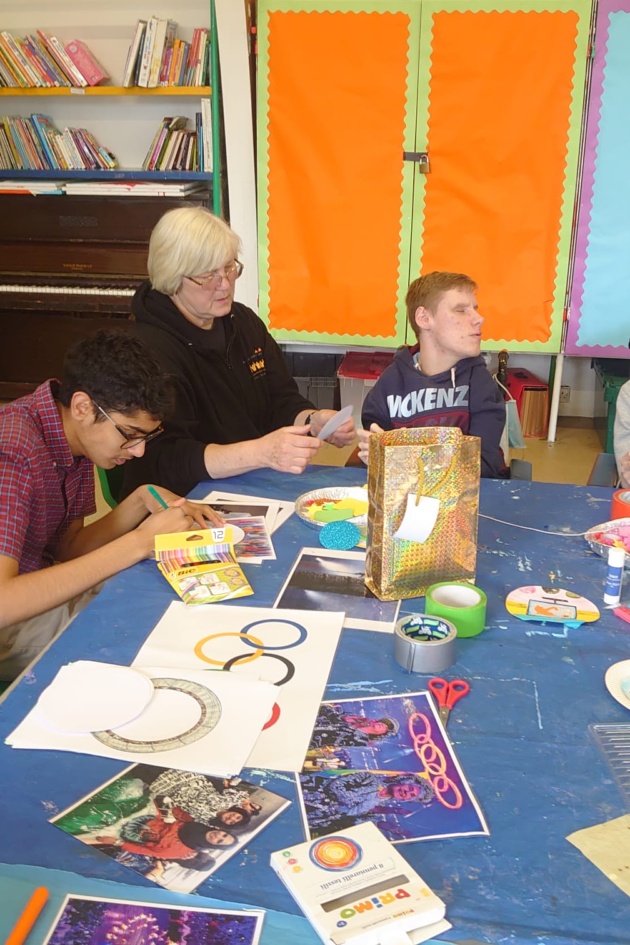
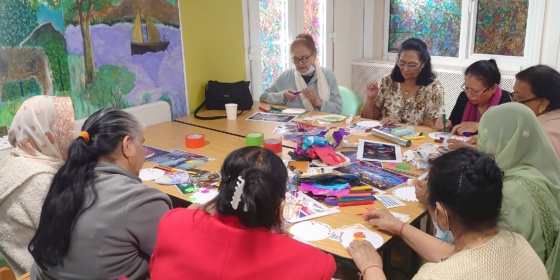
An interactive workshop where you can share your involvement in the 2012 Opening Ceremonies and help make a commerative banner. FULL DETAILS +
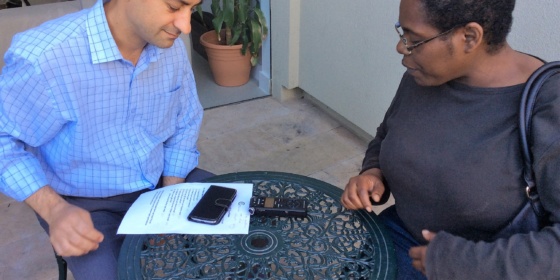
Join us to make a podcast about the London 2012 Olympic opening ceremonies FULL DETAILS +
Additional record details
- Contributor: Eastside Community Heritage
- Type: SoundsWriting
- Location: Olympic Park
Heritage newsletter
We would like to send you monthly emails spotlighting heritage content in Newham, as well as updates and opportunities to be involved in next year's festival. Be the first to hear about new projects, funding opportunities and ways to be involved.