‘Hear My Voice’- Stories From The South Asian Diaspora: Sokha Devi
About this record
This record is about Sokha Devi’s personal connection to Newham’s Arts and Cultural Heritage.
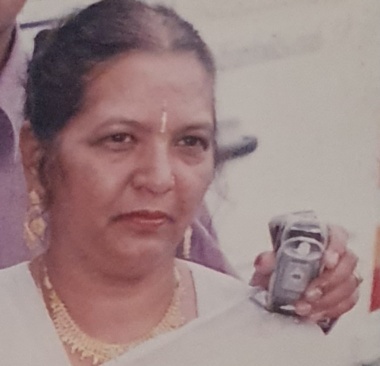
Sokha Devi © Partap Singh
Born in 1948 in a small town of Punjab in India, Sokha Devi had never imagined life’s circumstances would bring her to the UK. When in 1977 her mum received news from relatives in Southall in the UK, of a prospective groom’s interest in marriage for her only daughter, her instant delight was evident for days and upon Sokha’s approval, arrangements began to prepare for her to travel to England and marry Partap Singh.
I learnt of Sokha Devi’s story during the interview she gave for this project and my eyes welled up with emotion on more than one occasion. Her journey, her struggles and her joys formed a story many women of her generation here in Newham will easily identify with and relate to. It was an absolute pleasure conducting this interview with her and I hope her voice will reach many more people in the Borough and encourage them to connect with Newham Heritage Month and me for more stories.
Sokha Devi felt more at ease speaking in Punjabi for her interview and because the aim of my project was to give people in the borough a voice regardless of language, I happily respected her wish. Being bilingual was a massive bonus for me! Her interview will be translated to English where necessary.
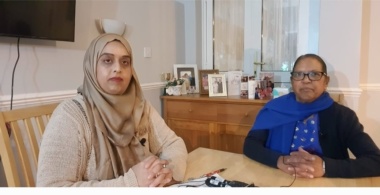
Sokha Devi © Farzana Hakim
Sokha Devi stayed with her maternal aunt in Southall for a year before she actually got married to Partap Singh in 1978. Her initial days like that of many women who emigrated as brides to South Asian men who’d already settled in Newham, were hard at first.
It wasn’t easy leaving behind my mum and siblings.
Here’s a clip of Sokha Devi describing her routine of when she first arrived and was living with her aunt in Southall.
Here’s a picture of Sokha Devi’s wedding which was taken in Southall hours before her life in Newham was about to begin.
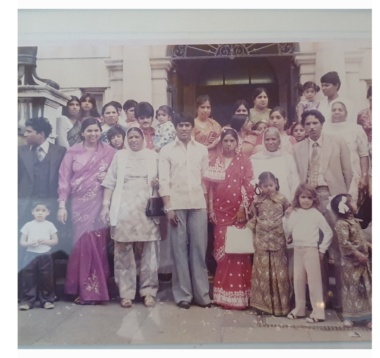
Wedding of Sokha Devi to Partap Singh in 1978.
© Partap Singh
Upon arrival in Newham, Sokha Devi, took up residence with her extended family on Stamford Road in East Ham. Here her days were busy doing household chores, cooking and shopping for groceries and going on the school runs. But she recalled these days as being pleasant because she enjoyed the company of her mother and sister in laws who she shared her house with. It was common in those days she said to live together in small houses because not many people could afford to rent or buy an entire property in Newham on their own.
Here’s a picture of Sokha Devi with her husband and children, as well as some of the other children living under the same roof:
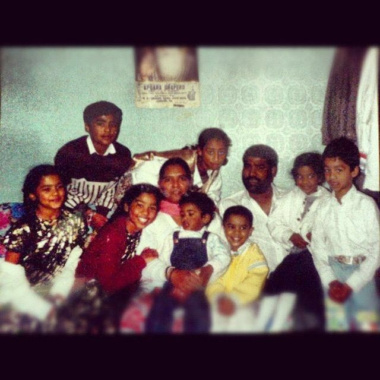
Sokha Devi and her family © Sokha Devi
Sokha Devi and Partap Singh finally moved out of the house on Stamford Road in 1987, when they were finally able to put down a deposit on a house on Cowper Avenue. Sokha Devi and her 5 children were delighted with the move as they now had the space and much needed privacy. This house is still their family home and Sokha Devi told me she would never move out or sell this house as it is her world.
Yet relations with the extended family continued to remain strong throughout the years.
All my in-laws were nice and we got on well. I was lucky to have them. Days passed peacefully and we would go to each other’s houses where we watched films from India and laughed and cooked food together and we ate together… Those days were good…
About entertainment, Sokha Devi said before the children were born, they’d go to the cinema regularly in Forest Gate to watch Indian movies but then when the children came it became harder to go out so they bought a video and would hire video cassettes from Indian film shops to watch at home. The films would keep the children entertained too. All her children really liked connecting to their Indian culture through Bollywood movies.
It wasn’t until 18 years later, after she arrived in Southall, that Sokha Devi was able to go back to India for a short visit. Recalling this, she became emotional and spoke of never having enough money to go visit her old home and her family back home.
It was never the priority to spend money on tickets to go visit my mum. There was always something which we needed the money for here. I was busy raising my five children and never had time to go back.
Her children didn’t know what India was apart from the India they saw in Bollywood films and TV. They spoke the language well and understood their cultural expectations though. This is typical of a majority of the third and fourth generation diaspora of South Asians, including myself.
Sokha Devi spoke at length about how having family get together on weddings, birthdays, Diwalis, Christmases, and in general, was important in the 80s and 90s as these get-togethers kept her connected to her culture. Despite not going to India, Newham’s inclusiveness meant they could easily go out wearing Indian clothes like sarees and shalwar kameez, and they could buy Indian products from any local shops. Although there are not many film shops around anymore, they still watch them on online screening platforms or YouTube. They are as popular as they ever were in her house!
About Weddings, Sokha Devi said she would dance the night away and they had many weddings in the family which gave her a sense of joy and a chance to relive some of the happy days she had left behind in India many years back.
Here’s a small clip from the interview.
Sokha Devi talked much about the diversity and multiculturalism of Newham and how that has kept her going for much of her life here.
I have my old friends in my neighbourhood as well as new friends. They are Bengali, Gujarati, Hindu, Pakistani, white and Black. I have a mix of friends from all cultures and backgrounds and this is why I like Newham and would never think of leaving.
Additional record details
- Contributor: Farzana Hakim
Heritage newsletter
We would like to send you monthly emails spotlighting heritage content in Newham, as well as updates and opportunities to be involved in next year's festival. Be the first to hear about new projects, funding opportunities and ways to be involved.