From Industrial Slums to Learning Hubs: The Evolution of Opportunity in Canning Town
About this record
In the 1800s, Canning Town bore little resemblance to the place we know today. East London—especially the dockland districts—was rapidly expanding into an industrial powerhouse. Shipbuilding, metalworking, sugar refining, and chemical production grew at unprecedented speed. Major employers such as the Thames Ironworks & Shipbuilding Company, Beckton Gas Works, and the Tate & Lyle refinery drew thousands of labourers into the area.
This industrial boom created employment and economic activity, but it also generated overcrowded slums, severe pollution, disease, and widespread poverty. Working-class families lived in cramped, unsanitary housing, while exploitation, insecurity, and harsh labour conditions shaped everyday life. By the mid-19th century, around 85% of London’s population was classified as working class. Mounting public concern among philanthropists and reformers helped spark the Victorian social reform movement. Legislation such as the Factory Acts began addressing hazardous working conditions, while the Public Libraries Act (1850) empowered local authorities to establish free public libraries—opening new pathways to knowledge and self-improvement for those previously denied such opportunities.
Why Public Libraries Were Revolutionary
For many working-class people—often labouring twelve-hour shifts, six days a week—formal schooling was rare. Only about one in three working-class children in London attended school regularly, and most left before age ten to enter the workforce. Free public libraries therefore became powerful tools for moral, intellectual, and social uplift. Philanthropists such as John Passmore Edwards and Andrew Carnegie championed libraries as instruments of self-help, public morality, and upward mobility. They believed libraries could:
- Promote self-education where schooling was limited
- Provide alternatives to idleness and crime
- Seen to encourage discipline, aspiration, and moral development
- Equip workers with technical and practical skills
- Support social mobility and independence
These ideals resonated widely. In boroughs like Edmonton, authorities recorded that “growth of stock and readers soon overtaxed the accommodation available,” demonstrating overwhelming public demand.
The Arrival of Canning Town Library and Its Impact
Recognising the acute need for educational and cultural resources, the Borough of West Ham (now Newham) prioritised Canning Town for library provision. Local workers themselves expressed how essential such a space would be. As one docker wrote in The Herald on 21 September 1892:
It would prove a great boon to many of my fellow workers throughout the winter months to have a place for shelter and recreation open to them.
He warned that without such provision,
hundreds of us fellows will find shelter in public houses, spending their hard-earned wages.
These testimonies reveal that the library was not simply a philanthropic gesture—it was a direct response to the needs of working-class residents who were seeking safe, affordable alternatives.
On 28 September 1892, the first permanent public library in the borough opened in Canning Town, accompanied by a public hall for lectures, meetings, and community gatherings. The library provided free access to books, newspapers, technical manuals, and a safe environment for learning. Improved literacy and access to information enabled unskilled workers to gain new competencies, pursue skilled employment, and navigate early forms of professional development. Local traders used the space to learn bookkeeping, correspondence, and business practices.
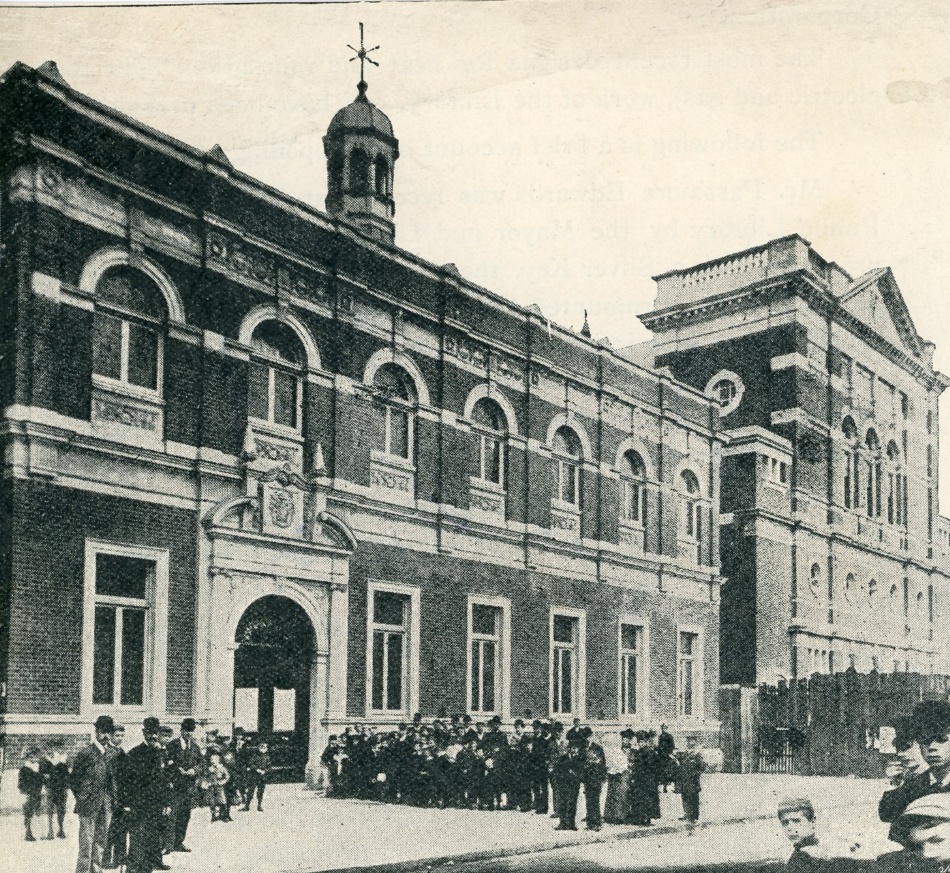
Keir Hardie, Political Awakening, and Social Change
Among the influential figures who used the public hall was Keir Hardie, founder of the Labour Party. Hardie regularly held meetings and rallies in Canning Town, raising issues such as wages, labour rights, and political representation. His activism deeply resonated with the community and contributed to the election of the first Independent Labour MP. As Hardie himself said, “The working classes are awakening to their own strength. It is my task to help them realise it.” His legacy remains embedded in the area today through landmarks like the Keir Hardie Estate and Keir Hardie Recreation Ground.
Both the library and the public hall became catalysts for political awareness, collective organising, and personal empowerment—helping shape a more informed, socially conscious, and increasingly entrepreneurial working class.
Rathbone Market: A Product of Local Enterprise
Alongside the growth of civic spaces, Rathbone Street Market began emerging as an informal trading area serving dockworkers and local families. Initially unregulated, it quickly evolved into a bustling economic hub. For more than 60 years, it became one of East London’s busiest markets, supporting micro-businesses and local livelihoods. In 1963, the market relocated to its current site opposite the former Canning Town Library and was formally recognised with allocated trading pitches.
The market’s decline began in the 1980s, following the collapse of the East London docks and the disappearance of thousands of industrial jobs. Falling incomes, competition from supermarkets, and long-term economic stagnation dramatically reduced footfall. Although regeneration efforts continue, Rathbone Market has struggled to regain its former vitality. The new Canning Town Neighbourhood Library now provides storage for remaining traders in an effort to support their work.
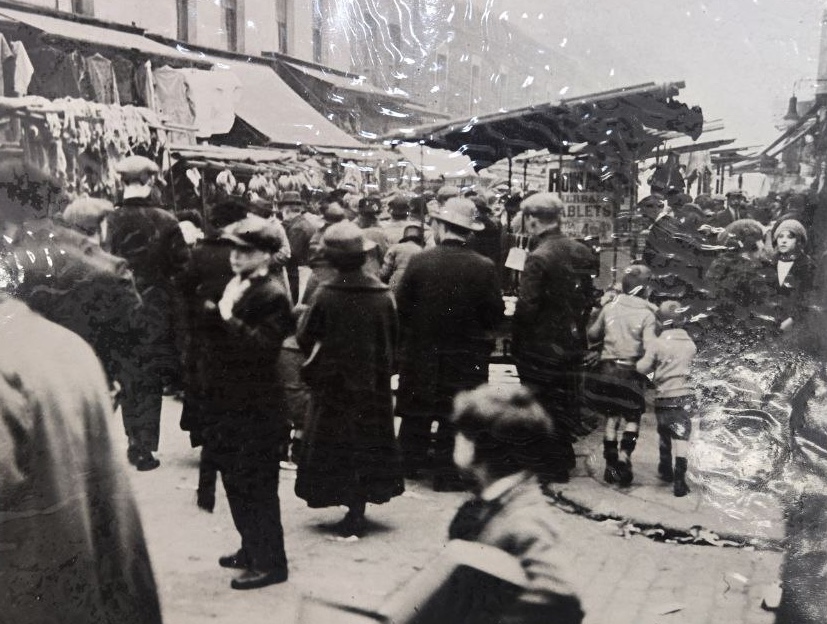
Contemporary Reflections from Local Traders
Conversations with local business owners reveal that while they value the library, many feel it no longer provides the specialist tools or support needed in today’s economic environment. A relative of a long-standing Nigerian restaurant owner described the library as helpful but lacking in business-focused resources. Yet he also described Canning Town as resilient—a community of self-starters who have “come to build their dreams.” Despite persistent inequality in Newham, a strong culture of informal entrepreneurship and mutual support endures, rooted in the area’s long history of self-improvement and accessible civic spaces.
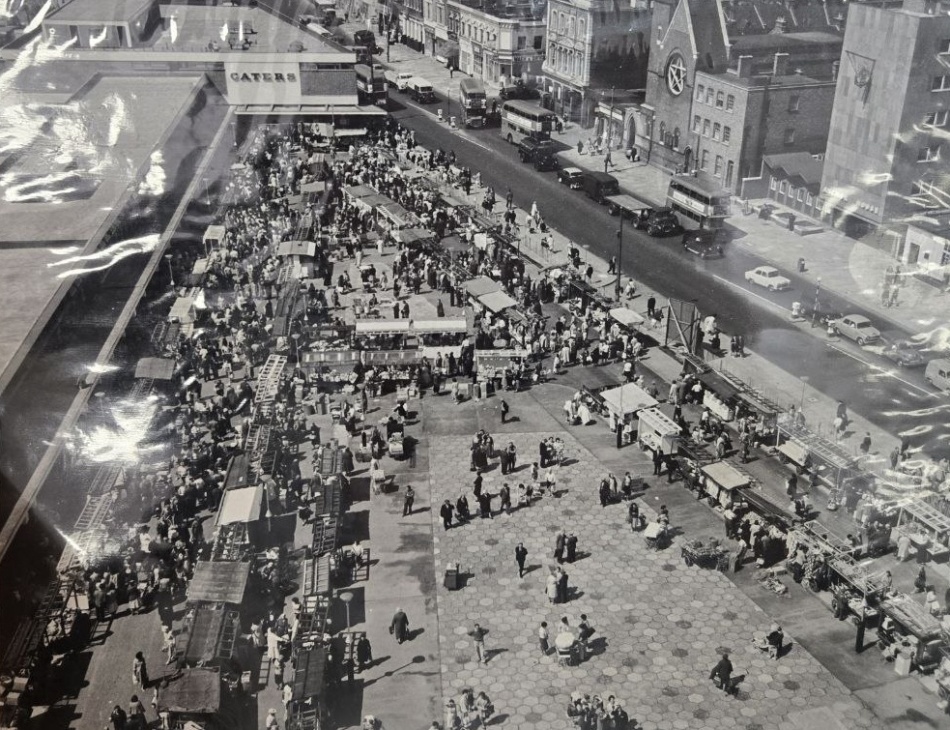
Community Wealth Building Today
Despite ongoing deprivation, Newham has recently adopted community wealth building strategies aimed at keeping economic value within the local area. These initiatives include:
- Supporting local procurement
- Expanding cooperatives and social enterprises
- Strengthening local supply chains
- Providing business support to residents
- Using public assets (such as libraries) to nurture local entrepreneurship
This legacy of education, access, and empowerment—beginning with the opening of Canning Town Library—continues to shape local attitudes toward enterprise, aspiration, and collective wellbeing.
How the Role of Libraries Has Changed
When public libraries first emerged in the Victorian era, their purpose was rooted in moral and social reform. They were intended as structured environments offering newspapers, encyclopaedias, and “improving literature,” guiding behaviour and encouraging self-help at a time when education was scarce and expensive.
Today, the role of libraries has transformed dramatically. Modern libraries function as community hubs providing digital inclusion for those without home internet, offering free Wi-Fi, computer suites, printing, and digital literacy training. They support economic mobility through CV workshops, job search support, start-up programmes, co-working spaces, and access to online business databases. They also serve as centres for social wellbeing, hosting warm spaces, ESOL classes, homework clubs, baby groups, cultural events, and mental health support.
This shift—from moral instruction to holistic community support—reflects how libraries continue to adapt to changing social needs. In areas like Canning Town, where digital inequality and economic hardship remain widespread, libraries continue to play a crucial role in supporting residents through accessible skills training, community programming, and inclusive public space.
Closing Reflection
The story of Canning Town’s Old Library, Rathbone Market, and the surrounding community is more than history—it is a blueprint for possibility. In the Victorian era, a humble reading room could ignite ambition, open minds, and create real opportunities for working-class families. Today, libraries offer far more than ever before—digital tools, business resources, creative workshops—but their transformative potential is still waiting to be fully realised.
The next revolutionary leap for libraries lies in boldly addressing the gaps that remain: giving residents access to advanced creative tools, business incubation, digital skills, and community wealth-building opportunities. If harnessed effectively, libraries could once again become engines of empowerment, sparking a new wave of innovation, entrepreneurship, and social mobility in Canning Town. The seeds planted over a century ago by Victorian reformers, philanthropists, and community leaders are still here, waiting to grow into something even greater—proof that with knowledge, space, and opportunity, communities can not only survive but thrive.
In Canning Town, the story is far from over. The library’s shelves may hold books, but its true potential lies in the dreams it can inspire, the skills it can nurture, and the doors it can open for generations to come.
Written by Bianca Frimpong
Additional record details
- Contributor: Bianca Frimpong
- Type: PhotographsWriting
Heritage newsletter
We would like to send you monthly emails spotlighting heritage content in Newham, as well as updates and opportunities to be involved in next year's festival. Be the first to hear about new projects, funding opportunities and ways to be involved.