The Silvertown Workers Strike of 1889 – A Potted History
About this record
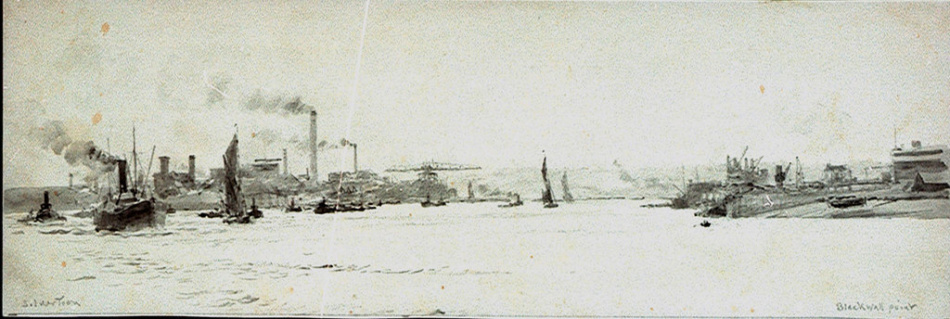
Silvertown, in a once remote and isolated corner of the borough, was an area of rapidly expanding industry, and exploitation in the 19th Century. The area soon became home to several major factories, including those involved in rubber, chemicals, food processing, and refinery.
Among the most prominent of these factories was Samuel Winkworth Silver’s India Rubber, Gutta Percha and Telegraph Works, later known as Silver’s Rubber Works, from which Silvertown derives its name.
The Silvertown Factory: Innovation at a Human Cost
Working conditions within Silver’s factory were harsh. Factory workers were expected to work long hours under poor working conditions. Overtime was mandatory and paid at a standard rate. Living conditions in the area were poor, although rents were comparatively high.
Whilst Gutta Percha, the factory’s main export, is relatively unheard of today, in Victorian Britain it would have been a household name. Extremely durable and water-proof, its original use included the manufacture of raincoats.
However, Samuel Winkworth Silver was an ambitious man, with an ever watchful eye on expansion and profit and by the time the company was floated in 1864 it had branched out far beyond waterproofing into a variety of rubber and rubber-based products.
The jewel in Silver’s crown was the insulated electrical and telegraph cable. By expanding into cables, Silver cleverly positioned himself at the forefront of advancing Victorian technology.
The newly manufactured Gutta Percha insulated underwater cables became central to the development of the British Empire. Messages from London to India or Australia which had previously taken months to send could be transmitted within hours. Silver’s Gutta Percha and Telegraph Company, became in effect, the Microsoft of its day.
It is therefore not surprising to see why the Silvertown Workers, who downed tools in September 1889 would have been relatively easy to quash. There would have been plenty with a vested interest to ensure that production continued despite any unrest from the workers.
To ensure any unrest would be quelled and that profits would continue to soar, Silver appointed factory manager, Matthew Gray. A strategic choice. Gray was an implacable man, who employed his sons to work alongside him. Nepotism, clearly undisputed, so that Gray could be assured of loyalty in the ranks, and ultimate control.

A Modest Demand, A Harsh Response
However, unrest did ensue when on 11th September 1889, 280 yardmen submitted a written petition to the management for a pay rise. Initially granted, Gray soon rescinded the offer when other departments started to petition for a similar rise. And declared that any worker who was not happy with their pay could go to the cashier’s office at the end of the day to be paid off, permanently!
Inspired by The Dockers and Gas Workers strikes which had been successful the unskilled and general labourers from Silver’s factory walked out. Their demands were humble, a modest pay rise, paid overtime and improved working conditions.
Given the fact that in 1889, Silver’s made a net profit of almost £58, 000 – the equivalent today of over five million, their assertion that they could not even part way meet the workers’ demands was ludicrous, not to mention mean and exploitative.
Silver, confident perhaps with his emerging power and connections, barely batted an eyelid as he left Gray to deal with the strike. As company shareholder and eager to prove his worth, Gray maintained a hard-line stance and refused any formal negotiation with the union.
The strike lasted less than three months, with the workers, in effect starved back into work; pay and conditions remained the same as they were before the walkout, and many of the key strike figures were blacklisted and unable to find work.
As well as Gray’s intransigence, another reason for the failure of the strike, lay in the divide between skilled and unskilled workers. Traditionally, only skilled workers who had served an apprenticeship could be members of the union. The failure of the skilled Amalgamated Society of Engineers to call their members out resulted in continued production in the factory, alongside the use of imported ‘scabs’ from other parts of the country.
The result was inevitable and as the harsh winter set in and strike funds dwindled, those strike hands still out returned to work on 9th December 1889.

The Fallout of the Strike
However, whilst the battle of the Silvertown Workers might have been lost, the spirit of New Unionism began to flourish.
The Silvertown strike had attracted experienced and prominent activists such as Eleanor Marx and Will Thorne who worked tirelessly with the people of Silvertown to ensure that unskilled workers could organise themselves and become part of the union. The Gas Workers and General Labourers Union was formed, which the Silvertown unskilled workers became a part of, known today as the GMB.
The Silvertown strike of 1889 also demonstrated the growing willingness of the unskilled workers to organise and fight for better conditions and highlighted the need for stronger coordination between the unions, something that would develop into the 1890’s and beyond.
Under the tutelage of Marx and Thorne, Frederick Ling, a local man and stoker in Silver’s factory became a prominent union leader and a road in Canning Town is aptly named after him today.
We remember and give thanks to all the factory workers at Silver’s factory who strove for better conditions in 1889 and who paved the way for all workers to stand up for their rights today.
Rise like Lions after slumber
In unvanquishable number,
Shake your chains to earth like dew
Which in sleep had fallen on you –
Ye are many – they are few.
Additional record details
- Contributor: Deborah Peck
- Type: PhotographsWriting
- Location: Silvertown
Heritage newsletter
We would like to send you monthly emails spotlighting heritage content in Newham, as well as updates and opportunities to be involved in next year's festival. Be the first to hear about new projects, funding opportunities and ways to be involved.