Dig into the past of Stratford Langthorne Abbey
About this record
Dig into the past of Stratford Langthorne Abbey where monks once worked the land and memories are unearthed. In this project, Friends of Abbey Gardens and Historic England collaborate to celebrate the legacy of this significant abbey, through the lens of archaeology from the 1970s to 2007.

This is the story of the abbey of St Mary Stratford Langthorne which was founded in 1135. For 403 years monks lived and worked this large area of land, perhaps 30 acres at its peak, including mills, tanneries, bakeries and playing an important role in local life. Until the abbey was suppressed in 1538, by Henry VIII. This was known as the dissolution of the monasteries and meant that Catholic religious buildings were taken control of with their land and money and the monks had to go and settle elsewhere.
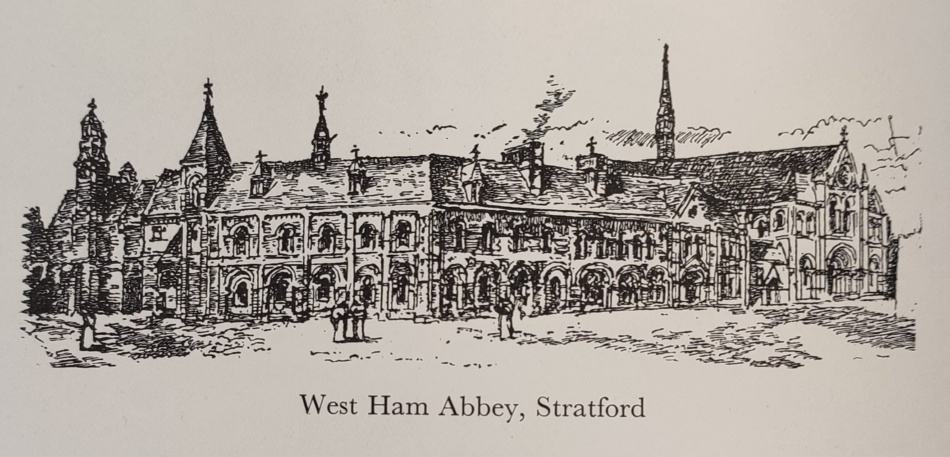
For the next 450 years, records from Newham Archive show that the land was split, rented out, we found rent books from the 18th Century. The buildings of the Abbey were pulled down and the stone building materials pillaged or repurposed or found built into other buildings. The Adam & Eve pub, 126 Abbey Rd, West Ham, E15 had the last remaining piece of the abbey built into a side wall, the pub was damaged by enemy action 1st July 1944, reopened 2nd April 1948, closed 1994.
Some buildings and the Great Gate, still in evidence in these maps and paintings in the 18th Century.


Newham Archaeology Service excavated the 4.5km2 site thoroughly led by Pat Wilkinson and her team of up to 40 archaeologists, all working for Newham and the wider South-East. Everyone who we spoke to remembered Pat as a figurehead of the efforts to learn more about the abbey.

And then in 1994 before the Jubilee Line Stratford Market Depot was built over the site of the Abbey, there was the most extensive archeological excavations investigating the site and a comprehensive book called The Cistercian abbey of St Mary Stratford Langthorne, Essex, MoLAS Monograph 18. This history is a must read for those interested in the Abbey.
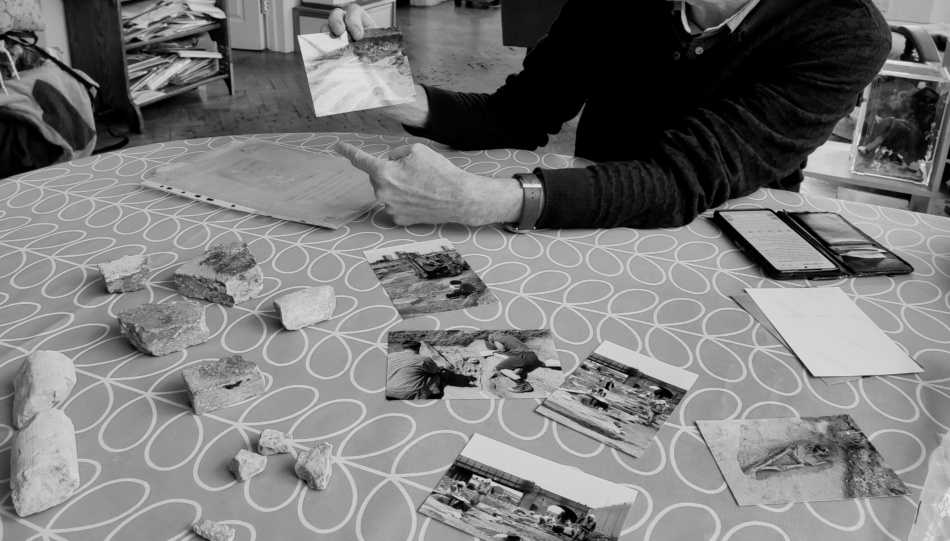
This project has focused on those people with memories of the archaeologists, local people who volunteered on the excavations and the monk who was responsible for reburying the remains of the 600 monks who were recovered during the excavations.
Shaun Tambly, an archaeologist for Newham Council from approximately 1990-1995, talks about the process for excavating human remains:
Since 1994 there has been an effort driven by the local community, Newham Council and Historic England to recognise the remaining ruins of the Great Gate, as a Scheduled Monument.

In 2006 local people and the Council began working together to improve the site. In 2008 an art commission by Somewhere formed the garden claiming its use for local people in their project: www.whatwilltheharvestbe.com.
If you visit the ruins in 2024 you will find a thriving community garden, cafe, bee hive, workshop spaces and open space for public enjoyment. So 889 years after the monastery was built, the monks would perhaps be surprised that their legacy lives on through bees, planting and a wish to support the community.
This project has been run by volunteers and a small project team at Friends of Abbey Gardens. Without the passion of hundreds of volunteers and passionate professionals over the years the remains of the Abbey and the Garden that holds these precious remains would not exist today.
Additional record details
- Contributor: Friends of Abbey Gardens
- Type: PhotographsSoundsWriting
- Date created: May 2024
- Location: Newham
Heritage newsletter
We would like to send you monthly emails spotlighting heritage content in Newham, as well as updates and opportunities to be involved in next year's festival. Be the first to hear about new projects, funding opportunities and ways to be involved.