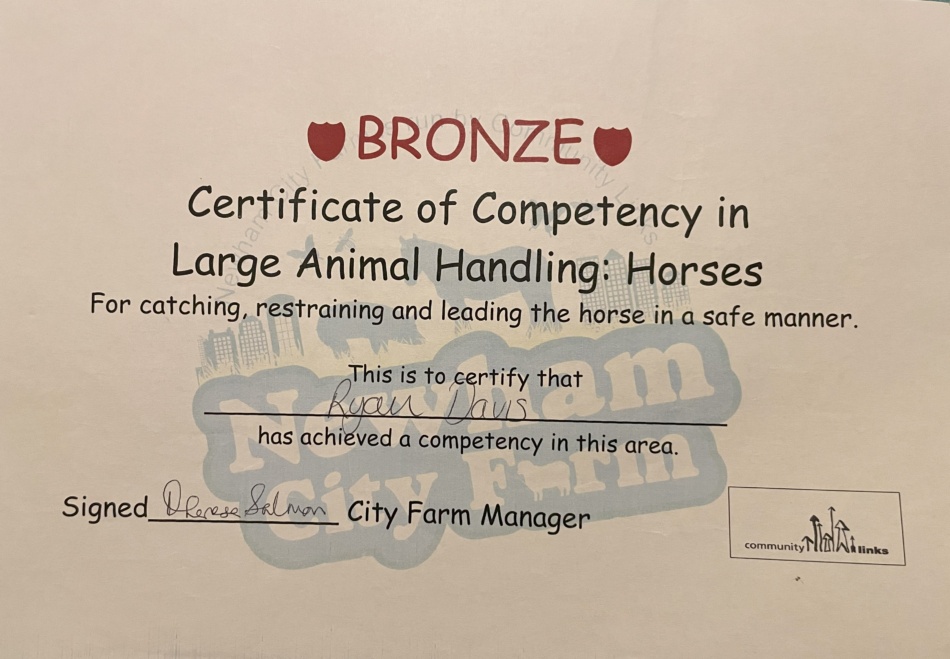
Ryan Davis 19.06.2025 Transcript
Alison McLucas (AMcL):
(0:02) This is Ryan Davis, born in 1997 in Newham. (0:08) Were you born in Newham? (0:10) Great.
(0:11) Okay, tell me about your time at Newham City Farm.
Ryan Davis (RD):
(0:16) So I think it started off, me and my Mum, Nan and Grandad always used to go to the farm on a weekend. (0:25) And then one time my Mum used to work for the Tunmarsh Centre, and they were doing a summer fete. (0:34) And then the farm come down, and I was quite young at that time.
(0:38) And I spent the evening, or the day, sorry, with Steph, showing animals to SEN children. (0:47) And I kept on asking, can I work with them? And they kept on saying I was too young. (0:51) And I was probably asking for about two or three years, until they finally said, okay, you’re old enough now.
(0:58) And I started volunteering.
AMcL
(1:00) And how old were you when you started volunteering?
RD
(1:04) 12 or 13. (1:06) I was quite young. (1:08) And then I think I did three years of volunteering, and then I ended up being a seasonal worker for them until I was about 18.
AMcL
(1:16) So that was paid work?
RD
(1:18) Yeah. (1:18) Yeah.
AMcL
(1:18) Okay. (1:19) Just to go back a little bit, for context, what’s the Tunmarsh Centre?
RD
(1:24) So the Tunmarsh Centre is a PRU, but it’s also for children with disabilities. (1:32) And they’ve got sensory stuff, and people that go to people’s houses, and my Mum did that.
AMcL
(1:42) And you mentioned Steph as well.
RD
(1:45) So Steph, when I worked there, was the, not the manager, but the one down below. (1:56) Whatever that word is. (1:59) Assistant manager or something like that.
AMcL
(2:02) Okay. (2:03) And so you were 12 or 13 when you started, and what sort of things were you allowed to do?
RD
(2:10) So I started off small. (2:13) In the mornings, we would, the horses would already be out, so we would groom the horses. (2:19) And then once they were out in the fields, we would then prep the morning feed for the small animals, head around, and basically open it up, and make sure they’re all okay, feed them, close them back up, and move on to the next ones, really.
(2:37) And then once that was done, we would do a sort of chores for the day. (2:41) So there would always be a whiteboard with something for us to do, like poo picking, or sweeping. (2:49) But I was quite fortunate, because I was there for a while, so I kept on getting picked for the exciting things, like beekeeping, and falconry, and so, yeah.
AMcL
(3:00) Okay. (3:01) Tell me a bit more about beekeeping then.
RD
(3:04) So me and Steph did beekeeping quite a lot. (3:07) I ended up buying my own bee suit. (3:10) I learned quite a lot.
(3:12) It was hidden away in one of the back fields, so obviously away from the public. (3:21) But we used to spin our own honey as well, so with all the honeycomb, we had a contraption that spun round, and all the honey would seep out. (3:31) And then we used to jar it up as well to sell it on our event days and stuff.
AMcL
(3:36) How much honey might you get, if you recall?
RD
(3:40) A fair few jars out of… (3:43) because it was like a gallon bucket, so I would say we would have at least 30, 40 jars.
AMcL
(3:50) Interesting. (3:51) And the falconry as well. (3:53) Tell me a bit more about that.
RD
(3:55) Oh, so I got to learn about falconry. (3:58) We had a few different birds of prey. (4:01) So when I first started, we had Cookie the kookaburra.
(4:06) We had Merlin, he was a Harris hawk. (4:11) We had Loki and another barn owl, which I can’t remember the name. (4:19) And when I was a child, I can remember a bird called Elvis, but I can’t remember what he was.
(4:27) It was some sort of buzzard or something. (4:29) Yeah.
AMcL
(4:30) So did you have to have any specific training, or what was the training for the falconry?
RD
(4:37) Yeah, so a lot of us did falconry courses, and then the ones that did falconry courses then passed that information down to everyone else that was then working with us. (4:48) So quite often, I would be walking around with a bird of prey on my arm or on the glove, just showing them around to members of the public.
AMcL
(5:00) Did you find the beekeeping or the falconry, was there anything about it that was frightening or risky that worried you?
RD
(5:11) No, I quite liked it. (5:11) The only thing that worried me about the falconry was the letting go of the bird, just in case, because that’s quite a scary prospect. (5:21) And with beekeeping, there was this one time that I was in, and we were trying to trap the queen to move her over to another hive, and a bee must have got in my suit.
(5:34) But I think I got stung about 27 times that day, and I ended up in hospital. (5:40) But yeah, it got in somehow.
AMcL
(5:42) Oh my goodness, that sounds a little bit dramatic. (5:51) So you talked about getting the animal sorted at the beginning of the day, the horses, how did it evolve from there during the day, on a normal day?
RD
(6:06) So on a normal day, it all depends on what the day was really. (6:10) So sometimes we would have hay delivery, so we would have a massive lorry full of about 300 bales of hay that we’ve got to take off from the lorry and then stack in the barn. (6:23) Other times we would have all the manure that we’ve kept throughout the week or month, we would then take it down to the allotments, so there would always be something going on.
AMcL
(6:40) Is that the allotments that were next to the farm on King George Avenue?
RD
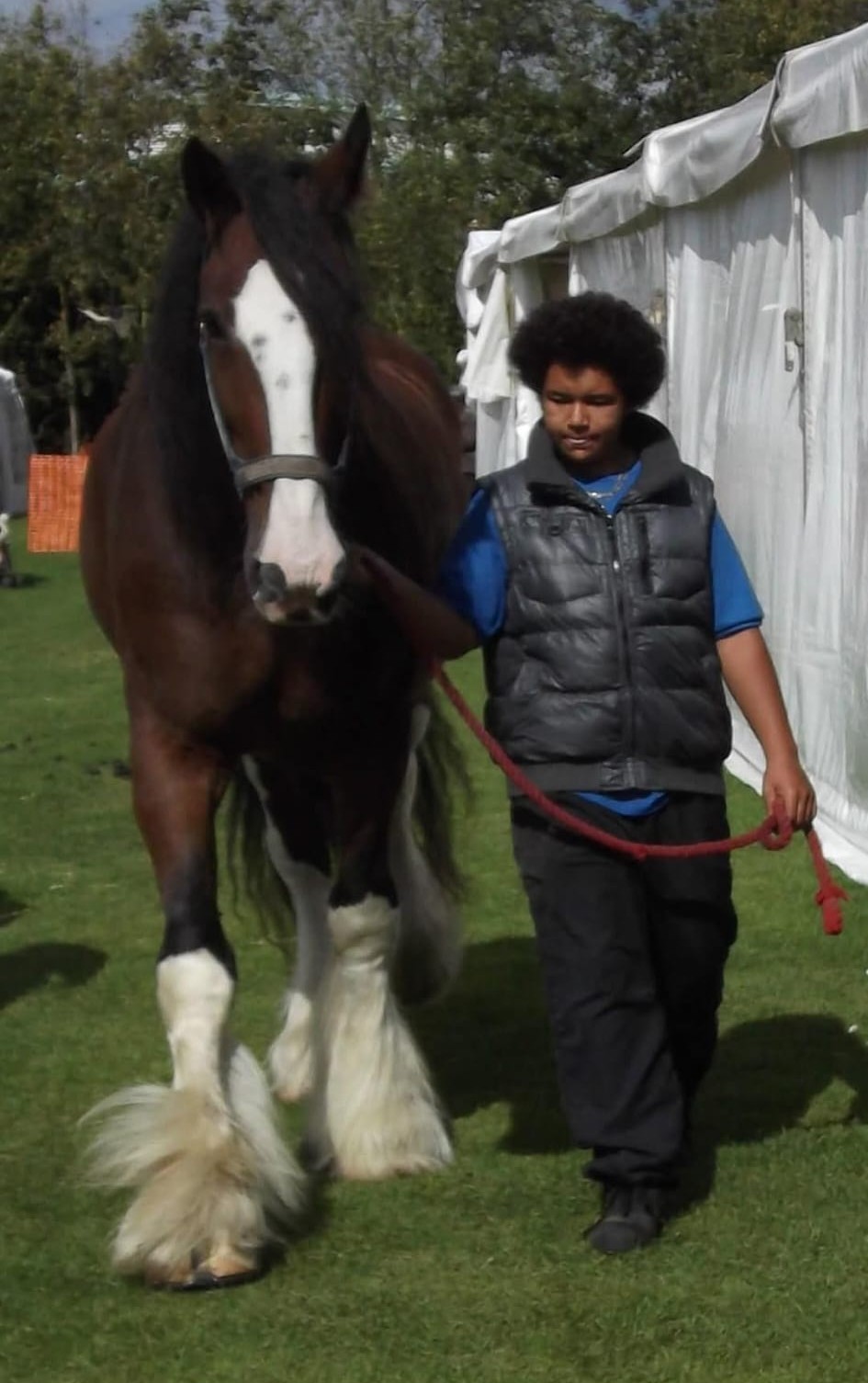
(6:46) Sometimes, yeah. (6:47) So we used to do it there, but then there were a few other places, but also, we used to take Blaze, the shire horse, to the market to get all the old fruit and veg, so we could then give it to the small animals.
AMcL
(7:03) Which market was that?
RD
(7:06) Spitalfields, I think.
AMcL
(7:08) Okay, and how did you get there?
RD
(7:11) Sometimes they took the van, other times we would take Blaze, and he would go on his cart and go up there.
AMcL
(7:18) All the way there? (7:19) Goodness, and you went with him?
RD
(7:22) Sometimes, yeah.
AMcL
(7:27) Okay, tell me a bit more about Blaze because I hear from other people that he was a bit of a favourite.
RD
(7:32) Yeah, so Blaze was lovely. (7:34) He was my favourite when I was a kid. (7:38) I would always go there for Blaze.
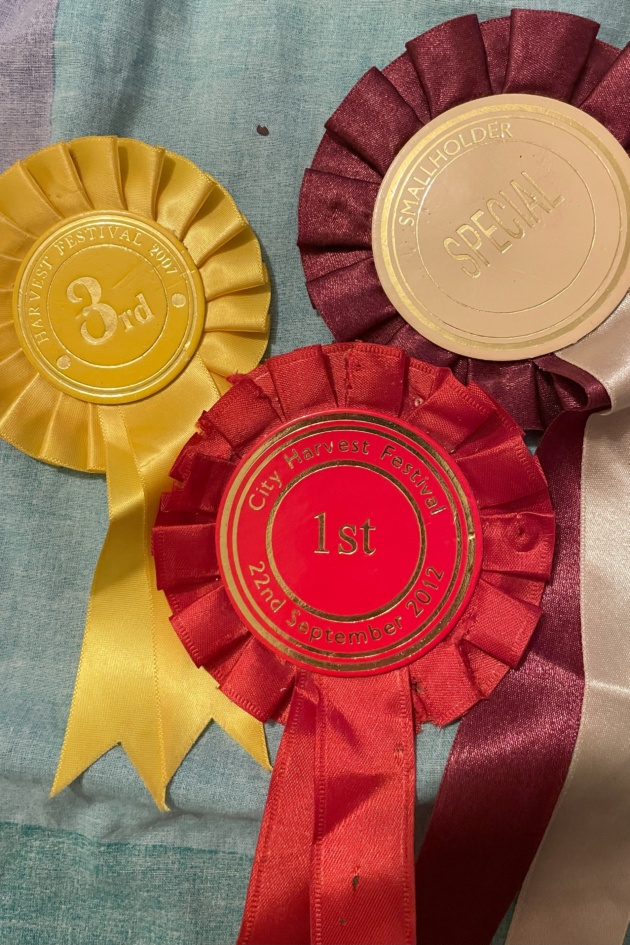
(7:41) He had a massive moustache, he was a proper old distinguished shire horse. (7:46) We used to do loads with him. (7:48) I used to take him to shows, so we took him to Capel Manor, and I’ve won rosettes with him as well and yeah, he’s just a gentle giant really, he’s my favourite.
AMcL
(8:02) So who has the rosette now?
RD
(8:04) I do.
AMcL
(8:05) Do you?
RD
(8:05) Yeah, I’ve got them upstairs.
AMcL
(8:07) Might you like lend it for the exhibition? (8:11) Yeah. (8:11) Okay, yeah, that would be really lovely if you could.
(8:19) So you’ve talked a bit about Blaze and about the other horses. (8:23) Tell me a bit more about the other animals there. (8:26) Oh, you’ve talked about the birds as well and the bees.
RD
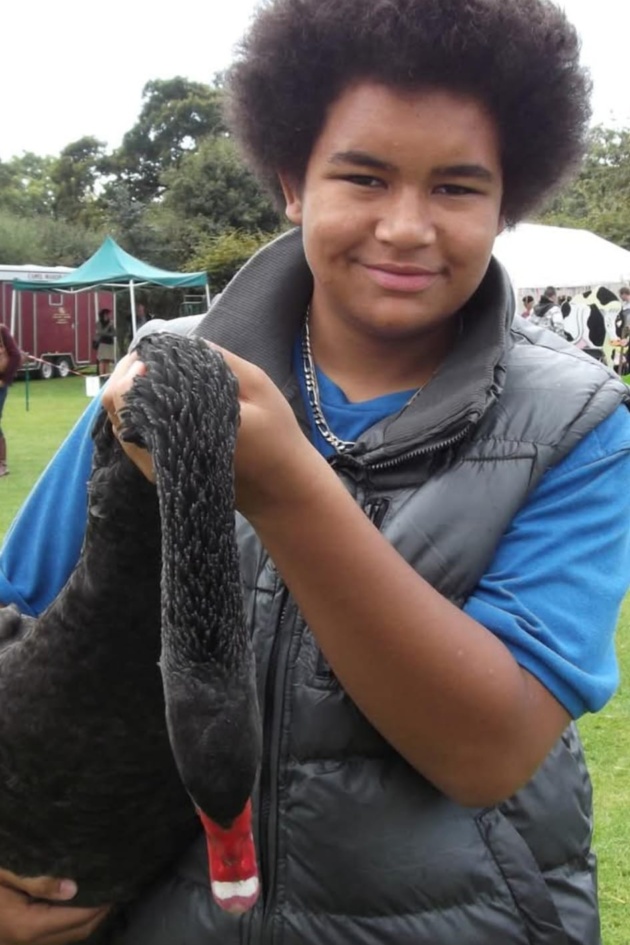
(8:30) So my favourite out of all time was Matilda the black swan. (8:38) So I’ve got a thing with animals, animals like me for some reason, but Matilda always used to come out of the pond and come up to the sides of the fence and let me stroke her. (8:50) And I took her as well to Cable Manor and I put her into a goose category and it caused a massive uproar, but I still won a special rosette.
(8:59) So that was a pretty good time.
AMcL
(9:02) That’s amusing. (9:04) Yeah, so Matilda, how old was she around that time, do you think?
RD
(9:10) So I remember Matilda when I was young. (9:13) So she must have been 15 to 20 by the time, yeah. (9:20) So I think she passed just before I left.
(9:23) So I think I left when I was about 18. (9:25) So yeah, she was quite old. (9:28) And in the end, we ended up putting her in with a goose called Mr Barhead because just to keep her company.
(9:36) Lovely animal.
AMcL
(9:37) Mr Barhead, where did that name come from?
RD
(9:39) Because he was a bar-headed goose.
AMcL
(9:41) I see. (9:43) That makes sense. (9:47) So what about other animals?
(9:50) I mean, because they had cows and goats, llamas.
RD
(9:55) We had two donkeys. (9:59) We had Romulus and Delilah. (10:02) We had loads of pigs.
(10:05) The bull was named Alfie, and we had Clementine and Poppy and then the Kunekune pigs as well. (10:18) We had pygmy goats, normal goats, sheep. (10:25) A chinchilla, all sorts.
(10:29) A ferret as well. (10:30) Yeah, ferrets. (10:30) We had quite a few ferrets in the end.
(10:33) I think about four or five.
AMcL
(10:39) There were some cows too, weren’t there?
RD
(10:42) Yeah, there was quite a few cows. (10:44) Angel was one of the big ones. (10:47) We had Dexter cows called…
(10:49) I’m not too sure about them. (10:54) We had Dexter cows.
AMcL
(10:59) So what were the other sort of jobs around with the other animals that you might have done?
RD
(11:06) So mainly it was involved in cleaning up in their pen or area enclosure or in their field. (11:16) So especially with like the field animals, we would make sure we’d go around, make sure that there wasn’t anything that was poisonous or could hurt them, as well as poo picking, just to keep it nice and fresh. (11:31) And then just general maintenance on the farm really, just making it nice for the public.
AMcL
(11:39) What sort of interaction with the public did you have? (11:42) You said about carrying the hawk.
RD
(11:48) Quite a lot. (11:49) We used to do events all the time. (11:51) So there would be hundreds of people coming from the Newham area just to come down.
(11:58) And I would be constantly talking to people, people wanting to know sort of what the animal was or how to look after them, even how to volunteer on the farm like I was.
AMcL
(12:12) And yeah, so you were a volunteer from 13, you said. (12:18) What was the kind of like process to become like a volunteer?
RD
(12:24) And so there was like an application process. (12:29) And then once you went through that and explained why you wanted to become a volunteer, you then would pick a day. (12:38) So everyone had a specific day, except for if it was an event, we would then all come in.
(12:48) And yeah, then just you come in on a sort of, as the farm opens, and then you go home as the farm shuts.
AMcL
(12:57) So what were the opening and closing times? (12:59) Can you recall? (13:00) No, I’ve probably got that somewhere.
RD
(13:04) I think it was like eight till, it used to change. (13:06) I think it was like eight to six, maybe. (13:10) And then it used to drop in the winter.
AMcL
(13:14) So you talked about events. (13:17) Can you, what were the particular events you mentioned, the competitions at Capel Manor or other events?
RD
(13:26) We used to do loads of like summer events, especially quite a lot around East Ham. (13:32) So the East Ham, is it Party Under the Stars?
AMcL
(13:38) There was like Newham Under the Stars, but there was also the Mayor’s Show, wasn’t there?
RD
(13:44) Yeah, so we used to do that as well, the Mayor’s Show. (13:47) Quite a lot of summer fetes and stuff. (13:50) And random places like companies that hire us out.
(13:56) Also, we used to do care farming at the farm. (13:59) So that was when people with disabilities would come and do a workshop for a day or so, either with horses or small animals, just to get them engaging and touching.
AMcL
(14:15) Okay, tell me a bit more about the care farming workshops, as I know that like for special needs, the farm was quite significant.
RD
(14:24) So we had a list of people that used to come. (14:30) The two main that stick out for me, Maureen and David, they would be there quite often, helping out around the farm.
AMcL
(14:43) That’s people with special needs, young people with special needs?
RD
(14:47) They were older. (14:50) But we had quite a few younger people, but they would come sort of during the week. (14:57) So obviously, I would be there mainly volunteering on the weekends because I was at school and stuff.
(15:03) But as I got older and started working sort of during the week, I started meeting different people that we were working with.
AMcL
(15:10) Yeah, because I think JFK and Eastway Care Centre, something like that, from Beckton, used to come too, and Richard House. (15:25) So summer events, what other seasonal events might there be?
RD
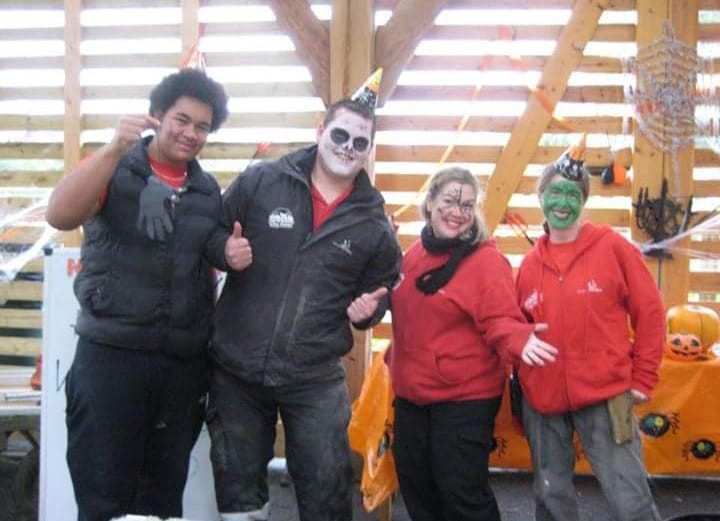
(15:32) So we used to do Santa’s Grotto at Christmas. (15:40) We used to do a Halloween event, an Easter event. (15:48) I’m sure one year we may have done like a May Day event with the Maypole and stuff.
AMcL
(15:57) A Harvest at all?
RD
(16:00) Yeah, it was Harvest Day. (16:03) There were so many.
AMcL
(16:05) So do you recall, or can you explain what happened at the Santa’s Grotto, at the specific events?
RD
(16:14) Yeah, so they would always pick someone to be Santa. (16:18) One year they suggested me, but I thought that was a bad idea. (16:23) But we used to create a grotto, so we would have that to go in and see Santa.
(16:30) And at that point we had the play barn that was made as well. (16:35) So we used to do activities and stuff in there and meet and greets with animals.
AMcL
(16:43) Okay, tell me a bit about the play barn. (16:46) Do you recall it being constructed and what it was used for?
RD
(16:49) Yeah, I remember when it was constructed, and it was used for just random meets and stuff. (17:00) I think it was after Newham Council left us and we went on to Community Links. (17:10) That’s when the play barn was then made for then Community Links’ projects to then go inside it as well.
(17:17) So it was like we could all use it for different bits and bobs.
AMcL
(17:23) Do you have any recollection of the dates of changes? (17:29) If not, I’ve probably got those somewhere else. (17:32) So the play barn was used for like meets and gatherings and events.
RD
(17:39) At one stage there was a theatre group in there, they were doing Animal Farm.
AMcL
(17:48) That’s interesting because I’ve got an interview coming up with the playwright and one of the actors for that. (17:55) Do you have any recollection of that at all?
RD
(17:58) I remember them rehearsing because I would always be around the area sorting animals and stuff. (18:07) But yeah, I don’t remember seeing it.
AMcL
(18:13) Did that happen just in the barn or around the farm?
RD
(18:17) It was mainly in the barn.