Newham Libraries: A Brief Origin Story
About this record
Before 1850, there were roughly 30 public libraries in England. In Newham and beyond, a series of new laws and two significant benefactors led to the birth of the library service we know today.
The Rise of Public Libraries in the UK
In England, there were only about 30 substantial free libraries before 1850.
A gradual increase began following the 1850 Public Libraries and Museums Act, which allowed towns above a certain size to set aside a small amount for the development of library premises. Queen Victoria’s Golden Jubilee of 1887 and the 1892 Libraries Act spurred more building activity in the late 19th century.
Public Library Champions: Andrew Carnegie and John Passmore Edwards
Private funding from philanthropists helped a lot to make up for the shortfall in public funding during this movement.
The two most significant benefactors were Andrew Carnegie and John Passmore Edwards. Both provided funding that initiated the first public libraries in Newham.


Andrew Carnegie
Andrew Carnegie (November 25, 1835 – August 11, 1919) was a Scottish-American industrialist and philanthropist.
Carnegie led the expansion of the American steel industry in the late 19th century and became one of the richest Americans in history. He became a leading philanthropist in the United States, Great Britain, and the British Empire.
During the last 18 years of his life, he gave away almost 90 percent of his fortune with special emphasis on building local libraries, world peace, education, and scientific research.
John Passmore Edwards
John Passmore Edwards (24 March 1823 – 22 April 1911) was a British journalist and newspaper owner.
A lifelong champion of the working classes, Passmore Edwards is remembered as a philanthropist.
Over the space of 14 years, 70 major buildings were established with his funding. These included hospitals, 11 drinking fountains, 32 marble busts, 24 libraries, schools, convalescence homes and art galleries and the Passmore Edwards Settlement.
Most of the libraries he founded were in his native Cornwall and in London. For his contribution to libraries and other buildings in Newham, he received the Freedom of the Borough in 1894.
Always been a library…
Discover Children’s Story Centre’s project for Newham Heritage Month 2024 focused on collating history and memories surrounding four Newham Libraries in particular.
Two of which — Plaistow and Custom House — were established with funding from Andrew Carnegie and John Passmore Edwards and, at present, have always been purpose-built public library buildings.
Plaistow Library


Built using London red brick in 1902 by Samuel Bridgman Russell, with funding from Passmore Edwards and Carnegie Foundation. An inscription over the door reads ‘PASSMORE EDWARDS/PVBLIC LIBRARY’. Now Grade II listed.
Custom House Library


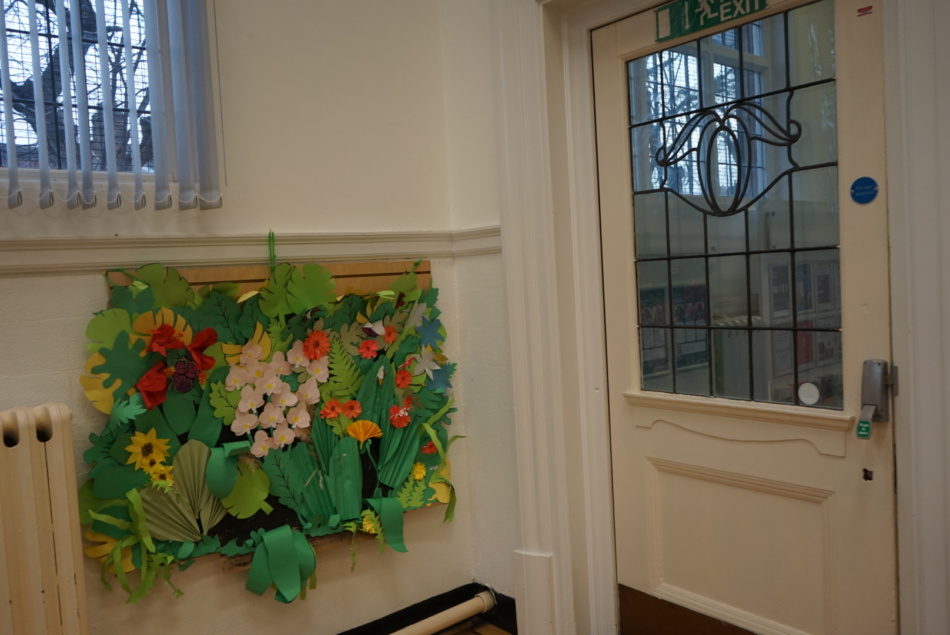


Also built using London red brick, with funding from Passmore Edwards and Carnegie Foundation. The opening ceremony, presided over by John Passmore Edwards, took place on 20th July 1905. A scroll on the outside reads: ‘CARNEGIE LIBRARY CUSTOM HOUSE’.
To the rear of the main building is a two-storey house, built for a librarian but now derelict.
Modern libraries and community hubs
The other two libraries part of Discover’s Newham Heritage Month project — East Ham and Forest Gate — represent a more modern approach to libraries. Both created with both traditional library services and wider community uses in mind.
East Ham Library


Opened in 2014, East Ham Library was purpose-built as both a library and customer service centre. Also containing council offices.
It replaced an original Carnegie Public Library (opened in 1908) just around the corner from the new site. This building has been repurposed as a sixth form college.
Forest Gate Library


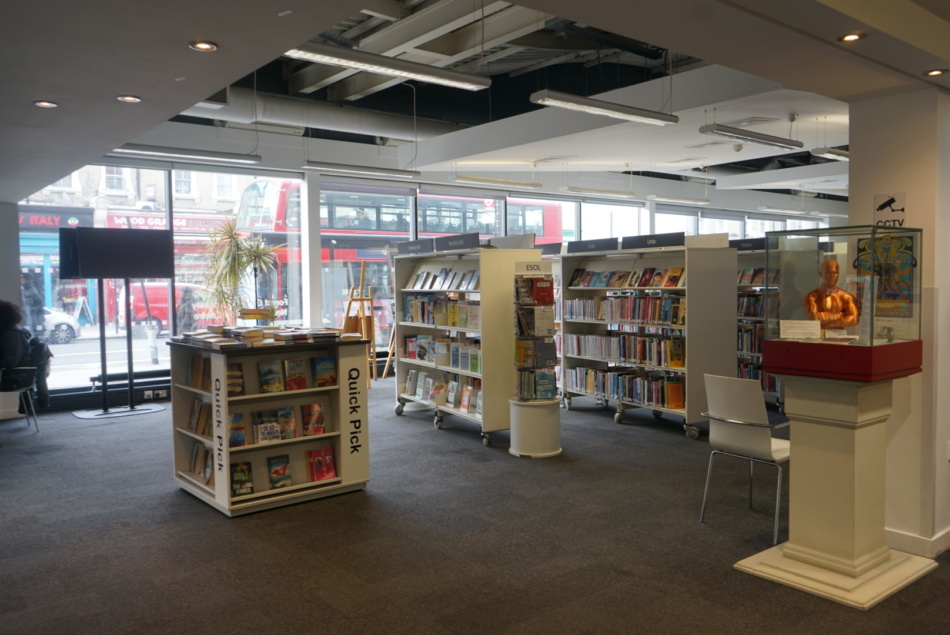
Forest Gate Library opened as a library in 2003, replacing the older library further along Woodgrange Road. The current building was built in 1958 and was known then as Telephone House and was owned by the Post Office.
It was refurbished in 2015 to include a coffee shop and more community space which could be used for events and displays.
At various points, the library has been used as a more multi-purpose community facility — offering a range of council services as well as library services. But more recently returning to focus more on library services.
Additional record details
- Contributor: Discover Children’s Story Centre
- Type: PhotographsWriting
- Date created: April 2024
- Location: Newham
Heritage newsletter
We would like to send you monthly emails spotlighting heritage content in Newham, as well as updates and opportunities to be involved in next year's festival. Be the first to hear about new projects, funding opportunities and ways to be involved.