When Chaplin met Gandhi: A meeting of minds in Canning Town
About this record
An account of the meeting of Charlie Chaplin and Mahatma Gandhi in Canning Town in 1931 and its influence on the making of the film Modern Times
On September 22 1931, number 45 Beckton Road in Canning Town played host to a meeting between two of the most famous and influential figures of the time. Gandhi (known as the Mahatma, a title of honour in South Asian culture) was the leader of the independence movement in India and an inspiration to many around the world; London-born Chaplin was a movie star – one of the first and certainly one of the best known of the era.

Pictures of the meeting between Chaplin and Gandhi made the front page of many of the next day’s newspapers. Crowds of up to 10,000 lined the street to catch a glimpse of the two as they met for around an hour at the house of a local GP, Dr Katial. Cinema was very popular in Newham at the time and a visit to the area from a Hollywood star would have been a major draw, alongside the presence of the Mahatma, a major figure in global politics. A report in that week’s Stratford Express said:
The British public became aware of the proposed meeting and although the time of arrival was not disclosed, a huge crowd had assembled outside the Dr’s house at five o’clock to gaze on the two celebrities…keeping the excited crowd in order was an arduous task.
How the meeting came to be is not entirely clear. In his autobiography, Chaplin claims in that he was asked if he wanted to meet Gandhi; an account from Mahadev Desai, the only journalist present at the meeting suggests otherwise – the Mahatma had never heard of Chaplin and was encouraged to meet him after hearing from acquaintances how many people he had made laugh. Chaplin arrived looking suave and smartly dressed, a far cry from the familiar character of the ‘Little Tramp’ he played in many of his successful films. After getting through a scramble in the street, the two men met and spoke for around an hour. In his autobiography, Chaplin recalls:
I met him in a humble little house in the slum district off the East India Dock Road. Crowds filled the streets and the Press and the photographers packed both floors. The interview took place in an upstairs front room about twelve feet square. The Mahatma had not yet arrived; and as I waited I began to think of what I would say to him. I had heard of his imprisonment and hunger strikes, and his fight for the freedom of India, and vaguely knew of his opposition to the use of machinery.
That the two men discussed machinery was widely reported at the time and reflects the interests of both in the lives and conditions of working people. In his autobiography, Chaplin described the conversation further: “Naturally I am in sympathy with India’s aspirations and struggle for freedom,’ I said. ‘Nonetheless, I am somewhat confused by your abhorrence of machinery.’ The Mahatma nodded and smiled as I continued: ‘After all, if machinery is used in the altruistic sense, it should help to release man from the bondage of slavery, and give him shorter hours of labour and time to improve his mind and enjoy life.’ ‘I understand,’ he said, speaking calmly, ‘but before India can achieve those aims she must first rid herself of English rule. Machinery in the past has made us dependent on England, and the only way we can rid ourselves of that dependence is to boycott all goods made by machinery.”
The meeting and the location it took place seem to have left an imprint on Chaplin. Five years later, he released Modern Times, widely regarded to be one of the best films of his career, one of the last great silent movies – and the last outing for his Little Tramp character. The film offers a critique of the dehumanising effects of industrial society and reflects Chaplin’s ongoing preoccupation with the plight of working people.
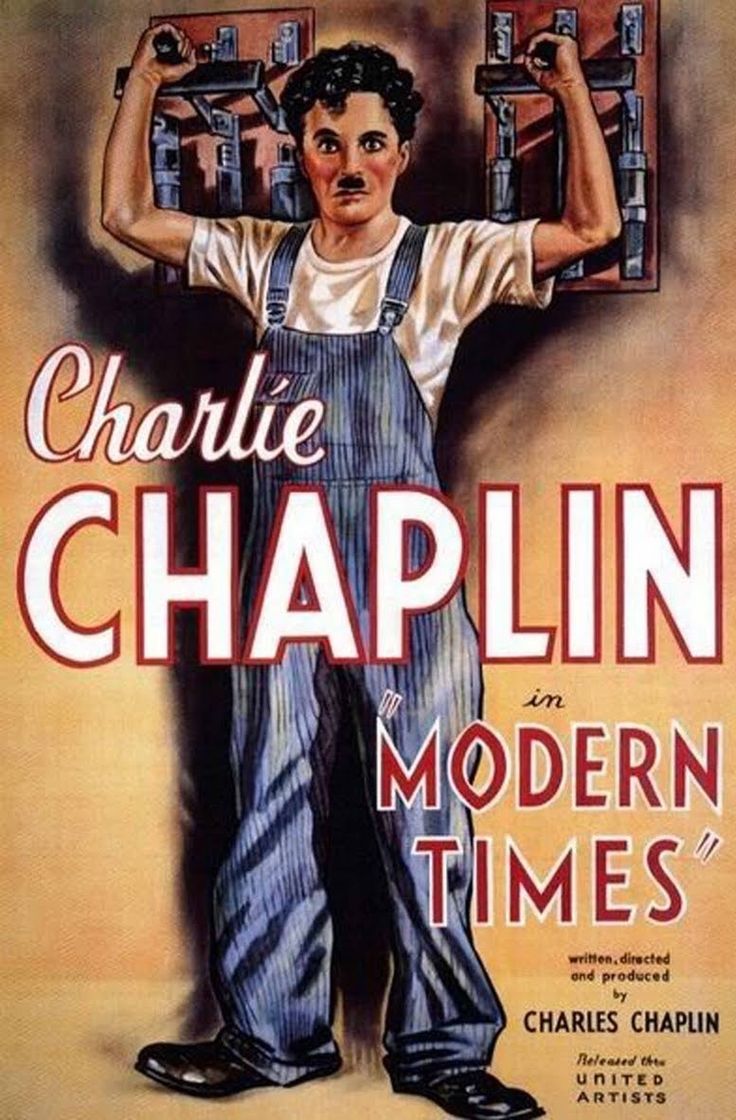
Several sources cite the Gandhi meeting as one of the key influences behind the film, though there were certainly others. In his autobiography, Chaplin recalls an interview with a young reporter on the New York World who told him about the factory-belt system in Detroit “a harrowing story of big industry luring healthy young men off the farms who, after four or five years at the belt system, became nervous wrecks.” Chaplin says this was the spur for him to make Modern Times. But it’s not hard to believe that the conversation he had five years earlier in a little upstairs room in Canning Town, talking about the pitfalls of industrialisation, with the sounds, smells and sights of factories all around would have been in his mind when he made what might be his most iconic film.
Additional record details
- Contributor: Performance Infinity
- Type: PhotographsWriting
- Date created: 22 September 1931
- Location: 45 Beckton Road E16 4EA
Heritage newsletter
We would like to send you monthly emails spotlighting heritage content in Newham, as well as updates and opportunities to be involved in next year's festival. Be the first to hear about new projects, funding opportunities and ways to be involved.