Title: ELBA interview
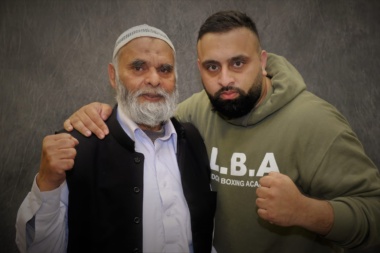
Interviewee/s: Umer Iqbal
Interview Date: 16th June 2022
Interviewer: Syed Muaaz Asim
Transcriber note: Interviewee was unclear at times, leading to some paraphrasing in the transcription.
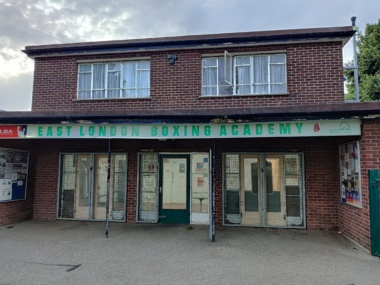
Q: Today is 16th June 2022 and I’m here at the marvellous East London Boxing Academy, joined by Umer Iqbal, which is spelt U-M-E-R I-Q-B-A-L.
A: That’s correct.
Q: And may I ask how old you are and where you were born?
A: Thirty-seven years old, and I was born locally, Waltham Forest.
Q: Thank you very much. So, just to kick things off, if I can just get your Olympic experience from start to end, what the event was to you?
A: The 2012 Olympics?
Q: Yeah, 2012.
A: To be honest, phenomenal. I’ve been around boxing at the Olympics for a long time. My father used to box as well, so got me into it at a young age, me and my brother, and it was phenomenal seeing it literally on the doorstep.
Q: Did you by any chance get to go see any events?
A: I didn’t at the time. I had tickets, but I unfortunately had a road traffic collision at the time, which – I couldn’t go, but I was watching it at home, so it was all good.
Q: What would you say was your favourite moment? What stood out for you?
A: It should have been the boxing, but it wasn’t, to be honest. It was either Mo Farrah winning or Usain Bolt, the 100 metres, I’ve always been a fan of the 100 metres.
Q: And what was one moment that you’d change or didn’t go well with you?
A: Sorry?
Q: One moment that you would change if you could redo the experience.
A: Not driving my car two days before the Olympics starts , so I could have actually gone.
Q: How do you think, how would you say the Olympics has affected Newham, the community, the people?
A: It’s been a considerable change, to be honest. As you can see, the regeneration in the area was one thing. But something like us, we started after the Olympics, so that’s probably a positive.
Q: So, moving onto the boxing academy, would you say the Olympics was a major thing to kick off?
A: Yeah, I would say, because I used to box myself, like I said. I had my last bout in 2010, and then around that time we got a few friends together, ‘cos we didn’t have a local boxing club around here. There was not much going on. And I’m obviously born and raised locally, got a few friends together who used to box, and we decided to set one up. But we were all over the place, as in renting little halls, and it was working, but after the Olympics, we were lucky enough to find this facility, and we’ve just gone from strength to strength from there on in.
Q: So, you talked about you being involved in boxing. What was your motivation? Who’s the inspiration like to join boxing and start the academy?
A: For me, yeah, I would say it was my father, to be honest. He was probably one of the first Pakistani heritage boxers who started up north, when you come into the country, got me into it at a young age. I remember when me and my brother used to box, there weren’t many ethnic minorities boxing at all, especially from the Indian subcontinent as such. It’s all completely changed, and then over the years I felt like it’s changed massively now for the local community. From here, we’re probably the most diverse boxing club in London or the country. I’ve got boxers from all over the place, you can imagine.
Q: So, you’ve mentioned that your father was one of the first foreign subcontinent to start in this area. How was it in that time? Like was there difficulties he had to face, and what was it like in those early days?
A: It was – I felt it was a lot of racism, prejudice. We weren’t getting decisions – I remember, when I was boxing, that I felt like I should have won. But that’s boxing’s opinion, it is what it is, even the crowd reactions – but over times things have changed. It goes without saying, over time things have changed.
Q: And for kids now, how would you say it’s different?
A: Much, much different. I’ll give you an example of it. When we host our shows – we’ve got a boxing club here, which we never used to have locally. I’ve got nine national champions here. All nine are from probably different heritage backgrounds. We never had stuff like that before. And we are like – well, we’re just on the border of Newham and Waltham Forest, but in Waltham Forest, we are the only boxing club with a national governing body at the minute. Newham, there is one or two others, but they’re a lot further down. So, for the local lads around Stratford, you know, and East London, there’s nothing.
Q: How would you describe your experience with the academy?
A: It’s been hard. It’s not been easy, but I’m just a spokesperson, to be honest. I’ve got a good team of coaches. Everyone’s a volunteer. We give our time just to help the local community and see what we can do. And it was a bunch of friends got together and we’ve grown phenomenally.
Q: Roughly how many participants do you have now?
A: We have fifty-four carded boxers, that’s boxers competing for the club, within the last year. Before the pandemic, we would have in a week over 200 kids walking through the doors. We’re talking huge numbers. Obviously, the pandemic’s had an effect and we’ve just started rebuilding up now again.
Q: If you were to choose one moment that you would say was the highest of your career or the academy, what would you choose?
A: It’s a tough question. We’ve had so many moments. However, it’d probably be a recent one. Two weeks ago, I had three boxers win the British Universities Championships, first round stoppages. That was our featherweight, lightweight and heavyweight. The fact that these boys are at university as well shows that what we’re doing is right. We are doing mentoring here. We help the kids as well, so they’re academically bright as well as following the sports. So, it shows a lot of things and the levels we are compared to in Britain. They’re the best kids in Britain by far.
Q: So, for the younger kids nowadays, I think it’s easier to sit at home, stick to the screen. What would you do to get them more involved?
A: We try, we try and do outreach programmes, but absolutely, the screens, it’s a tough one. And not only the screens, it’s losing youngsters to the street as well, street life. So, we do actively try and avoid that. A lot of mentoring goes on. We’ve got nine coaches, like I said, all professionals, so we do what we can to help the youngsters out.
Q: And just moving a bit back to the Olympics, would you say you were satisfied with Muslim participation? Did you see anything that made you go like, “That’s great,” or do you think we should have done more?
A: Looking back at it, other than Mo Farrah, do you remember any Muslims taking place?
Q: I had to do my research for the project and I found about Lutalo Mohammed, who won, if I’m not wrong, bronze in taekwondo. But I had to do my research for that, to find out that.
A: And he obviously probably didn’t get the media behind him like he should have. But again, I feel like we should have been more involved, but it is what it is. Don’t get me wrong, I think it might have been Ramadan around that time, if I remember correctly, so that might have had an impact as well.
Q: It was during Ramadan. And did it in any way have an effect on your Ramadan?
A: Like I said, I had a road traffic collision at the time, so I was at home, so it was a tough Ramadan, as I remember it.
Q: So, for Muslim athletes participating in the event, how do you think Ramadan would affect that? So, training and stuff like that, what do you think they’d have to do?
A: Hard, very hard. I remember having to box around that time and it’s difficult. You change your training routine. Even this Ramadan, I had four boxers box a week after Ramadan, all adults. I never let any of the juniors do it because I feel for their safety. It’s not right, and none of them performed how they can perform, even though they were training. So, it is hard on athletes, to be honest, very difficult.
Q: So, boxing, how hard of a sport would you say it is?
A: Arguably the hardest out there.
Q: So, if I’m a complete beginner, if I want to start, what do you think?
A: I would say, in terms of toughness, it’s like – there’s a quote I saw and I don’t know it off the top of my head, but it’s something to do – along the lines of, you need to have like the dedication of an actor, the work rate – like the fitness of a tennis player. You need the mindset, do you know what I mean? It’s huge. Boxing’s an all round sport, but to me it’s the bestest. It’s the man v man, it’s one v one, or woman v woman. It’s just one of them sports where you test yourself.
Q: So, a bit about in the ring, what’s that feeling when you get punched, when someone hits you dead centre [laughs]? What do you think? What goes through your mind then?
A: It’s not a nice feeling, I must be honest. Nobody likes getting hit. It’s not – it’s hit and don’t get hit. Defence is key to it. Everybody will expect a mature answer, but nobody likes getting hit and that’s the reality of it.
Q: And finally, just to ask you, ten years down the line, when we say the Olympic legacy, what does that mean to you?
A: It’s been great, to be honest. It’s been huge. We’re here, we’ve got this, and we’ve got a lot of new breed youngsters coming through now hopefully you’ll be hearing about soon. For instance, Jack Daley who’s training out there now, been training for seven, eight years, is looking to turn pro, waiting for a contract to see if he gets on BT or Sky. There’s a number of other boxers I’ve got, [Hassan Ali who was there 0:10:26]. But you’ll be hearing about these in the next ten or so years, so it’s huge.
Q: Would you say the Olympics has played a role to motivate these people?
A: Absolutely, because these would have been young kids at home watching it at the time, and now they’re on the pinnacle of even boxing for their country or any international bouts, or turning over and seeing what they can do.
Q: I’d like to thank you very much, and I wish you and your academy all the best. Thanks so much.
A: Thank you.
[End of recording 0:10:55]