A Homage to “The Building Next Door”: The Story of the Canning Town Public Hall
About this record
In summer 2025, I answered a call from Newham Heritage to join a team of community researchers on an oral history project focused on the Old Library at 103 Barking Road. We were to capture some oral histories to mark the imminent re-opening of the old library as a local heritage centre and forever-home for Newham Archives. We were told we could choose our focus, our storytellers and (as a side note) could consider “the building next door”. But then I discovered that Community Links was the building formerly known as the Public Hall and I realised the story of the Old Library was incomplete without attention to her nearest neighbour. This is a research journey that shifted next door.
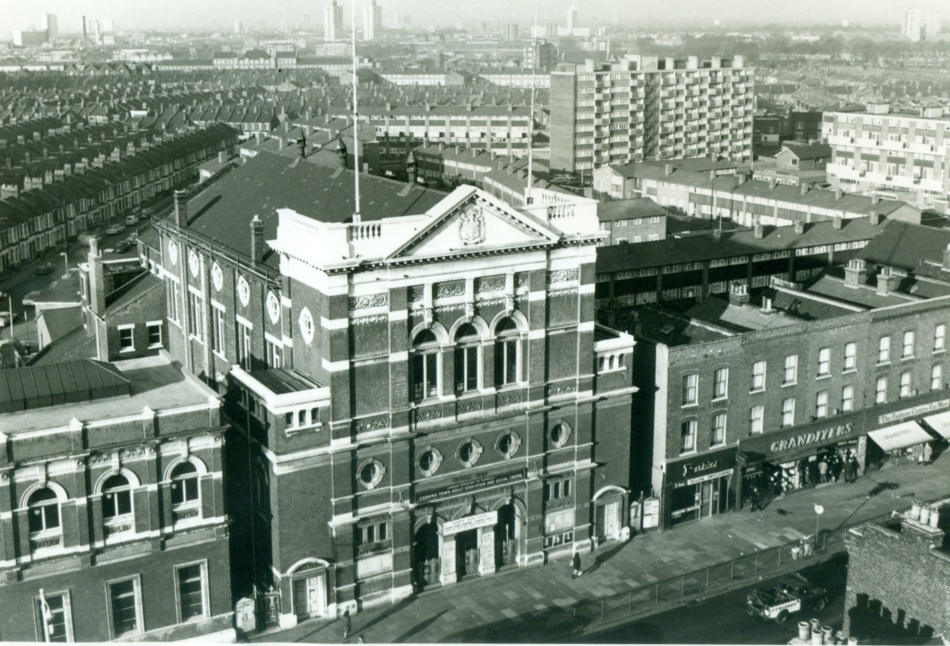
Seen here at the turn of the 1900s, the Canning Town Public Hall still towers over the Old Library. Yet despite her stature, to history, she has been a bit overshadowed by the bookish little sister at her side. Long since known as “the Community Links building”, the Canning Town Public Hall has served the community in extraordinary ways for more than a century.

A Hall Built for Community Life
“May your time in this building be fruitful and you find your own story” (Sylvia Pankhurst)
When Pankhurst said this at one of many Suffragette meetings held there, the ‘building’ she spoke in and of was the Canning Town Public Hall. A few years ago I saw her words on display in the reception of that same building, now known as Community Links. Our team had hosted our inaugural ‘Community Link Up’ event there and, once I saw Miss Pankhurst’s connection with the building, I knew later that day I would close my speech to the packed hall we had rented there with her words.

Our team was not from Community Links but of a collective called ACT-AS-1 (All Communities Together Are Strong). Little did I know then, the deep historical connection some of us had with the building: our Nadina (from Rights and Equalities in Newham-REIN) had supported many young people there during the golden era of Community Links; our Richard (from Fight For Peace) had come to ‘Links’ as a young MC honing his skills on the mic; and our Bob (of Ambition Aspire Achieve – AAA) had been part of the original 90s clean-up that, led by local legend Kevin Jenkins, helped take the decrepit Canning Town Public Hall from disuse to its rebirth as Community Links. That is the name still above the door and, as time goes on, the building’s other names (along with its stories) risk being lost to history.

I like to think that some of those lost stories have found their way here. I imagine Pankhurst’s blessing extends to every person, including me, who ever spent time in that building. I am grateful to my interviewees Jonny, Colin, Paulette, Mark, and Bob for sharing their stories with me and, as you share in them here, may you find your own story too.
A Tale of Two Buildings
The question of a ‘public’ or ‘town’ hall had been before the council from the time of the Incorporation of the Borough of West Ham in 1886. At the time, those pushing for the building argued:
- The borough (then West Ham) was divided into two portions, north and south, with entirely different population profiles and needs
- Built around the Docks and factories, the large population of the south were workers for whom it was inconvenient to go all the way to Stratford Town Hall to get involved in municipal business
- The people of the South should have a place where they could call public meetings, transact business, enjoy entertainment and have social gatherings
Built By the People for the People
This was the vision for the Public Hall from the start. But which of the people? West Ham had a varied population, with a north/south divide, and there was tension about where to put a Public Hall. A people’s vote decided it at a public meeting at the Tabernacle church: it was going to the “Rathbone Street” site on Barking Road.
Both buildings were built between 1892-94 but Lewis Angell, the borough Architect at the time, had conceived the Public Hall years before the Library was part of the plan. The original plan to build a baths in the Public Hall was removed due to cost and only then, in 1891, was money agreed to purchase the site next door for the library. In 1892 in one ceremony of two halves the great and good of West Ham gathered to lay the foundation stones, one for each building.

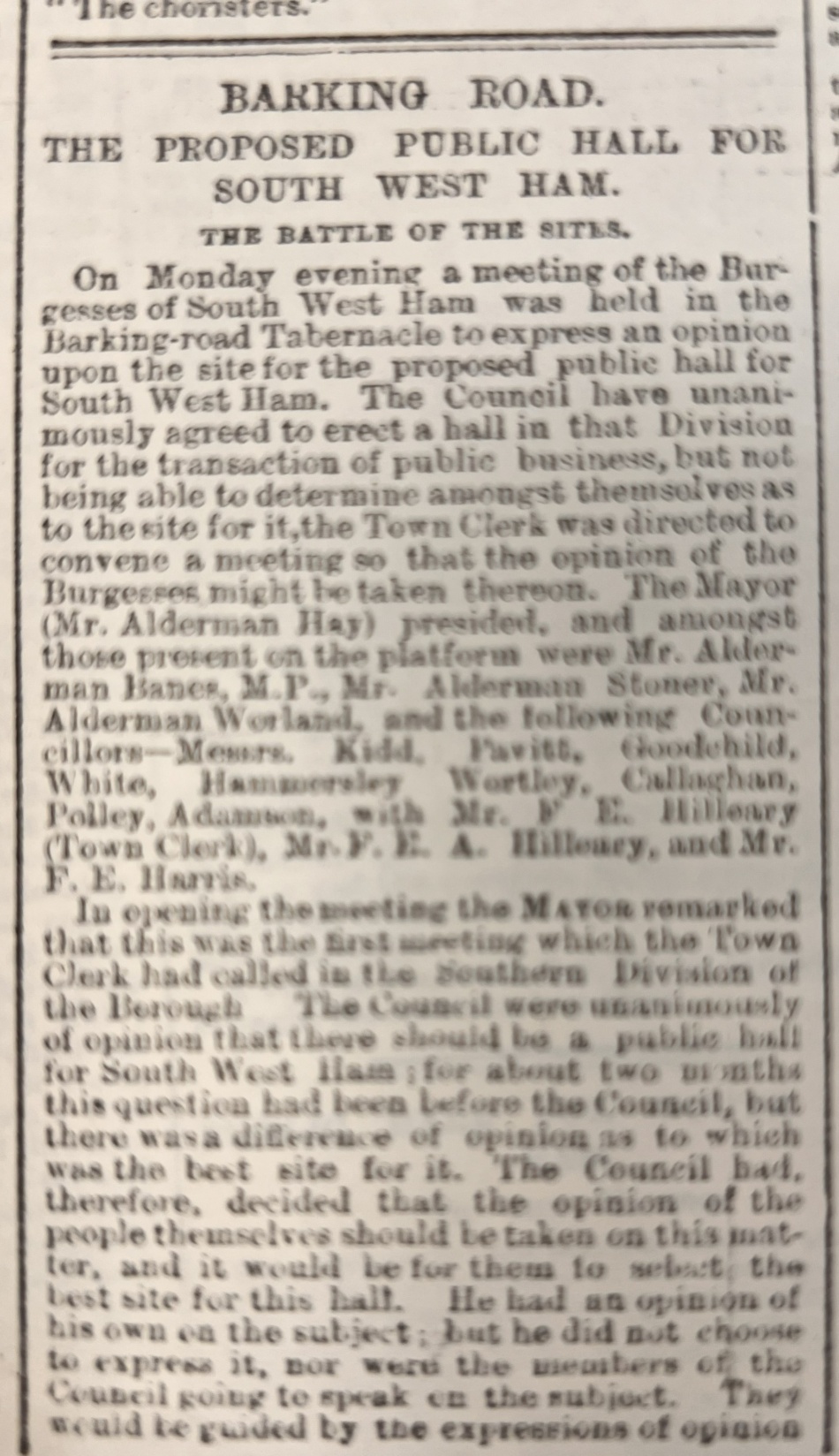

The Library was built and opened first with some ceremony by Passmore Edwards on 29 September 1893. The opening of the Public Hall on 26th July 1894 seems by comparison to have been somewhat muted. Only a short paragraph in the Stratford Express.


The grand three-story Public Hall was built in an Italianate style, with œils-de-bœuf windows, coloured and leaded glass, chandeliers and coffered ceilings you can still see there today.
The Public Hall and Library were some of the first public buildings in the borough to be lit by electricity, generated by gas engines on site; these were used until 1898 when the power generating station at Abbey Mills came into operation.
The lack of sources has hidden much of what happened inside the Public Hall. Yet, we have glimpses, such as in incidental admin details recorded.
On one of my visits, Cas at Newham Archives had “a surprise” for me in the form of the Public Hall Attendance Books from 1894 to 1917. In these, the HallKeeper, mostly entering staff hours, sometimes recorded reasons for overtime like ‘attendance at organ recital’, or to ‘clear chairs’ in preparation for an election, or ‘night-scrubbing large hall for dance’ (24 March 1915 – yes they kept dancing during the war). These pages show the Public Hall hosted all sorts including:
- public meetings
- Voting for School board, local and national elections
- Free ‘municipal’ concerts and weekly organ recitals
- dances’ and balls
- Picture exhibitions and educational lectures
Another such record showing the variety of how the Public Hall was used is the applications to West Ham Council for reduced fees, like these in 1891:
- Will Thorne – a meeting to further the candidature of Socialist candidates at the municipal elections
- P. Alden, warden of Mansfield House – a public meeting to commemorate the tenth anniversary of The University Settlement
- P.Alden – a Tea and Entertainment for 1,000 poor children
- P. Alden – a series of concerts on the first Sunday evening of each winter month
- A. Bothwell – a Y.M.C.A religious meeting on the other Sunday evenings
- J.W. Morday – a performance of “The Messiah” in aid of the Thames Ironworks Choral Society.
- Numerous concerts, dances and ‘benefits’ for hospitals, churches and for “individuals who had suffered particular misfortune”
Alongside a large dose of philanthropy, there was free (thereby accessible) music, art and theatre. Then you had the working class heroes like Will Thorne using the Public Hall as a meeting place to talk socialist politics as well as YMCA religious meetings on sundays. This mix of activity and participants, reflected Canning Town’s unique profile and marked their Public Hall out from its municipal counterparts.

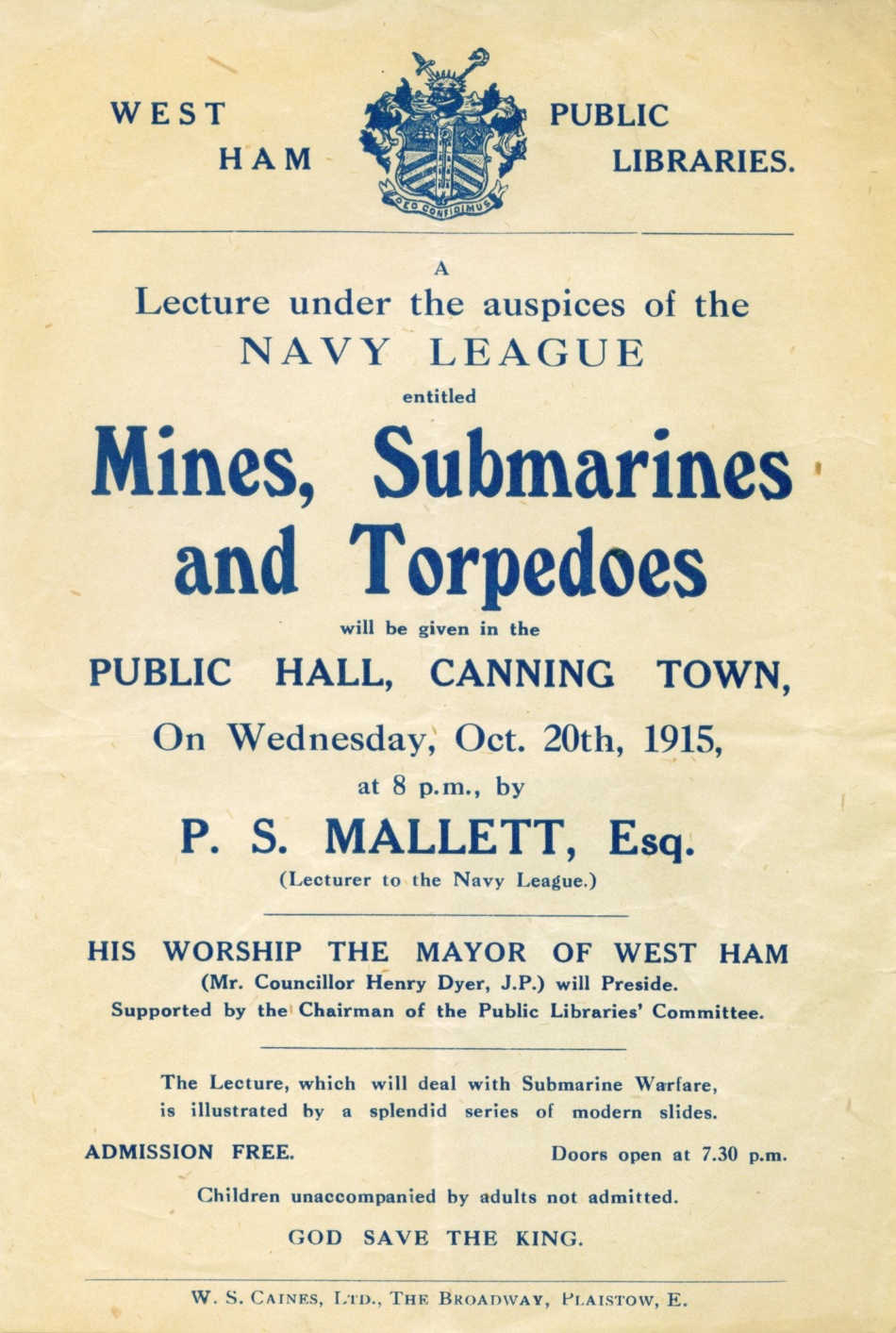
Posters on the notice board railings of the Public Hall show that there was dancing every Saturday. There are those, including my fellow community Researcher Lynda, who have memories of the Public Hall as the place to go:
The building was quite central to Canning Town social activities, though I was only aware of this via my family’s use of it – the ‘grown ups’ (Lynda)
Cyril Short, from Canning Town, born in 1913 was asked if he remembered any of the dance halls around there:
Yeah in the public hall in the Barking Road…Fourpence it was … in the war we used to have dancing that was 2 pence to go in. (Canning Town, Hidden Histories, Eastside Community Heritage, Archive reference: 2002_esch_cann_05, https://catalogue.eastsidecommunityheritage.org/wp-content/uploads/2024/02/DAMS_CANN_05.pdf )
Social and Political movements and the Public Hall
Wrapped in east London labour and protest history, the Public Hall hosted prominent socialist speakers including Labour party founder Keir Hardie, Sylvia Pankhurst and the Suffragettes. In March 1889, Will Thorne spoke to a large crowd at the site on which the Public Hall would later be built. His speech there led directly to the formation of the National Union of Gas Workers and General Labourers (precursor to the GMB union), a significant “New Union” that achieved major concessions for unskilled workers and paved the way for the Great Dock Strike of 1889.
Such speakers as Suffragettes Pankhurst, Baldock, Kenney & [Daisy] Parsons..the last who also became West Ham’s 1st Female Mayor; Keir Hardie, Bertrand Russell, Eleanor Marx, Will Thorne – all with Socialist leaning beliefs – how could it not give floorspace to them, being in such a deprived working class area. (Lynda)
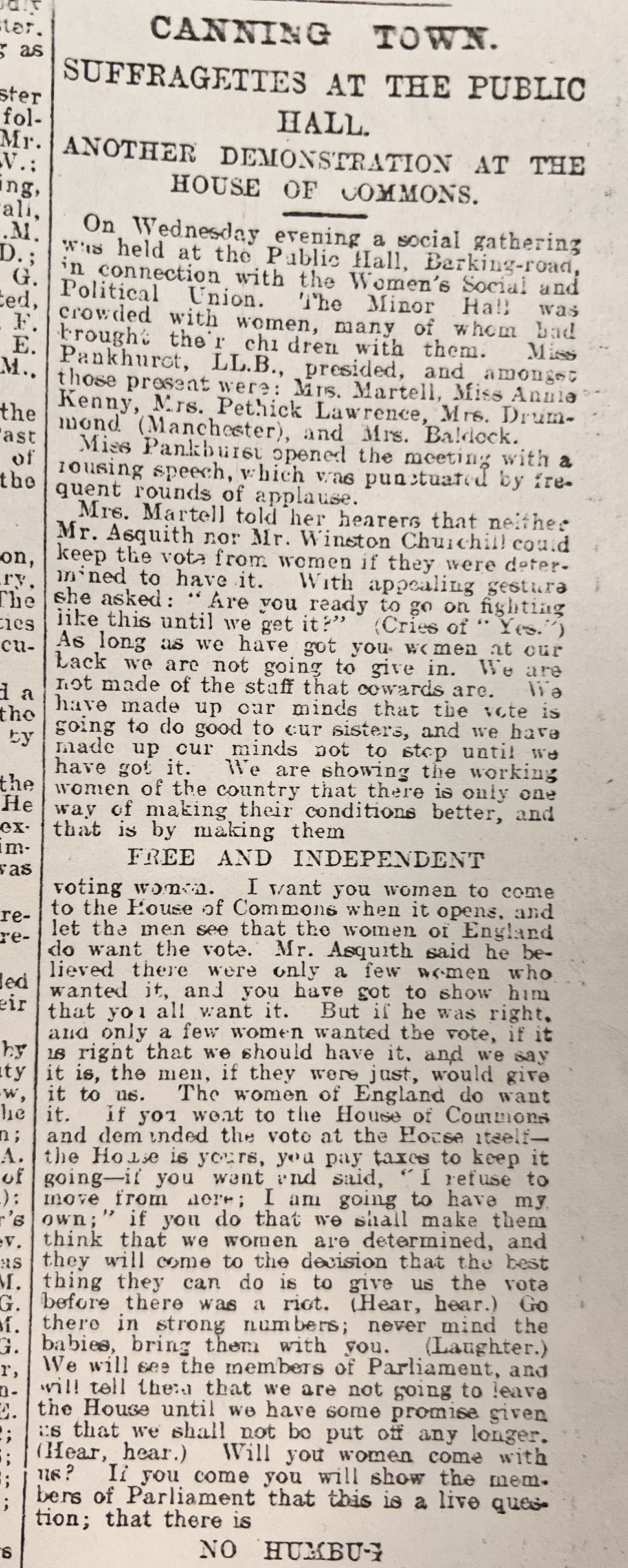
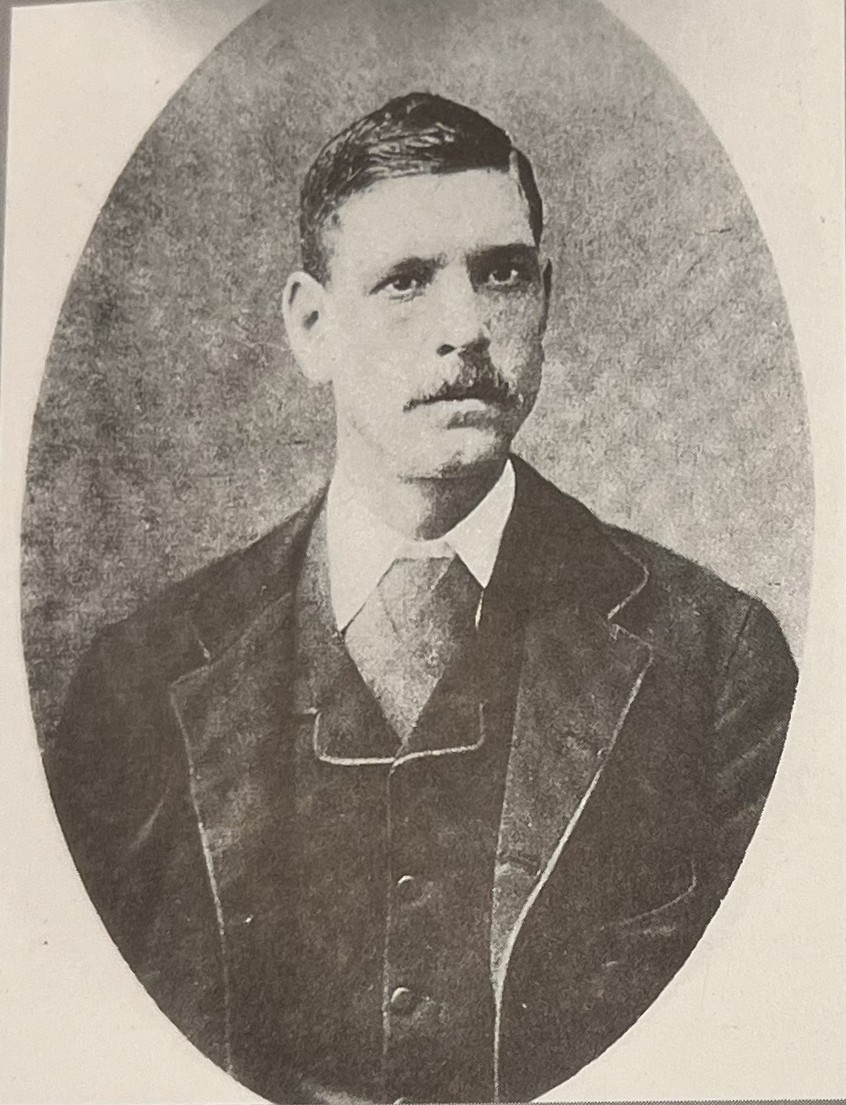
[Councillor] White said South West Ham [has] the most progressive people in England. I do not know what the Council would be [if it] were not for their LEAVENING QUALITY (Councillor Will Thorne MP, speaking to the Public Hall, Stratford Express, November 3rd 1906)
Thorne was elected as general secretary of the Union in 1889, to a seat on West Ham town council in 1891, the borough’s mayor in 1917–18, and MP for West Ham in 1906, a seat he held for nearly forty years.
A second local public figure connected with the hall is Daisy Parsons, a Suffragette and West Ham’s first female mayor. (Former Public Hall and Library, Canning Town, Historic England, https://historicengland.org.uk/listing/the-list/list-entry/1402042?section=official-list-entry)
The funniest thing…well it wasn’t funny but again it’s how people’s attitudes was in those days..Emily Pankhurst was gonna make a speech and they give her the small hall downstairs cause they didn’t think many people would turn up but apparently there was 100s…and they was all outside in the middle of the road and she had to stand outside Community Links, which is the old Town Hall, and do this speech. (Bob Goldsmith, meant *Sylvia not Emily, from his interview for this project Oct
2025)


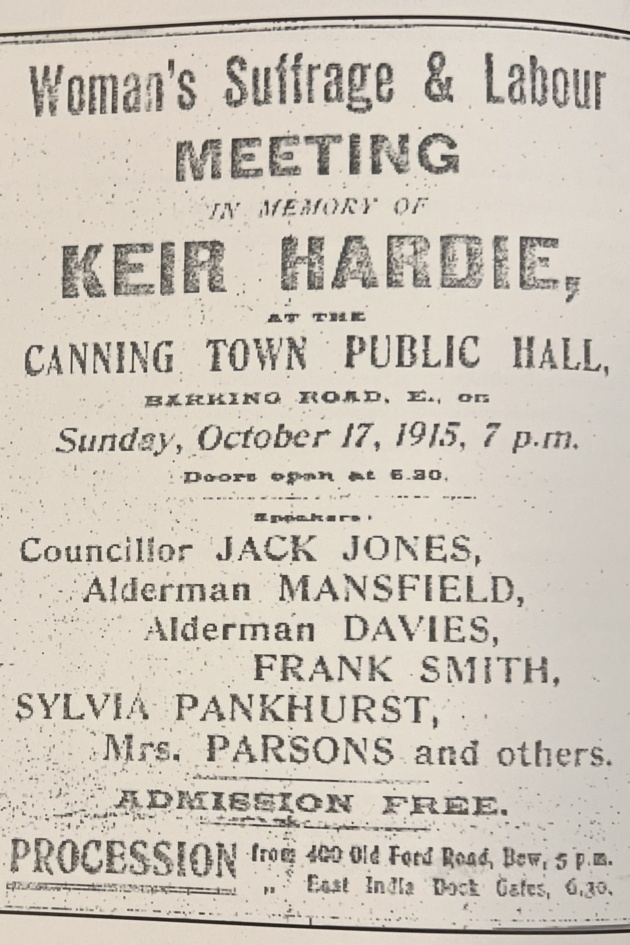
Prior to founding the Labour Party, from 1892-1895 (as the Public Hall and Library were being constructed) Keir Hardie was MP for West Ham South. He spoke at Canning Town Public Hall (CTPH) on multiple occasions, including as part of his election rallies. He spoke there to campaign for improved living and working conditions for ordinary people, advocating for policies like an eight-hour workday and better housing at a time when many in the area worked 10 to 12-hour days in poor conditions. (James Keir Hardie, Keir Hardie Society)
The poster about a Suffragette meeting in memory of Keir Hardie, with Sylvia Pankhurst and Daisy Parsons as speakers, shows the importance of the Canning Town Public Hall as a meeting place, a melting pot for the radical social, labour and political movements of the time. It speaks volumes to how connected the women’s suffrage and the labour movements were to each other and also to the people of West Ham South.
A refuge for the people
In times of need, the Canning Town Public Hall has been a place of refuge for the community.
During the desperate poverty of winter of 1904 the Public Hall was the centre of administration of the ‘Daily News’ Relief Fund for the distress in West Ham. (Line, Les and Ricciutti, The Audubon Society of Wild Animals (Newham Archives, 1978), p.2)
During the war people collected their ration books from there. When the Old Library was badly bombed during the Blitz, the Public Hall temporarily took on that role while repairs were done.
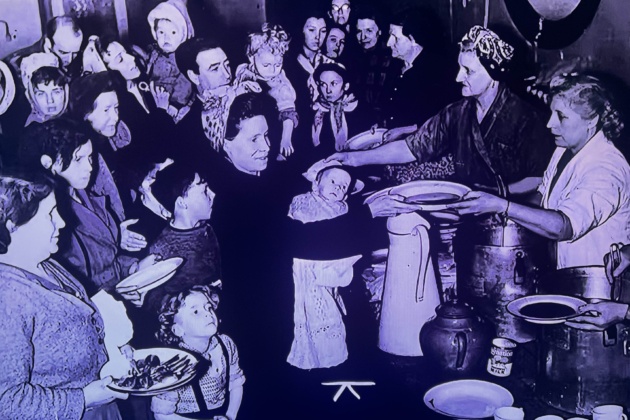
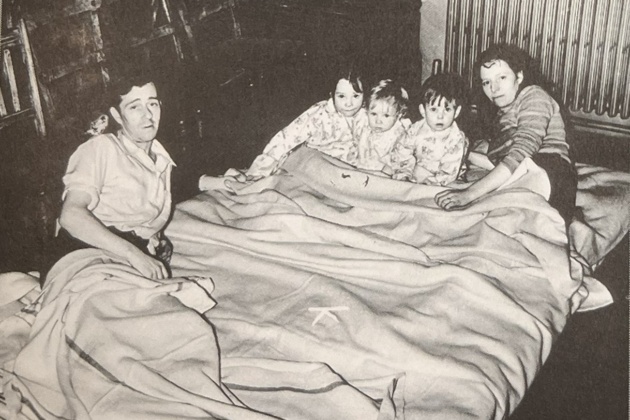
Made homeless or hungry by disasters people found shelter and sustenance at the Public Hall, including during the Silvertown Explosion 1917 and the Great Flood 1953.
Mark Gorman, local historian and volunteer at the Newham Archives spoke about these two major events:
Brunner-Mond was a huge munitions factory producing shells for the British army in the first world war and they dealt with a lot of explosive material…It was 1917… Something triggered fire or something in the explosives workshop and this factory full of explosives…exploded. And wrecked streets all around. It was said the explosions were heard in the west end of London…and people thought it was a bombing raid from the Germans..but it was hushed up in the press…until after the end of the war” (Mark)
Just as some of the 100s of local people left homeless by the destruction of the Silvertown explosion sought refuge in the Public Hall, so other families did the same after the Great Flood more than three decades later.
It mainly affected down river the Southend area, where alot of people died…It’s interesting that the Hall was used as a refuge because presumably people evacuated..that I didnt know.

The 1950s-1980s: The Public Hall as an Adult Education Centre

Record shows:
In the image of the Public Hall above, if you look closely, you can see above the door it is written the name ‘Canning Town Adult Education and Social Centre’. After the war, for a time, this was the incarnation of the place and something else that Lynda remembers:
Around 1966/67 (aged 12ish) I queued with my older sister for her to enrol for a keep fit evening class held there. This was part of a fuller Adult education programme my sister now tells me. Later the same year she had her 21st birthday party there – ‘big do’ – in the main hall. I recall inviting a school friend who afterwards took all the leftover sandwiches for her siblings – a large family of the time.
Then in 1969 my sister’s wedding reception was held there. An event not without problems: The Band booked for evening entertainment didn’t show up – later saying they had a double booking! (no mobile phones then). A decision was made to go to my parents home & collect our Stereo-radiogram + record collection. This was a large 5′ x 4′ (1.524m x 1.219m) wooden piece of furniture – so no easy task for the small cars of the time. This was used all evening, so the best was made of it, but not an ideal substitute in such a large high ceilinged hall; but was an only option. (Lynda)
Sometime after this, during the 80s, the building fell into disuse. There is something powerfully sad about this grand old public hall being in such a state of disrepair, this coincidentally aligns somewhat with the fall of the Docks, which had been leaving many families of Canning Town who relied on the Thames for work struggling in its wake. It’s like the fortunes of the Public Hall mirrored those of its community.

The Rise of Community Links
The building’s revival came through Community Links, thanks largely to the vision and drive of Kevin Jenkins. Community Links was a youth and community organisation founded in 1977 by Kevin Jenkins and David Robinson. It started with volunteers and a bus, moved for years to East Ham before it found a new home at 105 Barking Road.
In the late 1980s the founders managed to acquire the old Public Hall to be the new Community Links building as long as they brought the building back into public use. So, with the help of over a hundred investors, many workers and volunteers, they did!
Under Kevin’s leadership, the site became an energetic home for youth work, community programmes and of course the legendary, much-loved annual Toy Appeal that still runs today more than 30 years later (albeit at Ambition Aspire Achieve) and in Kevin Jenkin’s name.
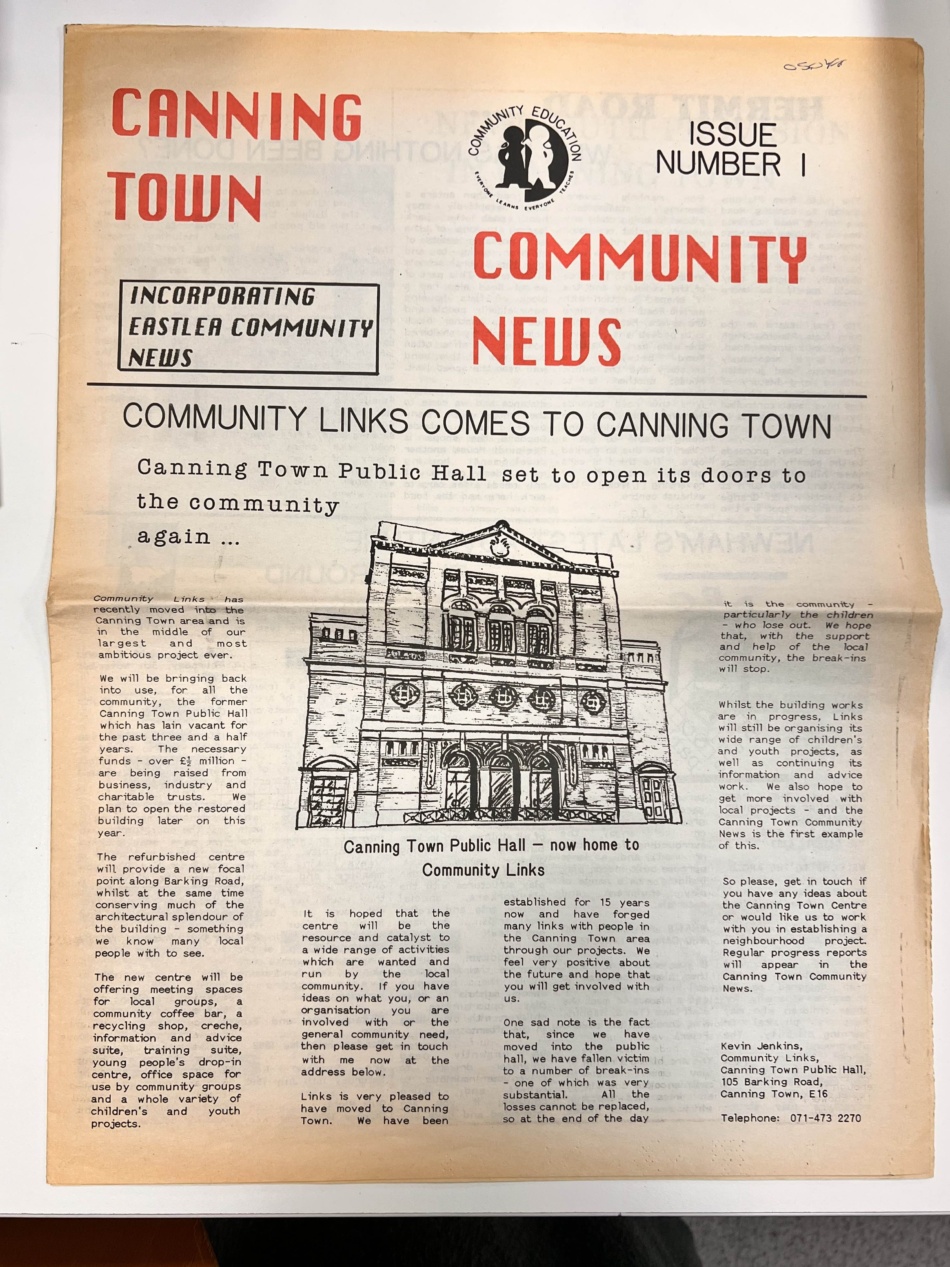
The early 90s to the mid 2010s, was a golden era for Community Links. In their name, the Public Hall had been returned to the community hub it once was, in a community that had seen a lot of change since the birth of the buildings. Community Links, with its hub and HQ at 105 Barking Road, was able to help the young people and families of Canning Town and more widely Newham, to navigate these changes and not let them sink like the Docks.
Read the other pieces in this series:
Community Links in that building at 105 Barking Road, as well as the story of their founder Kevin Jenkins in the oral history testimonies of the people that knew him best, deserve a page of their own. You can read about this next here.
Another element which came out of research, that deserved its own attention, was the history of the community of Canning Town that the Public Hall served. If you want to explore who this ‘public’ was, you can explore it here.
Additional record details
- Contributor: Taibah Shah Richardson
- Type: InterviewPhotographsSoundsWriting
Heritage newsletter
We would like to send you monthly emails spotlighting heritage content in Newham, as well as updates and opportunities to be involved in next year's festival. Be the first to hear about new projects, funding opportunities and ways to be involved.