Right, good morning. My name is Cyril Maloney. I’m an engineer who’s very curious about everything and the following information I am going to tell you, I learnt myself just purely for curiosity but now I share it with school children and everybody at STEM events as great engineers of the past.
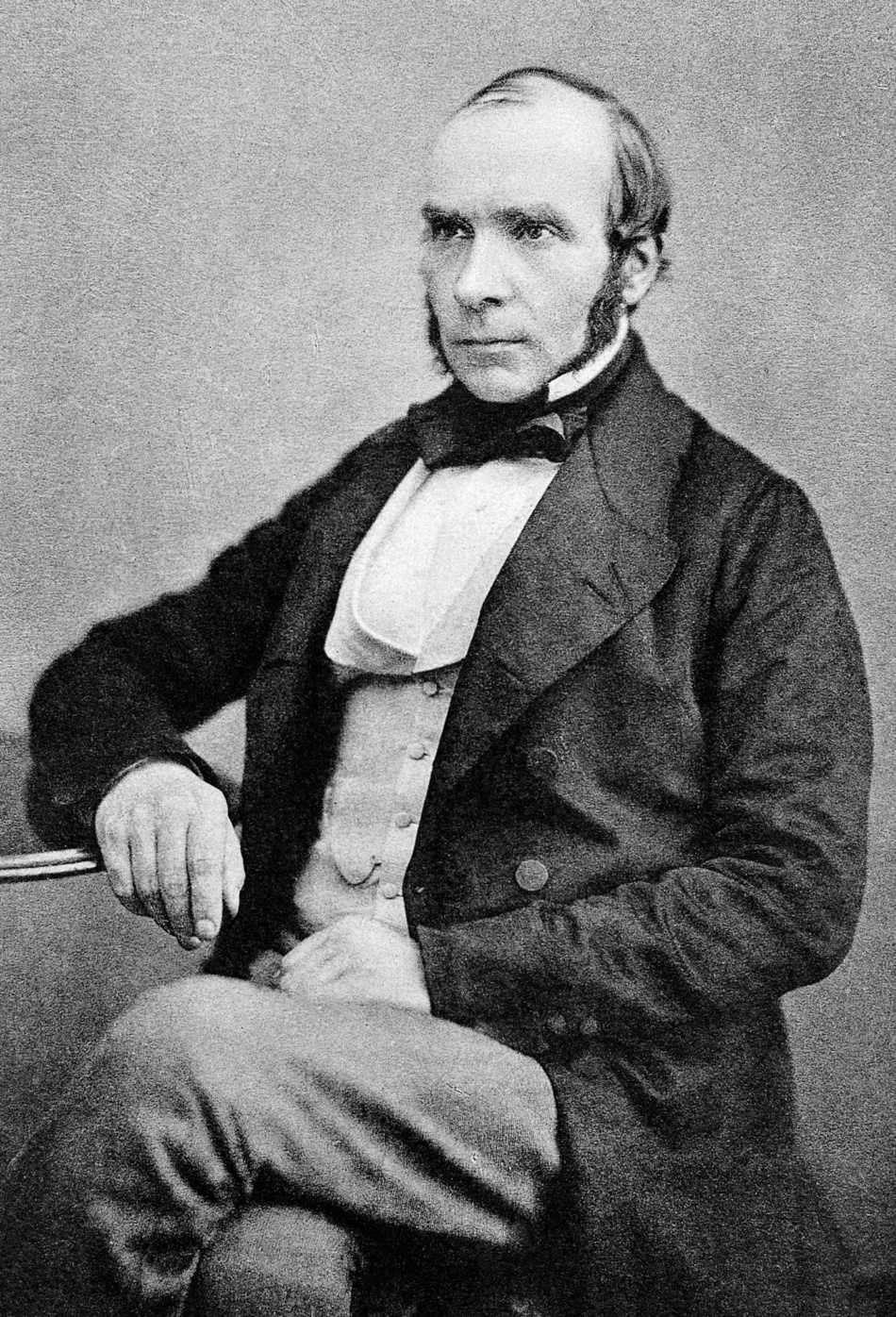
I’d like to start in 1831. Sadly, a ship came to Sunderland and all the people on it were ill and a fabulous doctor called Dr John Snow recognised there was something wrong with them and this was the first time we ever had cholera in Sunderland. Between 1831 and 1832 six and a half thousand people died of cholera in Sunderland, Plymouth and other places like London, this was due to the fact that people lived in very poor accommodation, one example, if you ever go to the Science Museum they’ve got a little building with six houses, two or three storeys high but six houses together and it was estimated between 175 people to 225 were housed there when they came round and did a census. Families also took lodgers to pay for the rent and their food so it could be even more crowded. No beds. If you were lucky, you put up a hammock, the kiddies slept on the floor.
The whole family slept in one room. No toilets, no bathroom, and no kitchen. If you wanted a Sunday roast and you were lucky to get a piece of meat, you took it down to the baker’s and put it in an oven on a Saturday night or Sunday morning and came back after mass and your dinner would be ready with a few potatoes and carrots all in a pot. You put it in the oven after you bake the bread, this is what life was like in London.
Now, it got even worse. It got seriously worse in 1848 and 1849 in a place called Southwark, there was a serious outbreak of cholera. And John Snow recorded that on one side of a street, nearly all the people died and on the other side very few people died. One side was fed by a well where the sewage was running into the well, and on the other side of the street, the sewer was running away from the well. But between 1848 and 1849, 14,000 people died in London. There were about a million to one and a half million residents, but 14000 is an awful lot of people, and it caused hysteria.
People were saying, is it safe to live and work here? The government said, if you can’t smell it, it’s not the sewer, its only bad living, bad smell. Its miasma. That it wasn’t the water. That John Snow was wrong. Even though he provided scientific evidence, he was wrong.
Can you tell me who John Snow is?
John Snow was training to be a doctor in Sunderland, he became a pharmacist first then he came to London. He took his doctor’s certificate and his pharmacy first, then his doctors then the Royal Society of Medicine all in 18 months, and he passed all the exams. He became famous first because he gave sedatives to Queen Victoria when she had her children. He gave her ether; he was the doctor that looked after Queen Victoria when she was pregnant. That was the only thing that stopped people from saying to him, look, you’re you’re a heretic go away, he was the Queen’s doctor so they had to sort of listen to him but they’d say no you’re not right this time John you are not right, if you ever go to the Science Museum there’s actually a letter from Queen Victoria saying how amazing the doctor was. “I had the birth and no pain.” He’s also a part of the Bazalgette story and the fact that he was the person providing the evidence that it was in the water.
I’m going to skip forward to 1855. Two water companies, one took its water out by the Tower of London the other in Chelsea. Nine out of ten people died. the odd person who died from the chelsea water they now believe were people who had become ill and moved to Chelsea. The people died because of the bed linen because when you went in temporary accommodation if someone died, they didn’t change the bedding they just rented the room out again, if you wanted to wash the linen, you washed the linen yourself, basically when you get Cholera everything comes out your body. The famous case that most people know of, is the case in 1853 to 1854 was the Broad Street one where he had the pump removed. An area around Soho had a massive outbreak. He went round to every house to see where people had died and asked them where they got their water from. If you go to the Science Museum you see this lovely big map, you can see it online if you look for John Snow and the Broad Street breakout. You will see black marks, and it shows how many people died and where they got their water from, and again, it was more evidence because there was a brewery in the middle of this street, all their water came from a different well, it was processed and most of the people drank beer in the brewery, and none of them got Cholera. There’s also another place that had a different well, a home for people who found it hard to support themselves, one of the workhouses. They had their own well. No one got Cholera. Everyone that used Broad Street well got Cholera.
And it all happened because where the pump was, there was a cesspit and it had hole in it and so even though the people were putting their sewage in it, it leaked and the first person to die was a baby called Lewis, his mother was washing his nappies out, pouring it into the cesspit thinking she was doing it correctly but it leaked and contaminated the water.
Sadly, in that case 10,000 people in London died because of the outbreak. In total, in four outbreaks over 40,000 people died. They still did nothing. They came in the night and put lime down on the streets and people moved away, they said it’s miasma, it is the smell.
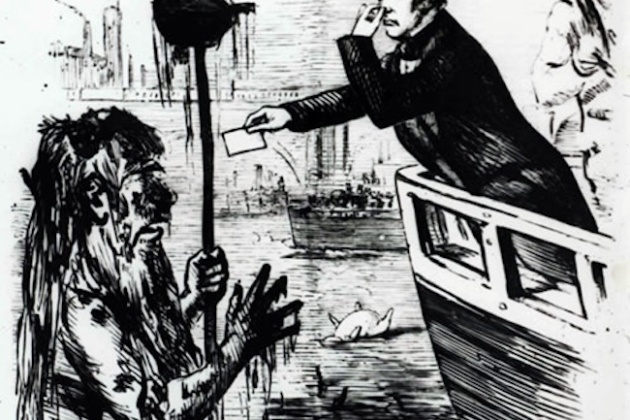
Until the great stink of 1858 when it hit parliament. We had a bad summer, and the sea brought all the effluent back in, up the river to Westminster, but when there’s a high tide all the stuff that they sent down to the estuary would come all way back up to London. So, it all stayed by Westminster. Charles Dickens, he dropped a hanky into it and when the hankie came out it was completely and ugly brown and another one of my heroes, Faraday, he put bits of paper down and you could see the paper getting brown. Punch magazine made a lovely cartoon of a skeleton of Mr. Death in a rowing boat.
People like him were getting the government to start to try and do something. It was a stink. It got so bad they put up black heavy curtains dipped in lime and it still didn’t stop the smell coming in.
This was at parliament.
Parliament. So they couldn’t use the chamber. One end you’ve got Queen Elizabeth with the Big Ben and then the other end, you got t Victoria’s Tower and in between you have the two houses. All that had to be shut off. So they decided, we better do something, this is when our hero, Joseph Bazalgette comes in.
They decided to put together a group of people and form the London Metropolitan Water board.
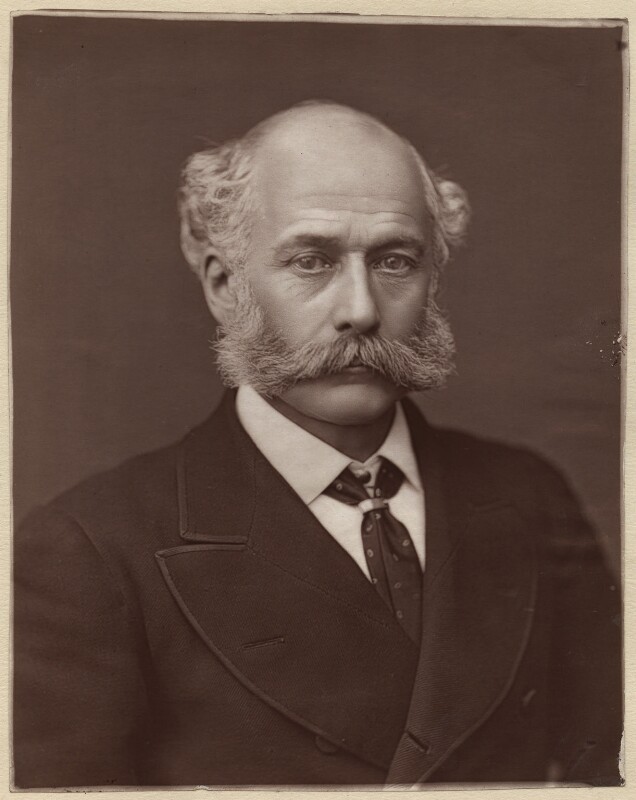
Bazalgette had worked on the railways for Brunel and for Stevenson and anybody who did a big engineering project. He was a civil engineer, he reclaimed land, took water away. He then started up his own consultancy. He was given about three million pounds; he’d already been working for maybe five to six years on the plans.
It started off really fast. And the method they did at the time, because London was not the London it is now, they would cut it, build the tunnel and then cover it back. So he could decide a route.
A lot of the route he did from Victoria, he starts off in Chelsea. He did the Chelsea Embankment. If ever you go along Putney all the way to Hammersmith and all the way along there and you see all those lovely lights and a nice straight roads and all the street lights, Joseph Bazalgette reclaimed all that land, and built the parks next to it and everything is there because the sewage pipe runs underneath it.They were building the underground, he said you put your tunnel down the middle and I’ll put my two sewage tunnels around the outside. There are fabulous drawings online you can have a look at, and you see the sewage line all the way from Victoria it follows the route of the train line. The embankment is the best place to see it. Come out of Embankment station and go into the park, that was the Thames, because right in the corner of the park about six or seven metres in, there is an arch, and that’s where one of the rivers came in, and where the river used to go into the Thames. So, the whole park was reclaimed land. In front of Somerset House the boats used to go up to the house. Now you must get off, there’s a road, there is another building in -front of it, and you go upstairs and behind Somerset house, the same with the temple.
All the way from there, all of way down is the sewer, and on the other side of the river the sewer goes all the way along the other side. He’s reclaimed all that. The Thames was very shallow, mud on either side and reeds, so the sewage used to get stuck on it. What he realized was that if sewage did get into the Thames if he made it a lot deeper it flows a lot faster, so he made it very deep. The downside was after Bazalgette finished there was no more skating on the Thames, before that you could skate because it used to be so shallow it would freeze in the winter, it’s now so deep it never freezes. His sewage tunnels are magical if you ever get to see inside, this is proper old school engineering.
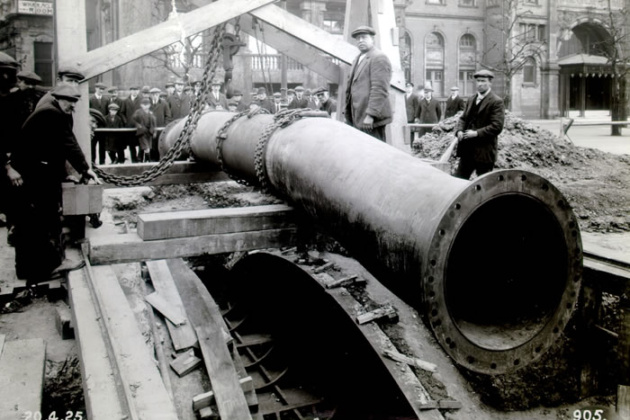
He decided what size tunnel he needed at the time, then he estimated how London was going to grow over the next 20-30 years and doubled or trebled the tunnel size. It was originally designed for 1.5 million and it’s still used today for 10 million people.Even though we have a super tunnel now, a tidal tunnel down the middle of the Thames, the old tunnel is still taking the sewage. The problem is that we’ve concreted all of London. If we hadn’t concreted it, when it rained the water would have gone into the ground but now all the water now goes into the drains, and it runs into a sewage drain and then it overloads the system. the System wasn’t designed to take all that rainwater, so we’ve caused the problem by building on everything.
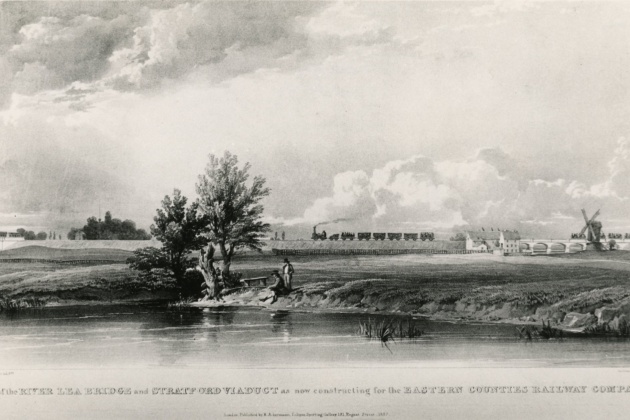
About 95% of London is concrete now. This area, Stratford, this was countryside. I live in Tottenham, it was countryside, Hackney was country. Most of the place was countryside growing food and vegetables for London. One and a half million people lived in a small area. About a million in the city and in the east end, but they’re all in that corridor of The Thames. I would say within about the most a mile from the Thames on the north side was where people were living, even where I live, Tottenham, was still a village until 1966.
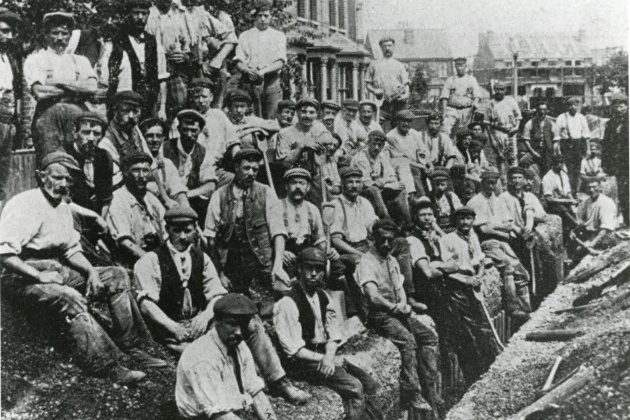
Joseph Bazalgette built 82 miles of cathedral tunnel, he bought all the best people together.
What he did was make the tunnel egg shaped. Because it is it’s shallower at the bottom, it means that it is going to flow a bit faster. Then you put a gully down the middle and this causes a vortex, the little channel means the water spirals and that creates turbulence and that means if you put it on a slight slope, using gravity it self-cleans.
And then he glazed it with fabulous tiles. There are 318 million bricks in his tunnels.
One of his engineers discovered they were using what we call Roman cement which doesn’t really go hard. It doesn’t go permanently hard and it’s not waterproof. Lots of cement is not waterproof. He came up with a new material called Portland Cement and when the water hits that, it gets harder, and they made these lovely tunnels. There is a smell, if you ever get the chance to go down it, but it is amazing how clean it is.
He then got every district to connect up 1100 miles of local tunnels, 6 inch, 8 inch or 12 inch little tunnels, little sort of gullies into his sewage system all the way across London. All of the different areas of London had their own system?
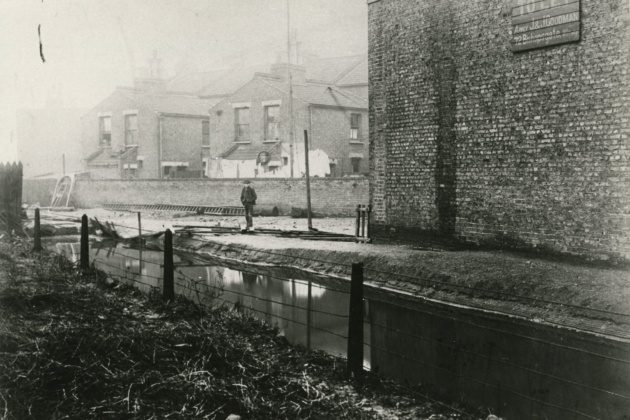
Well they would have, they had an old system but all that did was feed straight into the nearest river. Again where I live there’s a river called the Moselle, it got so bad that they had to cover it in brick because of the stink.It comes from Muswell Hill and goes all the way down into the Lea, all their pipes just went into that river. So other parts of London would have been the same. 1,100 miles of interconnecting tunnel, sadly this area of Stratford was the last place to be connected up and in 1866 it had a Cholera outbreak.
Just up the road are the Middlesex filter beds. They were filtering the water, but the local water sellers down here didn’t want to pay the tariff for the filter beds where water went through the sand, so all the impurities were taken out of it. Then the sand was scraped, put on a barge and then taken off the river. So they thought the Lea is getting a bit cleaner, looks a little bit cleaner, and so they used the old Ford lock. They used that water and there was a massive Cholera outbreak and nearly five and a half thousand people in this area got sick, and they only found out what it was in the end because when they opened the hydrants There were scavenger eels and mussels and other things in hydrants. If it’d been through the filter beds all of that would have been taken out, they’d tried to make an extra profit and had taken the water straight out of the River Lea. So in 1866, this was the last part to be connected. Finally, that vindicated John Snow. By then Snow had passed away, but everybody said, “What a hero”.
I don’t know which one did the most. Abbey Mills or Crossness, but between the two of them, they removed two billion litres a day of sewage out of London.
Have I mentioned anything on gravity? There is a slight slope, I don’t know what the angle is but it was always running down that slope so the sewage would run towards the sea. The problem is if you go over 60 miles or so you’re going to get a lot deeper than the the sea level, by the time it gets to Abbey Mills, the low level is 40 foot under the ground. So the reason for Abbey Mills was, its eight beam engines, all with big cylinder pumps at the end pumped the sewage up to the northern outlet to run down to Beckton.
So that’s what it’s for. The Greenway has got three tunnels all pumping sewage. Even the modern works today still use the same tunnel system. If you ever go to Abbey Mills, next to it is the new pumping station but they’ve still got electric pumps in the old station in case the ones in the new station don’t work.
When it reaches Abbey Mills it’s 40 foot below ground?
Yes.
So they pump it up?
Yes, it comes into a big chamber, a massive big chamber and then it pumps up. If you walk down the Greenway it’s a very slight incline all the way down to Gallion’s reach.So, walk from Abbey Mills its downhill, the other way and you are walking slightly uphill. Not much, but enough.
What I absolutely adore is the next time they did the census in 1880, there was no mention of Cholera anywhere.What started me on this journey is, I saw a poster and it said that if ever we built a time machine, dysentery, cholera, and all those waterborne diseases would come back and try to wipe out Joseph Bazalgette, because he destroyed them, he killed them. On the day of his death they said, Cholera was eliminated, typhoid was eliminated dysentery was eliminated in the UK, all due to Joseph Bazalgette. But the sad thing is up until about 2019 no one had heard about him.
When they made the system in Paris, they made the system similar, but they put round tunnels in and now they have to send a metal ball down different sections to clean out the sewage. And other countries have gone for round and they still have to send people down in Italy and other places.
And now we’ve done the tidal tunnel, you know, and it takes a massive amount of sewage, but in 10 years’ time we may need the Tidal Tunnel 2. I’d love to go down there.
You might think, that’s amazing, he didn’t stop there, if you’ve ever gone across Battersea Bridge, he built that too. If you go up to Victoria Park and think, oh that’s lovely, it wasn’t there before Joseph Bazalgette, he designed and helped build Victoria Park
You know, I’m not anti -Brunel or anti Stevenson, but they sort of did big things and they became famous. But they didn’t do as much for London and other places as Bazalgette.
Do you think it is because his work is mainly underground?
Yeah maybe, it wasn’t high profile, he wasn’t in with the royals and all that stuff you he was just seen as an engineer. It’s amazing isn’t it because like I said the Greenway is still the main route out of London and without it, London wouldn’t work.